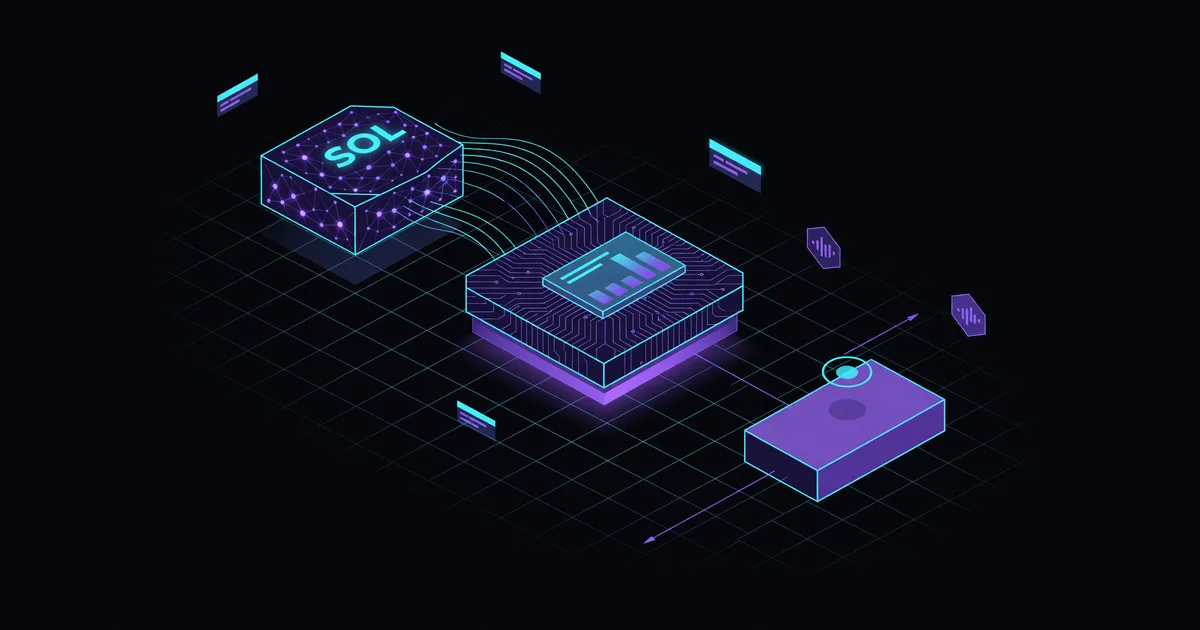
GPT-5.6 Sol, Terra, Luna: Pricing, Speed & Access Explained
GPT-5.6 Sol, Terra, and Luna went public July 9. Confirmed per-token pricing, the Cerebras speed number, and how to reach each tier.
Three model names, one API key, and a 5x spread between the cheapest and most expensive call. That's the shape of OpenAI's GPT-5.6 rollout now that Sol, Terra, and Luna are generally available. Reuters reported the launch approval on July 8; the public switch flipped July 9, closing a two-week window when only US-government-coordinated preview users could touch the family.
If you read the preview coverage, you already have the capability pitch. What most of it skipped is the part developers actually have to decide this week: which of the three you call, on which surface, and what it costs per task. Here's that, sourced to OpenAI's own numbers where they exist and flagged where they don't.
Sol, Terra, Luna map to hard, default, and cheap
GPT-5.6 ships as one generation cut into three tiers on a shared architecture, trading capability against cost. The naming is the only novel part. The structure copies the split Anthropic uses for Claude (Opus, Sonnet, Haiku) and the one Google runs on Gemini (Pro, Flash).
- Sol is the frontier tier. OpenAI aims it at long-horizon agentic work, software engineering, and cybersecurity, and claims a state-of-the-art Terminal-Bench result, the benchmark that measures finishing real terminal and coding tasks end to end rather than emitting plausible-looking code.
- Terra is the middle. OpenAI's own framing puts it at roughly half Sol's token cost while keeping most of the reasoning quality. It's the tier most production traffic should land on.
- Luna is the floor: cheap, fast, built for high-volume or latency-sensitive calls where flagship reasoning is wasted spend.
The names decode cleanly once you stop reading them as tiers of quality and start reading them as tiers of difficulty. Sol for problems that are genuinely hard. Terra for the broad middle. Luna for the calls a smaller model would also get right.
The per-token prices OpenAI put in writing
API pricing, per million tokens, from OpenAI's announcement:
| Model | Input (per 1M) | Output (per 1M) | Built for |
|---|---|---|---|
| Sol | $5.00 | $30.00 | Hard reasoning, agents, security |
| Terra | $2.50 | $15.00 | Default production traffic |
| Luna | $1.00 | $6.00 | High-volume, latency-sensitive |
Two numbers carry the story. Sol at $5/$30 is priced like a specialist tool rather than a default. It sits in the same premium bracket as rival flagship reasoning models, and OpenAI isn't pretending otherwise. Terra at $2.50/$15 is the one that reframes the upgrade: OpenAI positions it as about 2x cheaper than GPT-5.5 for comparable work. That turns "should I upgrade" from a capability question into a billing question, and billing questions get answered quickly.
Luna is the number that decides whether the family is worth wiring up properly. At $1/$6 it's cheap enough to absorb the calls you'd otherwise route to a small open model, which is what makes a difficulty-based routing setup pay off instead of being busywork.
My read: Terra is where the generation actually gets adopted. Very little real traffic needs frontier reasoning on every call, and a middle tier that costs less than the model you're already running is the thing that gets a finance team to sign off on a migration.
You reach Sol three ways, and they don't all cost the same
"Public launch" has been reported as one event. In practice access arrives on separate surfaces with separate economics, and only one of them is fully nailed down.
The API is the confirmed surface. As of July 9, any developer account can call all three variants at the posted per-token rates, no waitlist and no government coordination. This is the part you can build against today, with an explicit model ID and a known price on every call.
ChatGPT is fuzzier. OpenAI has not published a clean plan-by-plan table of which variant answers inside the ChatGPT app, or under which subscription. If it follows its own past pattern, the flagship reasoning tier sits behind the paid plans while the cheaper variants handle free and default traffic, with the app routing automatically rather than making you pick a model by name. Treat that as the likely shape, not a confirmed one. Where you need a specific model in production, use the API, because the in-app router can silently move you between tiers.
Enterprise and cloud is the slowest lane. Azure OpenAI and the enterprise admin controls typically trail the direct-API launch by days to weeks, and for the cybersecurity-heavy Sol tier, expect additional policy and access review rather than an instant switch. If your organization buys through Azure, the launch you care about hasn't fully landed yet. Watch the model-availability page, not the launch-day headlines.
Cerebras is doing the 750-tokens-a-second part
The one thing genuinely new versus the June preview is serving speed. OpenAI is leaning on a Cerebras inference partnership and citing throughput around 750 tokens per second. GPU-served frontier models usually sit in the tens to low hundreds of tokens per second for interactive use, so if that figure survives contact with production load, it's a real step change for anything latency-bound.
Throughput is felt, not spec-sheet trivia, in exactly three places: agentic loops that fire many sequential calls, streaming interfaces where a user watches the text arrive, and code tools that emit large diffs. Most other workloads won't notice the difference.
The honest caveat: 750 is a headline number, measured under friendly conditions. Real throughput moves with context length, batching, load, and which tier you're on, and no independent lab has published cross-tier latency yet. When Artificial Analysis or a comparable third party does, trust that over the launch figure. The speed claim also attaches most naturally to the smaller tiers, so don't assume Sol streams at the same rate as Luna until someone measures it.
Sol sat behind a government gate for two weeks
The reason the public launch is itself news: GPT-5.6 debuted June 26 in a limited preview OpenAI described as coordinated with the US government, a framing tied directly to the family's cybersecurity strength. The plain reading is that the model is good enough at security-relevant tasks that OpenAI gated early access instead of shipping wide on day one, then announced approval to broaden it on July 8.
That dual-use tension doesn't vanish at general availability. Stronger security capability means better defensive tooling (vulnerability discovery, code auditing, incident triage), and the same capability is what you don't want handed out unguarded. Going public means OpenAI judged its mitigations ready, not that the concern evaporated. If you're building legitimate defensive tooling on Sol, plan for a more visible safety layer: more refusals around clearly offensive use, more logging, and access review on the cybersecurity features. Budget time for policy, not just integration.
Routing beats standardizing on one variant
The three-tier design only pays off if you route by difficulty instead of pointing all traffic at one model. Here's the arithmetic on the published prices, using a hypothetical output-token mix rather than any measured workload:
Say a million output tokens split 60% Luna, 30% Terra, 10% Sol. That's (0.6 × $6) + (0.3 × $15) + (0.1 × $30), or $3.60 + $4.50 + $3.00 = $11.10 per million output tokens blended. Run that same million entirely through Sol and you pay $30. Route it and you land near a third of the flagship-only bill, for work that by construction didn't need the flagship on most calls.
The catch is that routing is engineering, not a config flag. You need a cheap classifier or a heuristic that decides difficulty before the expensive call, and evals that confirm Luna and Terra actually clear your quality bar on the calls you send them. Teams that skip that step and default everything to Sol will pay flagship rates for Luna-grade work, which is the most common way to overspend on a tiered family like this one.
Who should move this week comes down to what you're optimizing. If you're paying GPT-5.5 rates for general production work, Terra's cheaper-than-5.5 claim is a direct reason to price out a switch, and the migration is low-risk because the interface is the same. If latency is your actual complaint, the Cerebras-backed speed is worth a test on your own prompt shapes now rather than waiting. If you're on Sol for security work, assume the access and policy friction is the real gating factor, not the price. And if none of those describe you, there's no penalty for waiting a week or two for independent latency and quality numbers before rewiring anything. Launch-day claims are a starting point, not a verdict.
The piece still missing is transparency on the in-app side. Until OpenAI documents which variant answers inside ChatGPT, and when it upgrades a hard prompt to Sol on your behalf, the API is the only place you fully control the model-to-cost mapping. For anything where the monthly bill is a line item someone has to defend, that's where to build.
Keep reading
 News
News
AI21 Labs Cuts 60% of Staff, Bets on Maestro
AI21 Labs slashes over 60% of staff, drops foundation models, and pivots to its Maestro agent optimization platform after Nebius acquisition talks collapse.
 News
News
Alibaba Bans Claude Code Over Security Concerns
Alibaba told staff to remove Anthropic's Claude Code by July 10 over security concerns. Here's what triggered the ban and what it signals.
 News
News
Anthropic Acquires Stainless: What It Means for AI
Anthropic bought Stainless, the SDK generator behind OpenAI and Cloudflare's client libraries. Here's the strategic play for AI agents.