
GPT-5.6 Sol
OpenAI's flagship GPT-5.6 family (Sol, Terra, Luna) targeting frontier coding, agentic tasks, and cybersecurity — currently in limited preview.
Updated 2026-06-27
No free tier is documented for GPT-5.6 Sol.
Listed pricing: API usage-based: Sol $5/$30, Terra $2.50/$15, Luna $1/$6 per 1M tokens.
Overview
GPT-5.6 Sol is the top tier of OpenAI's newest flagship model family, announced June 26, 2026 alongside two siblings: Terra (the balanced mid-tier) and Luna (the cost-efficient tier). The pitch is frontier-level reasoning aimed squarely at three areas OpenAI is leaning into hard — software engineering, long-horizon agentic workflows, and cybersecurity — where the company claims new state-of-the-art results on benchmarks including Terminal-Bench.
The three-tier structure is the practical story here. Sol is the heavyweight at $5 input / $30 output per million tokens, Terra slots in at $2.50 / $15, and Luna undercuts both at $1 / $6 — so teams can route easy calls to Luna and reserve Sol for the hard problems. This mirrors the now-standard frontier-lab playbook (think Anthropic's Opus/Sonnet/Haiku split), and the per-token economics put Sol in the same premium bracket as other flagship reasoning models rather than commodity territory.
The notable wrinkle: GPT-5.6 launched in limited preview after what OpenAI describes as coordination with the US government, a framing tied to the model's cybersecurity capabilities. That gating matters — at announcement this is not a model you can simply switch your production traffic to, and the cybersecurity angle cuts both ways (stronger defensive tooling, but also dual-use concern that explains the cautious rollout). Anyone evaluating it should treat availability, rate limits, and final pricing as subject to change until general availability.
Is GPT-5.6 Sol free?
No free tier is documented for GPT-5.6 Sol.
Listed pricing: API usage-based: Sol $5/$30, Terra $2.50/$15, Luna $1/$6 per 1M tokens.
No figure is estimated here for what is not published. Check GPT-5.6 Sol's own site for the current terms.
Pricing on this page has not been re-verified. The entry was last edited on , and no separate pricing check has been run since. Treat the figures as a record of what was published then and confirm on the official site.
GPT-5.6 Sol pricing
| Plan | Price | What's included |
|---|---|---|
| Luna (efficient) | $1 / $6 per 1M tokens | Cost-efficient tier for high-volume or simpler tasks (input / output pricing). |
| Terra (balanced) | $2.50 / $15 per 1M tokens | Mid-tier balancing capability and cost for general production workloads. |
| Sol (flagship) | $5 / $30 per 1M tokens | Top-tier model for the hardest coding, agentic, and reasoning tasks. |
Cost-efficient tier for high-volume or simpler tasks (input / output pricing).
Mid-tier balancing capability and cost for general production workloads.
Top-tier model for the hardest coding, agentic, and reasoning tasks.
Pricing on this page has not been re-verified. The entry was last edited on , and no separate pricing check has been run since. Treat the figures as a record of what was published then and confirm on the official site.
Is GPT-5.6 Sol worth it?
Worth it for Development and agentic-workflow teams evaluating a frontier model family they can route by task difficulty and token cost.
There is no free tier to test it on, so the plans above are the entry cost. The recorded trade-offs are listed below, and any one of them can settle the question on its own.
The 9.1/10 AI Score is an editorial read of published capability, price and shipping pace. Nobody here has hands-on hours with GPT-5.6 Sol. How we verify.
Worth it if
The strengths recorded against this entry.
- Three-tier family lets you match model cost to task difficulty instead of overpaying
- Claimed state-of-the-art on Terminal-Bench, a meaningful real-world coding/agentic benchmark
- Luna tier ($1/$6 per 1M tokens) is genuinely cheap for a current-generation model
- Strong focus on agentic, long-horizon workflows rather than just chat
Not worth it if
Any one of these blocks your use case.
- Launched in limited preview — not broadly available, so you can't reliably build production on it yet
- Sol's $5/$30 pricing is premium; costs add up fast on token-heavy agentic loops
- Cybersecurity/dual-use framing and gov coordination signal tighter usage gating than a normal release
- Benchmark claims are vendor-reported at launch; independent verification is still pending
What sets GPT-5.6 Sol apart
- Three-tier family (Sol, Terra, Luna) trades capability against cost for the same generation
- Claimed state-of-the-art results on Terminal-Bench, a real-world coding and agentic benchmark
- Major reported cybersecurity capability gains, released via a gov-coordinated limited preview
- Luna tier priced at $1/$6 per 1M tokens, cheap for a current-generation model
Key features
Three-tier family
Sol (flagship), Terra (balanced), and Luna (efficient) share the GPT-5.6 generation but trade capability against cost, letting you route requests by difficulty instead of paying flagship rates for every call.
Agentic & coding focus
OpenAI positions the family around long-horizon agentic tasks and software engineering, claiming new state-of-the-art on Terminal-Bench — a benchmark measuring how reliably a model completes real terminal/coding workflows.
Cybersecurity capability
Major reported gains on cybersecurity benchmarks are a headline feature and the stated reason for the gov-coordinated limited preview — a dual-use capability OpenAI is rolling out cautiously.
Tiered API pricing
Per-million-token pricing scales with tier: Sol at $5/$30, Terra at $2.50/$15, Luna at $1/$6 (input/output), so cost-sensitive workloads can drop to Luna without leaving the family.
How it compares
| Tool | Best for | Pricing | Score |
|---|---|---|---|
| GPT-5.6 Sol | Development and agentic-workflow teams evaluating a frontier model family they can route by task difficulty and token cost. | API usage-based: Sol $5/$30, Terra $2.50/$15, Luna $1/$6 per 1M tokens | 9.1/10 |
| ChatGPT | Users who want one subscription covering reasoning, voice, vision, image and video generation, and agentic browsing in a single app. | Free tier + Plus $20/mo + Pro $200/mo | 9.5/10 |
| Claude vs Claude → | Developers and professionals who need agentic coding, computer control, and large-document or codebase analysis in one assistant. | Free tier + Pro $20/mo + Team $30/mo/user | 9.5/10 |
| Gemini vs Gemini → | Google Workspace users who want an assistant that can read their Gmail, Drive, and Calendar while reasoning across huge documents or videos in one pass. | Free tier + Advanced $19.99/mo | 9.2/10 |



Learn to use GPT-5.6 Sol
Step-by-step, each one stamped with the date it was last checked against the docs.
Compare head-to-head
Related reading

DeepSeek Flash KV Cache at 890 Bytes per Token
DeepSeek V4.1-Flash posts 90.6 on Terminal-Bench 2.1 against GPT-5.6 Sol at 88.8 while cutting KV cache to 890 bytes per token.

Astra Token Rates Against Sol Predecessor
OpenAI documentation lists GPT-6 Astra at ten dollars input and fifty dollars output per million tokens, compared to four and twenty for GPT-5.6 Sol.
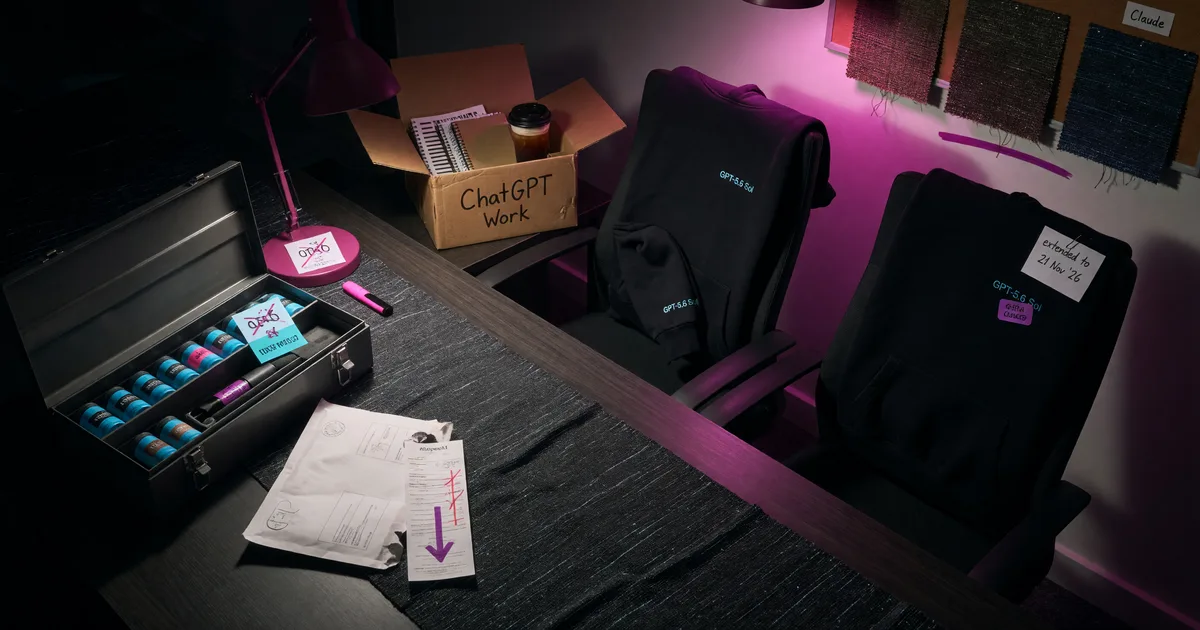
GPT-5.6 Sol Drops to $4/$20 on the API
OpenAI cut GPT-5.6 Sol to $4/$20 per million tokens through at least 21 Nov 2026. What changed, who pays less, and how it sits next to Terra, Luna, and Claude.
Ready to try GPT-5.6 Sol?
Head to the official site to start with GPT-5.6 Sol — pricing and plans are listed above.
Visit GPT-5.6 Sol