Gemini Robotics 2 and Whole-Body Intelligence
Google DeepMind's Gemini Robotics 2 claims whole-body control of a humanoid. What that means, and how NVIDIA, Physical Intelligence and Mistral compare.
Google DeepMind published its work on whole-body intelligence for humanoid robots in late July 2026 under the name Gemini Robotics 2, and the claim attached to it is control of a humanoid from its feet to its fingertips. It landed in a field where NVIDIA already gives a humanoid foundation model away with open weights and Physical Intelligence publishes its robot policy on GitHub.
Start at feet, end at fingertips
Most robot models before this one solved a narrower problem than the videos suggested. The model looked at a scene, picked an object, and planned a path for an arm. The rest of the machine stayed parked. That works on a tabletop and falls apart the moment the thing you want is behind something, below knee height, or heavy enough that a robot has to shift its weight to lift it.
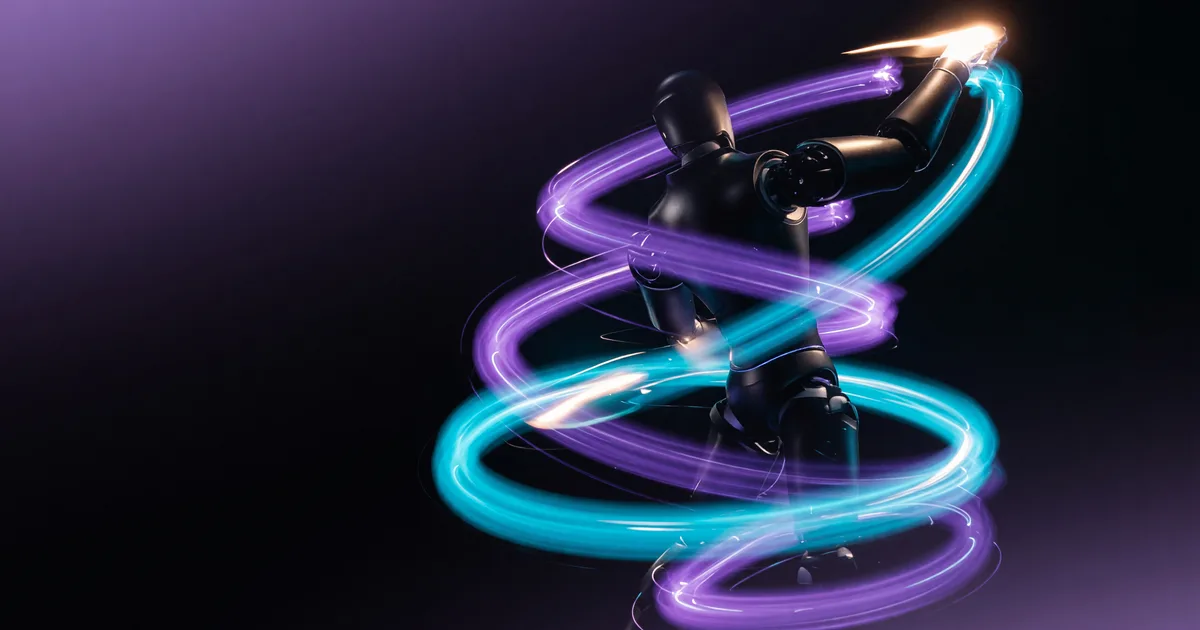
Whole-body control is the version where legs, torso, arms and hands are one control problem instead of four. The robot can crouch, lean, take a step to get in range, and use its own mass as part of the motion.
DeepMind's announcement pairs that with multi-robot collaboration: one machine coordinating its own limbs, and more than one machine coordinating with each other. Both capabilities arrive demonstrated rather than quantified. The access being discussed publicly since the video went up is early access, which is not the same thing as a product you can sign up for.
The launch footage shows the models driving Apollo 2, a humanoid, through household work rather than lab setups. Robotics 24/7 covered the release within a day of the announcement and described it as full-body control, which is a fair description of what the video shows and not a verification of how often it works.
Buy NVIDIA's pipeline, not its robot
NVIDIA sells the layer underneath everyone else. Isaac Lab for simulation, Cosmos for world models that generate synthetic training data, Omniverse for the digital twin of your factory floor, and the GR00T humanoid foundation model, which NVIDIA released with open weights.
The structural advantage is that NVIDIA does not build a humanoid. It has no reason to withhold anything from a customer who does, which is why robot makers keep signing platform agreements with it instead of routing around it. We covered one of those in the Nvidia-Hyundai physical AI deal.
NVIDIA's products assume you already own the hardware. That is a different customer from the one DeepMind is filming.
Download the weights Physical Intelligence published
Physical Intelligence is a robot-model company that does not make robots. Its π0 policy is published on GitHub with open weights, π0.5 followed it, and the stated goal is generalizing to homes the model was never trained in.
Open weights change what kind of question you can ask. You cannot re-run a DeepMind demo. You can clone the repository, point it at a supported arm, and find out where it breaks on your own bench. That is evaluation you run rather than evaluation you watch.
Watch Mistral's cheap end
Mistral's Robostral Navigate goes the opposite direction from a humanoid. Our July write-up of that release put it at 8 billion parameters running from a single camera, with 76.6% on the R2R-CE unseen split, and that write-up is the only basis for those figures here.
It only navigates. There is no manipulation here, no hands, nothing that picks anything up. What it targets is the bill of materials on an indoor mobile robot, where a spinning LiDAR unit can cost more than the chassis it sits on. A model that small is built to ship inside cheap hardware, not to carry a demo reel.
Skip Figure and Tesla
Figure's Helix and Tesla's Optimus both run in-house models on in-house robots, and as of writing neither company publishes a route for an outside developer to run those models on hardware they own. That is a legitimate strategy. Vertical integration is how you get a robot and its policy to co-evolve instead of forcing a general model onto someone else's joint limits.
It also means there is nothing here to evaluate unless you are buying the robot, so treat their demo footage as marketing until an access programme exists.
Demand a number on hardware
Look at what each of these labs has actually put in public alongside its model.
| Model | What is public |
|---|---|
| Gemini Robotics 2 (Google DeepMind) | An announcement and demo footage of Apollo 2; access discussed as early access |
| GR00T (NVIDIA) | Open weights plus the Isaac and Cosmos stack |
| π0 / π0.5 (Physical Intelligence) | Weights and code on GitHub |
| Robostral Navigate (Mistral) | 76.6% on R2R-CE unseen, per our July write-up |
| Helix (Figure), Optimus (Tesla) | Nothing external |
None of the releases covered here came with a success rate measured on a physical robot that an outside group could re-run and either confirm or contradict.
Language models got this right by accident. SWE-bench, MMLU and the rest are flawed in a dozen documented ways, and they still let a reader compare two vendors' claims on the same axis without trusting either vendor. Robotics has sim benchmarks like R2R-CE, which measure a model in a scanned house inside a physics engine, and it has demo reels. The distance between those two things is where the interesting failures live: glass doors, mirrors, dim light, an object that turns out to be heavier than it looked.
My read: the reason no one publishes hardware success rates is not secrecy so much as cost. Running a few hundred physical trials on a humanoid takes weeks, breaks parts, and produces a number that will be worse than the video. The lab that eats that cost first will look weaker than its competitors on the day it publishes, and that is exactly why it hasn't happened.
A demo video is a claim about the best run. A success rate is a claim about the median one. This field has published plenty of the first.
The gap is measurement. Every artefact in that table was produced by the lab that built the model and evaluated by that same lab. The missing one is a count from a standard robot in a standard room, run enough times that the number means something, published by a group with no model in the race.
Keep reading
 Guides
AI Agents Explained: What They Do and Why It Matters
Understand what AI agents are, how they work, and why they're transforming workflows. Learn about autonomous AI agents like Devin, Manus, and Claude Code.
 Guides
Claude Riemann Hypothesis Result: 41.6% to 67.2%
Anthropic says an unreleased Claude raised the proven fraction of Riemann zeta zeros on the critical line from 41.6% to 67.2%. Here is what that means.
 Guides
Google Gemini 2.5: Everything You Need to Know
Complete guide to Google Gemini 2.5. Learn what's new, key features, how it compares to previous versions, pricing, and who it's best for.