WeatherNext Explained: DeepMind Opens Cyclone AI
Google DeepMind open-sourced WeatherNext 2, Cyclones and 2-mini on August 6, 2026. What the three models forecast and who open weights are for.
Google DeepMind published the weights for three of its weather models on August 6, 2026. One of them, WeatherNext Cyclones, forecasts where a tropical storm's center will travel and how strong it will be when it arrives. DeepMind's stated result is roughly a day of extra lead time on cyclone track, evaluated across the 2025 hurricane season including Hurricane Melissa, with a Nature paper published alongside the code.
Three models went out together: WeatherNext 2, the general global forecaster; WeatherNext Cyclones, the storm-specific one; and WeatherNext 2-mini, a smaller variant of the first.
Trace the release back to the 2025 storm season
This release carries two dates, and they run in one direction.
The first is the 2025 hurricane season, which supplied the test cases. DeepMind's evaluation covers that season's storms, Hurricane Melissa among them, so the models were scored against weather that actually occurred rather than a synthetic replay of it. A season is the natural unit here. A cyclone model gets judged on a small number of real events per year, and one well-forecast storm proves very little.
The second is August 6, 2026, when the rest of it landed at once: the Nature paper, the GitHub repository, checkpoints for all three models, and DeepMind's own announcement thread carrying videos and worked forecast examples. Coverage followed within hours, including writeups at opensourceforu.com and resultsense.com.
Publishing the paper and the weights on the same day changes what a reader can do with the claim. A paper on its own gives you a result you can read and argue about. Weights alongside it give you a result you can rerun, on storms of your choosing, without asking the lab for anything.
The three models split the job three ways. WeatherNext 2 is the general-purpose forecaster: it takes the state of the global atmosphere and produces a forecast for the whole planet, every variable, everywhere. Cyclones is the narrow one, trained on the specific problem of a tropical storm's path and strength. WeatherNext 2-mini is the small version of the general model, and a smaller model exists for one reason, which is to run somewhere the full one will not fit.
Separate the track forecast from the intensity forecast
The extra day in DeepMind's headline is a track number. Track and intensity are two different forecasting problems sharing one name, and learned models have been credible on one of them for longer than the other.
Track is the path of the storm's center. It is governed by large-scale steering flow, the broad arrangement of highs, lows and upper-level winds that pushes the entire system around like a cork in a current. That is exactly the kind of structure a model trained on decades of gridded global weather can pick up, because it is large, slow and repeatedly represented in the data.
Intensity is maximum sustained wind speed. It depends on what is happening inside the eyewall at scales a global grid barely resolves, and on how much heat the storm can draw from the ocean beneath it. Rapid intensification, when a storm gains a large amount of wind speed inside a day, is simultaneously the case forecasters most want warning of and the case every class of model handles worst.
There is a structural reason to grade learned intensity forecasts carefully. A model trained to minimise average error across a long history is rewarded for landing near the middle of the distribution, and a Category 5 peak sits at the edge of it. That is a property of the training objective, not a finding about this particular model. It is why an agency evaluating WeatherNext Cyclones will score track and intensity on separate scales instead of folding both into a single lead-time figure.
Start with the Colab notebook, not the checkpoint
For a reader who has never touched a numerical weather model, the way in is the demo notebook DeepMind links from the August 6 release, not the weights themselves.
A Colab notebook runs in a browser tab on Google's hardware. You get a forecast rendered as a map, from the actual model, at no cost, in a session you can close and forget about. Nothing to install, no GPU to rent, no account beyond a Google one. For understanding what these models produce and how a forecast is represented, that is the whole exercise.
What it does not get you is a live forecast, and the obstacle there is data rather than compute. Every model of this kind takes the current state of the atmosphere as its input: temperature, pressure, wind and humidity on a global grid, at one fixed moment. That input is produced by national meteorological agencies and reanalysis archives, on their schedules, at their file sizes, under their terms. Downloading a checkpoint is an afternoon. Feeding it today's atmosphere every six hours is a standing job with an operations budget attached.
One distinction is worth fixing before anyone builds on any of this. A forecast is not a warning. A cyclone warning is a legal instrument issued by a designated national meteorological service, and no output from a GitHub repository is one, however good the model behind it.
Read the three-model release as a distribution decision
The shape of what DeepMind shipped indicates who it was assembled for. Three checkpoints at different sizes, a peer-reviewed account of the training, and an evaluation against a named completed season together make a package built for people who need to reproduce a result rather than consume one.
A developer who wants a forecast inside an app is not that person. That developer wants an endpoint, a key and a JSON response, and would never download a checkpoint to get one. The constituency for open weights is the set of organisations that cannot use somebody else's endpoint at all: a national meteorological service has to run forecasting inside its own perimeter, verify it against its own historical records for its own basin, and defend the output in public when an evacuation call goes wrong. None of that works through a hosted black box.
Most readers meet AI as a chat box. Gemini and Claude answer questions typed by a person. WeatherNext consumes a grid of atmospheric variables and returns another grid, and the people who need it are not prompting it at all, they are wiring it into a pipeline that already exists.
An extra day of cyclone lead time is worth nothing until the office with legal authority to order an evacuation believes it. That belief comes from running the model against your own basin and your own past storms, not from reading a benchmark table someone else produced. Open weights are the mechanism that moves a forecaster in Kingston or Manila from "Google published a chart" to "our office ran this against our last ten storms."
Open the LICENSE file before you plan around these weights
Published weights and open-source code are two separate grants and they routinely carry different terms. Code in a repository can sit under a permissive licence while the checkpoint beside it restricts commercial or operational use, and the restriction lives in a file most people never open. Anyone planning to put WeatherNext output in front of the public, or inside a paid product, should read that file first and treat its terms as the binding constraint rather than the announcement's framing.
The reading above, that this release is aimed at institutions which must run the model themselves, breaks on one specific event. If the next generation of WeatherNext reaches Google's products and Google's customers with no matching checkpoint published, and the August 6 weights are still the newest public ones a year from now, then this was the release of a model Google had already finished extracting value from rather than an attempt to get forecasting agencies operating it. A restrictive licence on the next checkpoint would point the same direction.
The other check belongs to someone other than Google. The 2026 Atlantic season closes on November 30, and an evaluation of these models against it by an agency that did not build them would test the extra-day claim in a venue Google does not control.
What is in public hands right now is three sets of weights, a peer-reviewed description of how they were trained, and a completed hurricane season of real storms to check them against. A forecasting office anywhere can pull all three today without a quota, a contract or a conversation with Google. That is a genuine shift in who gets to evaluate a frontier weather model, and it happened on August 6 whatever the next licence turns out to say.
Keep reading
 Guides
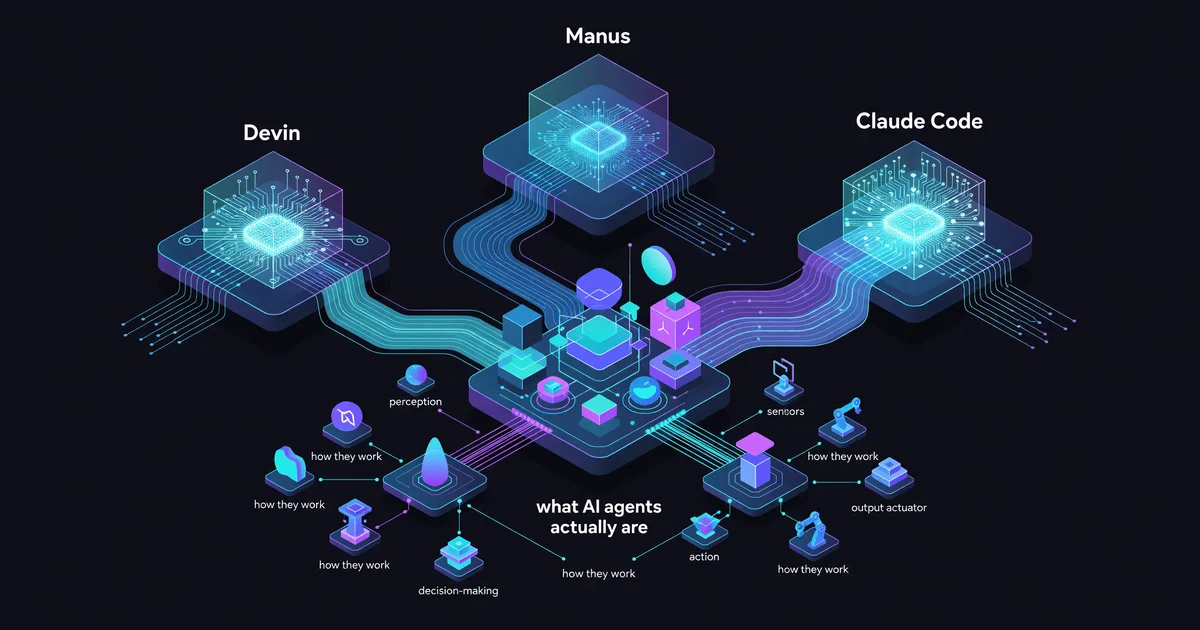
AI Agents Explained: What They Do and Why It Matters
Understand what AI agents are, how they work, and why they're transforming workflows. Learn about autonomous AI agents like Devin, Manus, and Claude Code.
 Guides
Claude Riemann Hypothesis Result: 41.6% to 67.2%
Anthropic says an unreleased Claude raised the proven fraction of Riemann zeta zeros on the critical line from 41.6% to 67.2%. Here is what that means.
 Guides
Gemini Robotics 2 and Whole-Body Intelligence
Google DeepMind's Gemini Robotics 2 claims whole-body control of a humanoid. What that means, and how NVIDIA, Physical Intelligence and Mistral compare.