US Lifts Mythos 5 Block: Anthropic's Cyber Model Returns
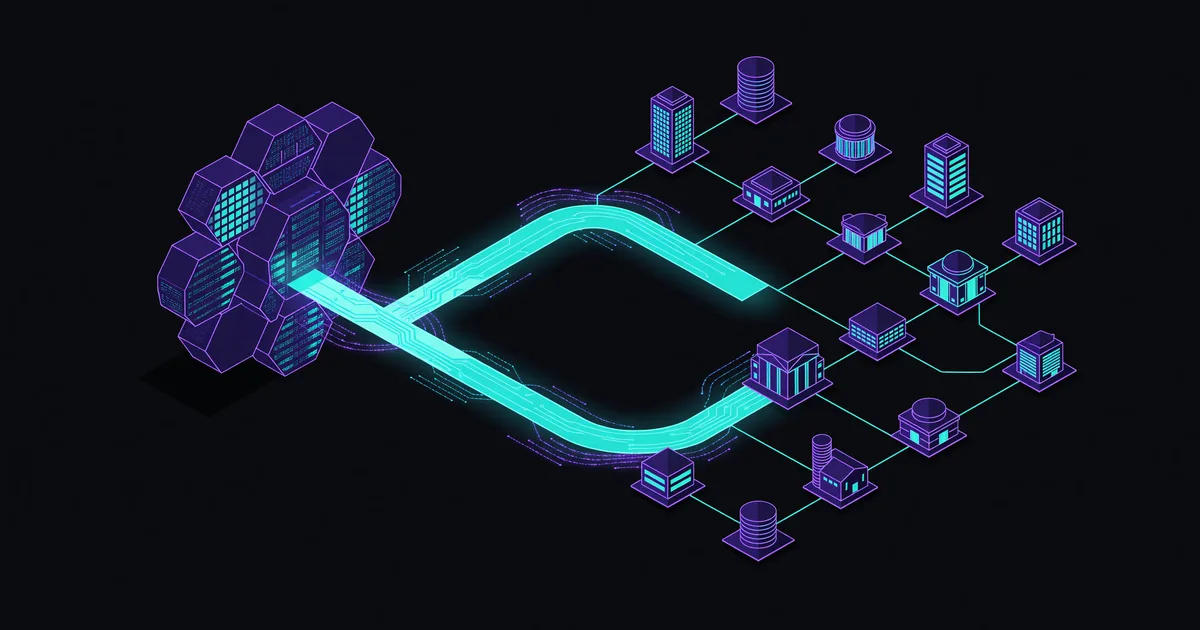
The US government cleared Anthropic's Mythos 5 cyber model for ~100 trusted American companies and agencies after a two-week export block.
For roughly two weeks, the most capable cybersecurity model Anthropic has built was switched off. Now it's back on — but only for a short, vetted list. Per Semafor, CNBC, and TechCrunch, the US government cleared Anthropic's Mythos 5 for use by more than 100 trusted American companies and agencies on June 26, reversing a full disablement that had been imposed under export-control authority earlier in the month.
This is one of the stranger moments in the AI-regulation story so far: a frontier model that was effectively pulled into a closet, then released under conditions — not to the public, not to the open market, but to a government-curated allowlist. It's worth understanding exactly what happened, what it signals, and why it matters well beyond Claude's product roadmap.
What Mythos 5 actually is
Mythos is Anthropic's internal line of cyber-specialized models — the engine behind Project Glasswing, the security research effort that, by Anthropic's own account, surfaced more than 10,000 software vulnerabilities in a single month. The public-facing relative of that work shipped as Fable 5, the consumer Claude model. Mythos is the harder-edged sibling: tuned for vulnerability discovery, exploit reasoning, and large-scale code auditing.
That dual-use quality is the whole story here. A model good enough to find 10,000 vulnerabilities for defenders is, by construction, a model good enough to find 10,000 vulnerabilities for attackers. The same capability that lets a Fortune 500 security team pre-empt a breach lets a hostile state actor industrialize one. There is no version of "find the bugs" that only points in the friendly direction.
The thing that makes Mythos 5 valuable to defenders is exactly the thing that makes governments nervous about who else can touch it.
The timeline: disabled, then conditionally released
The reporting points to a compressed sequence. Earlier in June, the model was subjected to a full disablement under export-control authority — not just restricted from foreign buyers, but switched off broadly while the government and Anthropic worked out terms. Then, on June 26, the Trump administration cleared it for a defined set of more than 100 US-based organizations: a mix of private companies and federal agencies that the government considers trusted handlers of an offensive-capable security tool.
What we know is reasonably firm. What we don't know is still substantial, and I'd rather flag the gaps than paper over them:
- The exact allowlist is not public. "More than 100 companies and agencies" is the figure in circulation; the named members are not.
- The vetting criteria aren't published. We don't know whether access maps to security clearances, CFIUS-style ownership screening, sector (defense, critical infrastructure, finance), or some combination.
- The legal mechanism is fuzzy in public reporting. "Export-control authority" is the framing, but a software model running on US servers is not a shipped hard drive, and how that authority attaches to an API is the interesting open question.
So treat the specifics as provisional. The shape of the event — disable, then conditionally re-enable to a trusted set — is well-sourced across four outlets including Reuters. The fine print is not yet.
Why a model gets treated like a weapons system
The instinct to compare this to munitions export controls isn't an accident. The US has decades of machinery — ITAR, EAR, the Entity List, the chip rules that have governed Nvidia sales to China since 2022 — for deciding who gets access to capabilities with national-security weight. What's new is applying that machinery to a model rather than a chip.
Hardware controls are tractable because hardware is physical and countable. You can inspect a shipment of GPUs. A model is weights and an endpoint; it copies perfectly and travels at the speed of a download. That's precisely why the government's tool here wasn't an export license in the classic sense but a kill switch plus an allowlist. When you can't reliably stop the artifact from moving, you control the on/off and the front door instead.
My read: the Mythos 5 episode is the first time we've seen the US treat a specific commercial AI model's inference access as a controlled good in real time — flipping it off, negotiating, and flipping it back on for named parties. Whatever you think of the policy, that's a precedent, and precedents in this space tend to harden into procedure fast.
What it means for enterprise access
If you run security at a US company and you're wondering whether you'll get Mythos 5, the honest answer is: probably not, unless you're already in a category the government cares about. The allowlist framing strongly implies critical-infrastructure operators, defense contractors, large financial institutions, and federal agencies sit near the front. A mid-market SaaS firm doing standard appsec is not the target user of this release.
For everyone else, the practical security capability still flows through the public Claude products and the broader Anthropic API — just without the sharpest offensive-research edge. That's a feature, not a bug, from the government's standpoint. The tiering is the point: blunt the most dangerous capability for the general market, concentrate the sharp version where it can be monitored.
| Tier | Who | What they get |
|---|---|---|
| Public | Anyone | Standard Claude / Fable 5 capabilities via API and apps |
| Allowlist | ~100 vetted US orgs + agencies | Mythos 5 cyber-specialized access |
| Blocked | Foreign entities, untrusted parties | No Mythos 5 access |
This mirrors a pattern the site has covered before — gov and big labs getting frontier capabilities first, with the rest of the market on a delay. The Mythos 5 release is that dynamic made formal and explicit rather than incidental.
The open-weights problem nobody solved
Here's the part that complicates the entire control regime: it only works on closed models. Mythos 5 is gated because Anthropic controls the weights and the endpoint, and the government can lean on that single chokepoint. None of that leverage exists for an open-weights model.
That's why the comparison to Chinese open models matters. Releases like GLM-5.2 from Z.ai — which has topped some coding benchmarks — ship as downloadable weights. A capable open security-research model, once published, cannot be recalled, allowlisted, or switched off. There's no chokepoint to grab.
So US export controls on a model like Mythos 5 raise an uncomfortable question: if the marginal frontier cyber capability is also available, or soon will be, in an open Chinese release that anyone can fine-tune, what exactly does gating the American closed model accomplish? It protects against the proliferation Anthropic controls. It does nothing about the proliferation it doesn't. The control regime is only as strong as the most capable open model nobody can switch off.
I don't think that makes the Mythos 5 restrictions pointless — slowing the diffusion of the single most capable, best-supported cyber model is worth something, and an enterprise-grade allowlisted tool with monitoring is genuinely different from a raw open checkpoint. But it does mean the strategy has a known expiry date tied to the open-model frontier, and pretending otherwise would be dishonest.
Competitive positioning: Anthropic's awkward win
For Anthropic, this is a complicated kind of validation. On one hand, your model was deemed dangerous enough that the US government switched it off — that's a backhanded statement about capability that no marketing budget could buy. On the other, you spent two weeks with a flagship capability frozen, and you now operate a product whose availability the government can revoke.
Compared to rivals, the strategic read is interesting. OpenAI and Google haven't (publicly) had a model treated this way, which could reflect either positioning or capability differences in the cyber domain specifically. Grok and the broader xAI/SpaceX orbit are a different conversation again. But the lesson every closed lab is absorbing right now is that frontier cyber capability comes with a regulatory string attached — and that string is now demonstrably pullable.
What to watch next
A few things will tell us whether this is a one-off or a template:
- Does the allowlist get codified? If a formal process emerges for vetting AI cyber-tool access, that's the precedent hardening into procedure.
- Do other labs' models get the same treatment? If a comparable OpenAI or Google security model triggers the same disable-then-allowlist cycle, this becomes the standard playbook.
- How does the open-model gap get addressed? Export controls on closed models and an unrestricted open frontier can't coexist indefinitely as policy. Something gives.
- What were the actual terms? Monitoring requirements, usage logging, audit rights — the conditions attached to allowlist access will reveal how much control the government really negotiated.
The honest take: Mythos 5 coming back online for 100-plus trusted orgs is being read as de-escalation, and in the narrow sense it is — the capability is no longer fully dark. But the more durable story is the machinery this established. The US just demonstrated it can switch a commercial frontier model off, hold it, and switch it back on for a list of its choosing. That's a new lever in the AI-policy toolkit, and the next time it gets pulled, we'll all recognize the move.
Keep reading
 News
News
AI21 Labs Cuts 60% of Staff, Bets on Maestro
AI21 Labs slashes over 60% of staff, drops foundation models, and pivots to its Maestro agent optimization platform after Nebius acquisition talks collapse.
 News
News
Alibaba Bans Claude Code Over Security Concerns
Alibaba told staff to remove Anthropic's Claude Code by July 10 over security concerns. Here's what triggered the ban and what it signals.
 News
News
Anthropic Acquires Stainless: What It Means for AI
Anthropic bought Stainless, the SDK generator behind OpenAI and Cloudflare's client libraries. Here's the strategic play for AI agents.