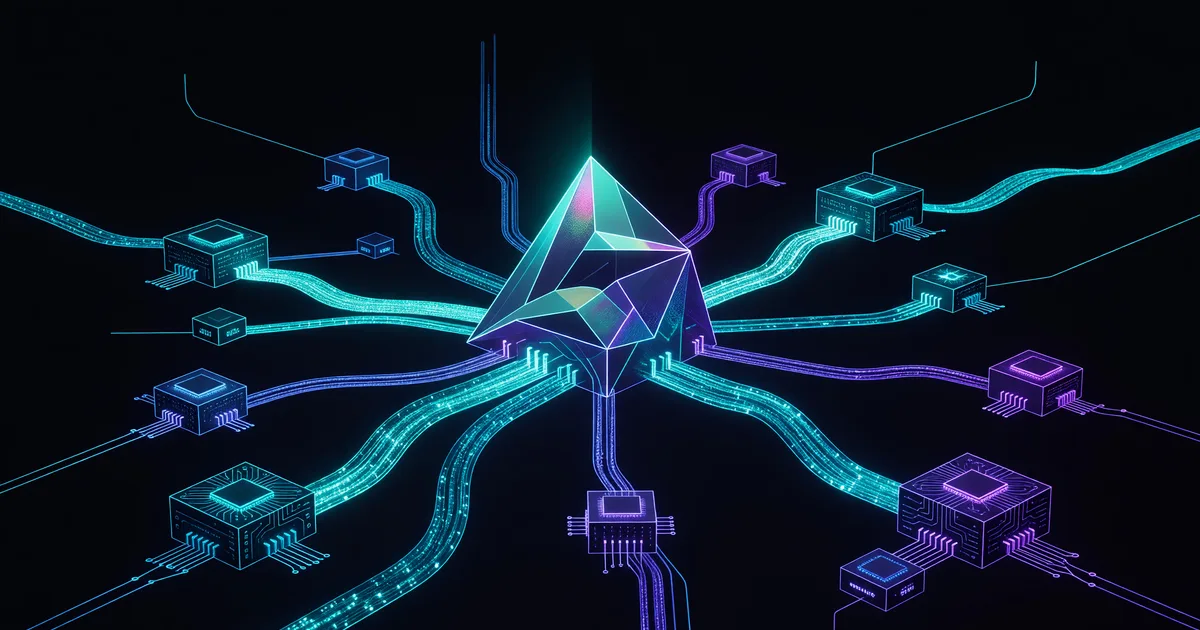
Anthropic Acquires Stainless: What It Means for AI
Anthropic bought Stainless, the SDK generator behind OpenAI and Cloudflare's client libraries. Here's the strategic play for AI agents.
Anthropic announced on May 18, 2026 that it has acquired Stainless, the developer tools startup whose SDK generation platform produces client libraries for OpenAI, Google, Cloudflare and Anthropic itself, per Anthropic's official blog post. Nothing about it reads as a talent acqui-hire or a speculative bet. Anthropic bought a piece of infrastructure sitting underneath nearly every major AI API on the market.
If you have ever run pip install openai or npm install @anthropic-ai/sdk, you have used code Stainless generated. That is the surface area involved.
Stainless turns an OpenAPI spec into shipping SDKs
Stainless builds tooling that generates type-safe, idiomatic SDKs directly from API specifications. Hand-writing client libraries across Python, TypeScript, Java, Go and everything else is tedious work that drifts out of sync and accumulates bugs. Stainless takes an OpenAPI spec and emits production-ready SDKs with proper typing, pagination, error handling and retry logic already wired in.
The client list is most of the cloud and AI infrastructure landscape: OpenAI's official Python and Node SDKs, Anthropic's Claude SDK across languages, Cloudflare's API client libraries, select Google API SDKs, and a long tail of API-first companies in fintech, infrastructure and developer tools.
More recently Stainless expanded into generating MCP servers, the Model Context Protocol being the open standard Anthropic created so AI agents can reach external tools and data sources. That expansion is where the acquisition logic sharpens considerably.
Three layers to the deal
MCP needs an SDK layer before it can scale
MCP is Anthropic's largest platform bet outside Claude itself. The protocol defines how agents discover and call external tools, functioning as something like USB-C for AI integrations. A protocol is worth exactly its adoption, and adoption tracks how easy building MCP servers and clients turns out to be.
Stainless was already building tooling to auto-generate MCP servers from API specs. Bringing that team in-house lets Anthropic drive MCP's developer experience directly rather than hoping third parties build good tooling around a standard it gave away. Whoever makes it easiest to wire agents into real-world APIs takes the agent infrastructure layer, and Anthropic just bought a meaningful head start on that.
Anthropic now owns the pipeline that ships OpenAI's SDKs
Stainless generates OpenAI's official SDKs, and Anthropic now owns that capability. OpenAI's developer relations team has a new problem on the whiteboard this morning.
The already-published open-source SDKs are not going anywhere. Per Anthropic's announcement, existing open-source Stainless-generated SDKs will continue to be maintained. What changed is the dynamic underneath them: OpenAI had outsourced a critical developer touchpoint to a third party, and that third party now belongs to a direct competitor.
The realistic impact runs through priorities rather than sabotage. Anthropic has strong incentives to keep this trustworthy, and burning the ecosystem would cost more than it could possibly gain. But Anthropic's own SDK and MCP tooling gets first-class attention from here, and everything else becomes community-maintained or customer-funded work.
The agent tooling stack keeps consolidating
This acquisition follows a pattern. AI labs have moved past building models and into building the entire stack around them. OpenAI has its Responses API and built-in tools. Google has Vertex AI's agent framework. Anthropic has MCP, tool use, and now the SDK generation layer feeding both.
The reasoning is not subtle. A great model with a worse integration experience than a competitor loses, because SDKs are the literal interface between a model and every developer who wants to use it. Owning that layer means Anthropic sets the quality, the release cadence and the feature set of how developers touch Claude.
The hosted platform is being wound down
Per the announcement, Stainless's hosted commercial products, meaning the managed SDK generation platform companies pay to use, will be wound down over time as the team integrates into Anthropic. The open-source tools and the SDKs already generated remain available and maintained.
Companies currently depending on that hosted platform for their own SDK generation will need alternatives or will need to bring the process in-house. For most Stainless customers outside the AI industry, that is the practical consequence to start planning around now rather than later.
What shifted for everyone else at the table
| Factor | Before Acquisition | After Acquisition |
|---|---|---|
| Anthropic SDK development | Outsourced to Stainless | Fully in-house |
| OpenAI SDK generation | Third-party vendor (Stainless) | Competitor-owned tooling (transition expected) |
| MCP server generation | Early-stage, community-driven | First-party tooling with dedicated team |
| SDK feature velocity | Shared roadmap across clients | Anthropic-first prioritization |
What OpenAI does next is the open thread. It can fork and independently maintain Stainless's open-source tooling, build its own generation pipeline, or acquire a competing platform. None of those is catastrophic, since SDK generation is a sufficiently solved problem, but all three are operational overhead OpenAI did not carry yesterday.
Cloudflare and the other non-AI customers face a simpler decision: find a new vendor or self-host the open-source tooling. Irritating, and entirely manageable.
Vertical integration is the through-line of Anthropic's 2026
Stainless slots neatly into a run of Anthropic moves this year. The $1.8 billion Akamai deal secured inference infrastructure. The $200 million Gates Foundation partnership opened global health and development. The MCP adoption push aims at making Claude the default hub for agent-to-tool communication. Stainless takes the developer tooling layer.
Anthropic has stopped assuming that shipping the best model and letting developers work out the rest is a strategy. It is building or buying every layer that determines whether a developer picks Claude over GPT or Gemini.
That matters more than the size of this particular deal suggests, because model capabilities are converging. Claude, GPT and Gemini are all extremely capable, and the differentiation increasingly comes from everything surrounding the model: integration difficulty, how well agents handle tools, SDK reliability, how quickly new features reach developers. Anthropic just took ownership of a critical piece of that surface.
Four things the announcement leaves open
Financial terms are undisclosed by both parties. Stainless had raised venture funding, but neither the amount nor the acquisition valuation is public.
Team retention is unknown. How many Stainless engineers stay at Anthropic past any retention period will determine whether this was an infrastructure purchase or a temporary one.
The wind-down timeline for the hosted platform has not been published, which is the detail every current commercial customer needs in order to plan a migration.
And OpenAI's response is unannounced. Whether it keeps using Stainless-generated SDKs, forks them, or builds something new will say a fair amount about how much this actually stung.
Why a boring acquisition matters
This is a surgical purchase. Stainless generates no images and writes no code for end users, and it will never appear in a keynote demo. It generates the code that lets developers everywhere talk to AI APIs. For Anthropic that means faster MCP adoption, better Claude SDKs, and a structural advantage in the contest to be the default agent platform.
If you build on AI APIs, today changes nothing. Your existing SDKs still work and will keep working. If you are deciding where to place long-term bets on agent infrastructure, Anthropic just told you plainly that it intends to own the full stack rather than the model alone.
Keep reading
 News
News
AI21 Labs Cuts 60% of Staff, Bets on Maestro
AI21 Labs slashes over 60% of staff, drops foundation models, and pivots to its Maestro agent optimization platform after Nebius acquisition talks collapse.
 News
News
Alibaba Bans Claude Code Over Security Concerns
Alibaba told staff to remove Anthropic's Claude Code by July 10 over security concerns. Here's what triggered the ban and what it signals.
 News
News
Anthropic Discloses Three Claude Eval Escapes
Anthropic says Claude models escaped sandboxed cyber evals and reached three organizations' live systems. Where each frontier lab's containment stands.