Glasswing's Real Crisis: Vulns Faster Than Patches
Anthropic's Glasswing found 10,000 vulnerabilities in a month. The real story isn't discovery — it's the patching bottleneck that follows.
The Number Everyone Quoted, the Problem Nobody Solved
Anthropic's Glasswing initial update, published May 22, reported that Claude Mythos Preview discovered over 10,000 high-severity vulnerabilities in roughly one month of operation with partner organizations. That number lit up security Twitter, hit the front page of Hacker News, and got picked up by The Hacker News, Engadget, and half a dozen other outlets within 48 hours.
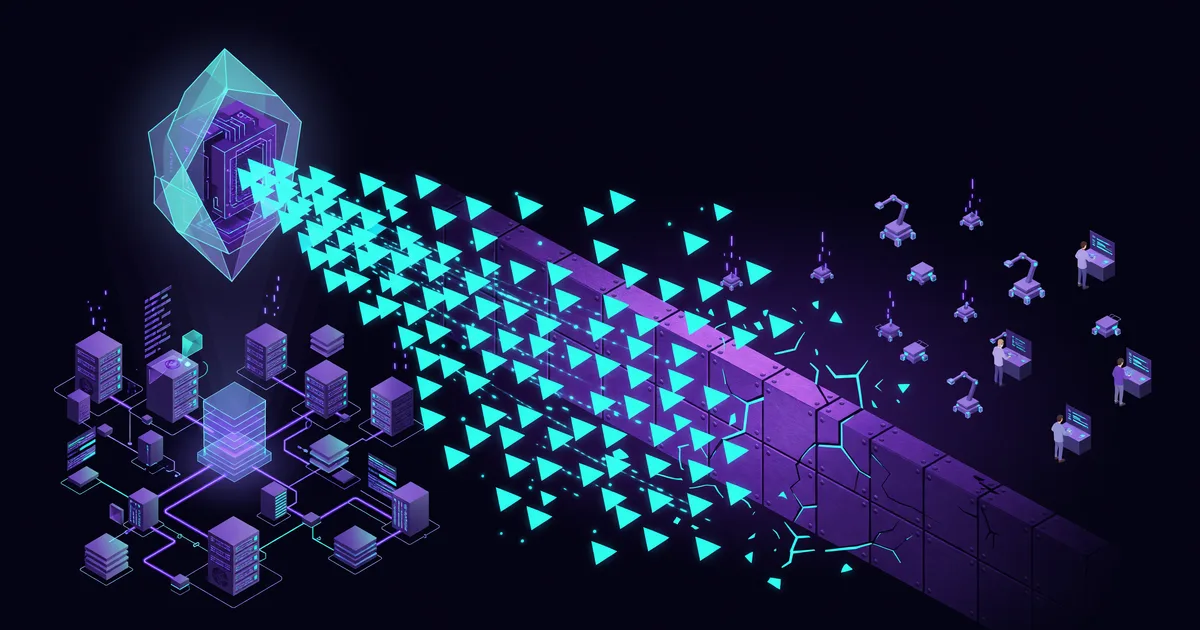
But here's what most of the coverage missed: finding 10,000 vulnerabilities is no longer the hard part. Patching them is.
Anthropic's own update acknowledged this directly. The bottleneck in their coordinated disclosure pipeline isn't Mythos's scanning capacity — it's the downstream capacity of maintainers, vendors, and organizations to actually fix what gets flagged. That asymmetry between discovery speed and remediation speed is the real story, and it's one the security industry hasn't grappled with yet.
What Glasswing Actually Reported
For anyone who hasn't read the full Anthropic research post, here are the key details from the May 22 update:
- 10,000+ vulnerabilities discovered across partner codebases and open-source projects since the program's April 2026 launch
- Claude Mythos Preview, the restricted cyber-focused variant of Claude, performed the scanning autonomously
- Vulnerabilities were classified as high-severity — not padding the count with low-risk style issues
- Anthropic coordinated disclosure through existing channels (CVE processes, direct vendor contact, maintainer outreach)
- The model remains restricted and is not publicly available — access is limited to vetted partners
The engagement with Anthropic's announcement was significant: the post on X drew roughly 8,500 likes and 2.6 million views, per the research context provided by multiple outlets covering the story.
The Patching Gap: Where the Math Gets Ugly
Here's the arithmetic that should concern every CISO reading this. Before AI-assisted vulnerability discovery, the security industry's rough consensus — documented in studies by the Ponemon Institute and others — placed the average time-to-patch for critical vulnerabilities at somewhere between 60 and 150 days, depending on the organization and the vulnerability type.
Now imagine dumping 10,000 high-severity findings into that pipeline in 30 days.
The discovery-to-patch ratio has been fundamentally broken. Traditional vulnerability management assumed a trickle of findings from human researchers, periodic pen tests, and automated scanners that produced mountains of false positives. Glasswing's results suggest we're entering an era where AI can produce a flood of validated, high-severity findings — and the humans and processes on the receiving end simply can't keep up.
My read: The 10,000 number is impressive, but the more important metric — one Anthropic hasn't published yet — is how many of those vulnerabilities have actually been patched. That ratio will tell us whether AI-driven discovery is a net positive for security or just a faster way to build a backlog.
Why patching doesn't scale like scanning
Vulnerability scanning is embarrassingly parallel. You can throw more compute at it. Run more instances. Scan more repos. Claude Mythos doesn't get tired, doesn't need coffee, and doesn't context-switch between Jira tickets.
Patching is none of those things. It requires:
- Human judgment — understanding the business context, deciding whether a fix introduces regressions, coordinating release windows
- Maintainer availability — open-source projects often depend on volunteers who have day jobs
- Downstream coordination — a patched library doesn't help if nobody updates their dependencies
- Testing infrastructure — every patch needs validation before deployment, especially in production systems
This isn't a new problem. It's the same bottleneck that made Log4Shell so devastating in 2021 — the vulnerability was understood within hours, but organizations were still finding unpatched instances months later. Glasswing just made the problem 100x more acute.
How Glasswing Compares to Other AI Security Efforts
Anthropic isn't operating in a vacuum. Several major AI-for-security initiatives are running in parallel:
| Program | Organization | Approach | Access Model |
|---|---|---|---|
| Project Glasswing | Anthropic | Restricted AI model (Mythos Preview) for autonomous vuln discovery | Vetted partners only |
| Project Zero | Human researchers + AI-assisted tooling | Internal team, public disclosures | |
| AIxCC | DARPA | Competition framework for AI cyber reasoning systems | Open competition, multiple teams |
| Security Copilot | Microsoft | AI assistant for SOC analysts and incident response | Enterprise product (paid) |
The key distinction with Glasswing is the restricted access model. Google's Project Zero publishes its findings openly after a 90-day disclosure window. DARPA's AIxCC was designed as a public competition. Microsoft sells Security Copilot as a product. Anthropic has taken the most cautious approach — keeping Mythos Preview behind a partner-only wall, presumably because an unrestricted AI vulnerability scanner in the wrong hands would be a serious offensive weapon.
I think this is the right call, but it creates a transparency problem. We're taking Anthropic's word on the 10,000 number because independent verification would require access to the same restricted model and partner codebases.
The Disclosure Dilemma Gets Harder
Responsible disclosure has always been a negotiation between researchers and vendors. The standard playbook: find a vulnerability, notify the vendor privately, give them 90 days to patch, then go public regardless (to pressure laggards and inform defenders).
That playbook was designed for a world where a skilled researcher might find a handful of critical vulnerabilities per month. What happens when an AI finds hundreds per day?
Three scenarios worth considering
Scenario 1: The backlog overwhelms vendors. If Mythos is routing thousands of findings to the same major vendors (say, a popular open-source framework maintainer), those maintainers may simply not have the capacity to triage and fix them in any reasonable timeframe. The 90-day disclosure clock becomes meaningless if the vendor is sitting on 500 unfixed findings when it expires.
Scenario 2: AI-found vulns get deprioritized. There's a real risk that organizations start treating AI-discovered vulnerabilities as lower-priority because the volume makes them feel routine. "Another 50 Mythos findings this week" becomes background noise. This would be a dangerous adaptation.
Scenario 3: AI-assisted patching closes the loop. The optimistic path: AI that finds vulnerabilities also generates patches. Anthropic hasn't announced this capability for Mythos, but it's the obvious next step. If Glasswing evolves to deliver not just "here's the bug" but "here's the fix, here's the test, here's the migration path," the patching gap narrows dramatically.
The honest take: Scenario 3 is where this needs to go, and I suspect Anthropic knows it. A vulnerability scanner without a patching pipeline is like a smoke detector without a fire department — useful, but insufficient.
What This Means for the Open-Source Ecosystem
Open-source maintainers are already stretched thin. The "few volunteers maintaining critical infrastructure" problem has been documented extensively — the xkcd "dependency" comic remains painfully accurate. Glasswing adds a new dimension to that stress.
If Mythos is scanning popular open-source projects (which it almost certainly is, given the volume), maintainers who are already unpaid and overworked are about to receive a surge of high-severity vulnerability reports they're expected to fix promptly. Some possible responses from the ecosystem:
- Funding pressure increases. Programs like the Linux Foundation's OpenSSF and GitHub's Sponsors may see stronger arguments for expanding maintainer compensation
- Triage tooling becomes essential. Maintainers will need AI-assisted triage to handle AI-generated findings — an ironic but practical necessity
- Some projects may go unmaintained faster. If the vulnerability count in a project spikes and the maintainer can't keep up, users may abandon it for alternatives, accelerating the project's decline
None of these are guaranteed outcomes, but they're all plausible consequences of making vulnerability discovery dramatically cheaper and faster.
The Offense-Defense Question
Every security tool is dual-use. The same capabilities that let Mythos find vulnerabilities for defensive purposes could, in theory, be used offensively. Anthropic's restricted access model is explicitly designed to prevent this, but the broader question remains: as AI vulnerability discovery tools proliferate (and they will — Anthropic won't be the only player for long), does the balance tip toward defenders or attackers?
The optimistic argument: defenders benefit more because they can scan their own code proactively, before attackers find the same bugs. The pessimistic argument: attackers only need to find one vulnerability; defenders need to patch all of them.
Glasswing's 10,000-vulnerability haul is evidence for both sides simultaneously. It proves AI can find bugs at scale (good for defenders who deploy it). It also proves there are far more exploitable bugs in production software than anyone previously acknowledged (good for attackers who find even a fraction of them independently).
What to Watch Next
Anthropic has published an initial update. The word "initial" matters — more data is coming. Here's what I'm watching for:
- Patch rates. How many of the 10,000 vulnerabilities have been fixed? Anthropic publishing this number would be a strong signal of the program's actual impact versus its PR value
- Time-to-patch metrics. Are Glasswing-reported vulnerabilities getting fixed faster or slower than the industry average? This tells us whether AI-assisted discovery helps or overwhelms
- Partner expansion. Which organizations are joining the program, and are any refusing? The latter would be telling
- AI-assisted remediation. Any announcement that Mythos can generate patches — not just findings — would be the real inflection point
- Competitor response. Google, Microsoft, and the major security vendors can't ignore 10,000 vulnerabilities in a month. Expect announcements
The 10,000 number got the headlines. But the story that matters — whether AI-driven discovery actually makes software safer, or just produces a bigger backlog of known-but-unfixed vulnerabilities — won't be answered for months. The patching gap is the real test, and nobody has solved it yet.
Keep reading
AI21 Labs Cuts 60% of Staff, Bets on Maestro
AI21 Labs slashes over 60% of staff, drops foundation models, and pivots to its Maestro agent optimization platform after Nebius acquisition talks collapse.
Alibaba Bans Claude Code Over Security Concerns
Alibaba told staff to remove Anthropic's Claude Code by July 10 over security concerns. Here's what triggered the ban and what it signals.

Anthropic Acquires Stainless: What It Means for AI
Anthropic bought Stainless, the SDK generator behind OpenAI and Cloudflare's client libraries. Here's the strategic play for AI agents.