
Consensus
AI search engine that synthesizes answers from 250M+ peer-reviewed papers with evidence-based consensus meters.
Updated 2026-05-01
Yes, within limits. Consensus runs a free tier with paid plans above it.
Listed pricing: Free tier + Premium from $8.99/mo.
Overview
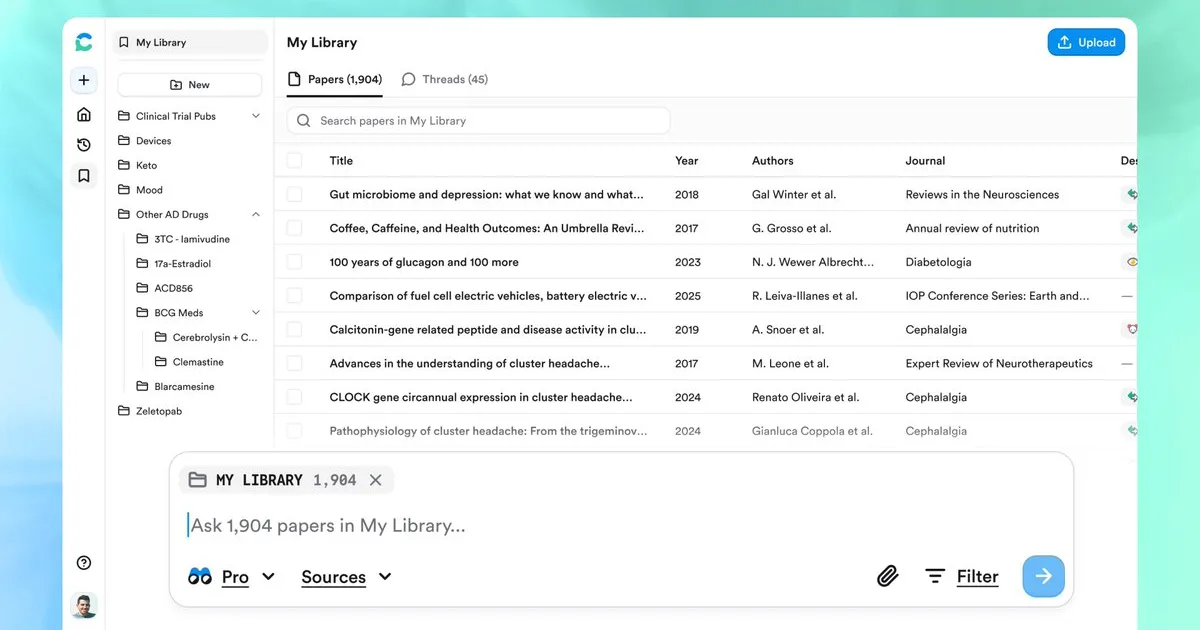
Consensus is an AI-powered academic search engine that answers research questions by synthesizing findings from over 250 million peer-reviewed scientific papers. Instead of returning a list of links, it reads papers, extracts relevant findings, and presents a direct answer backed by citations — think Perplexity, but exclusively for scientific literature.
The standout feature is the Consensus Meter, which shows at a glance how strongly the body of research supports or contradicts a given claim. Ask "Does creatine improve cognitive performance?" and you'll see a percentage breakdown of studies that say yes, no, or are mixed — something no other tool does this cleanly. It also generates structured study snapshots showing methodology, sample size, and key outcomes for each cited paper.
Consensus is built for researchers, students, healthcare professionals, and evidence-based practitioners who need fast, reliable literature review without wading through hundreds of abstracts. It's not trying to replace deep systematic reviews, but for quickly establishing what the evidence says on a topic, it's the fastest path from question to answer in academic AI.
Is Consensus free?
Yes, within limits. Consensus runs a free tier with paid plans above it.
What the free tier covers: 20 AI-powered searches per month with basic features.
Listed pricing: Free tier + Premium from $8.99/mo.
Pricing on this page has not been re-verified. The entry was last edited on , and no separate pricing check has been run since. Treat the figures as a record of what was published then and confirm on the official site.
What the free tier leaves out
Read straight off the plan list below. Vendors move features between tiers, so check the current split before you pay.
- Premium $8.99/mo Unlimited AI credits, unlimited Consensus Meters, GPT-4 summaries, study snapshots, bookmarks
- Team $12.99/mo Everything in Premium plus shared workspace, team analytics, priority support
Consensus pricing
| Plan | Price | What's included |
|---|---|---|
| Free | Free | 20 AI credits/mo, basic search, limited Consensus Meters |
| Premium | $8.99/mo | Unlimited AI credits, unlimited Consensus Meters, GPT-4 summaries, study snapshots, bookmarks |
| Team | $12.99/mo | Everything in Premium plus shared workspace, team analytics, priority support |
20 AI credits/mo, basic search, limited Consensus Meters
Unlimited AI credits, unlimited Consensus Meters, GPT-4 summaries, study snapshots, bookmarks
Everything in Premium plus shared workspace, team analytics, priority support
Pricing on this page has not been re-verified. The entry was last edited on , and no separate pricing check has been run since. Treat the figures as a record of what was published then and confirm on the official site.
Is Consensus worth it?
Worth it for Researchers, students, and healthcare professionals who need a fast, citation-backed answer on what the evidence says.
You can test that on the free tier before paying anything. The recorded trade-offs are listed below, and any one of them can settle the question on its own.
The 8.7/10 AI Score is an editorial read of published capability, price and shipping pace. Nobody here has hands-on hours with Consensus. How we verify.
Worth it if
The strengths recorded against this entry.
- Consensus Meter gives instant visual evidence breakdown — unique among academic search tools
- 250M+ paper database with strong coverage across sciences and social sciences
- Answers are always grounded in peer-reviewed literature with full citations
- Study snapshots extract methodology and sample size so you can assess quality fast
Not worth it if
Any one of these blocks your use case.
- Free tier is restrictive at 20 AI searches — you'll hit the limit quickly during a literature review
- Coverage is weaker outside STEM and social sciences — humanities and legal research fall short
- Cannot upload or analyze your own documents like NotebookLM or Elicit
- Consensus Meter can oversimplify nuanced topics where study quality varies widely
What sets Consensus apart
- Consensus Meter shows a visual percentage breakdown of supporting studies
- Synthesizes answers from 250M+ peer-reviewed papers
- Study snapshots surface methodology and sample size per citation
Key features
250M+ Papers
Searches across more than 250 million peer-reviewed academic papers sourced from Semantic Scholar's corpus, covering medicine, biology, social sciences, computer science, and more.
Consensus Meter
Visual indicator showing the percentage of studies that support, oppose, or are mixed on a given claim. Gives you an instant evidence snapshot without reading every abstract.
Evidence Synthesis
AI reads and synthesizes findings from multiple relevant papers into a direct, cited answer. Includes study snapshots with methodology, sample sizes, and key outcomes.
How it compares
| Tool | Best for | Pricing | Score |
|---|---|---|---|
| Consensus | Researchers, students, and healthcare professionals who need a fast, citation-backed answer on what the evidence says. | Free tier + Premium from $8.99/mo | 8.7/10 |
| Perplexity AI vs Perplexity AI → | Knowledge workers and researchers who want cited, synthesized answers instead of a list of links to click through. | Freemium | 9.4/10 |
| NotebookLM vs NotebookLM → | Students, researchers, and professionals who need answers grounded strictly in the specific documents they upload. | Free | 9.1/10 |
| Inkling-Small vs Inkling-Small → | — | Free — open weights download; Tinker Playground access | 8.8/10 |


Learn to use Consensus
Step-by-step, each one stamped with the date it was last checked against the docs.
Compare head-to-head
Related reading

Grok Build CLI: xAI's Agentic Terminal Coding Tool
xAI launched Grok Build CLI in early beta on May 14 — an agentic terminal coding tool with subagents and plan review, exclusive to SuperGrok Heavy.

Anthropic Traced More Than 23 Million Exchanges
Anthropic attributed more than 23 million exchanges to Moonshot between May and July in its September 2026 threat intelligence report.

ChatGPT for Financial Services: What Shipped, Pricing & Who It's For
OpenAI launched a tailored ChatGPT Work experience for investment bankers and equity researchers with GPT-6 Astra, built-in PitchBook/Daloopa/LSEG data, citations, and sales-quoted pricing.
Ready to try Consensus?
Head to the official site to start with Consensus — pricing and plans are listed above.
Visit Consensus