GPT-5.6 Sol: What Shipped, Pricing & Who It's For
OpenAI's June 26 GPT-5.6 launch splits into three tiers — Sol, Terra, Luna. Here's what shipped, the pricing logic, and who each is for.
OpenAI shipped GPT-5.6 on June 26, 2026, and the headline isn't a single model — it's a family. The flagship is called Sol, with two lighter siblings, Terra and Luna, slotting in beneath it. Rather than a flip-the-switch launch for everyone, the rollout started as a preview behind limited partner access, paired with an unusually loud safety message and a government-coordination angle that's worth reading between the lines on.
If you want the head-to-head scorecard against GPT-5.5, we covered that separately in GPT-5.6 Sol vs GPT-5.5: What the Benchmarks Say. This piece is the other half of the story: what actually shipped, how the pricing tiers are structured, and who each one is built for.
What shipped: the three-tier split
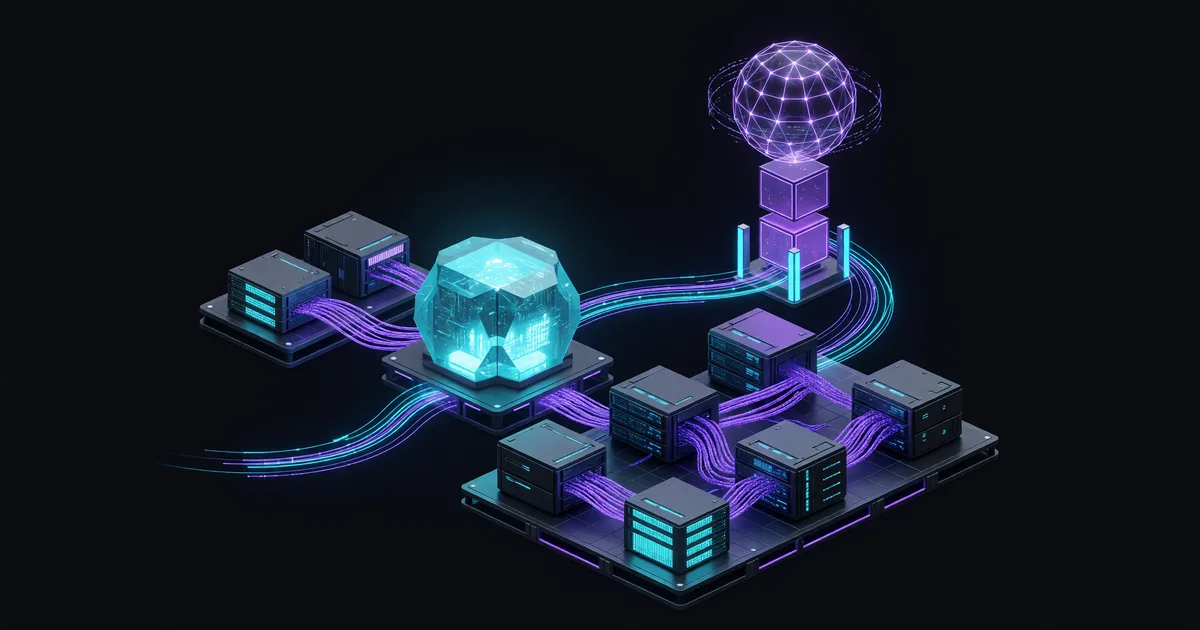
The most important thing to understand about this release is that OpenAI stopped pretending one model fits every job. GPT-5.6 is a tiered family, and the names map to roles, not just parameter counts.
- Sol — the flagship reasoning model. This is the one OpenAI positions for the hardest work: long-horizon agentic coding, multi-step tool use, and security/cyber tasks where depth matters more than cost. It's the headline capability jump over the GPT-5.5 line.
- Terra — the cost-optimized middle tier. Per OpenAI's announcement, Terra lands at roughly 2x cheaper than the flagship for comparable everyday work, which makes it the obvious default for high-volume production traffic that doesn't need Sol's full depth.
- Luna — the lightweight tier, aimed at latency-sensitive and high-throughput jobs where you want a fast, cheap GPT-5.6-generation model rather than a deep reasoner.
My read: this is OpenAI formalizing a pattern the whole industry has converged on — Google with Pro/Flash, Anthropic with its Opus/Sonnet/Haiku split. A flagship that's too expensive to run at scale is only half a product. By shipping Terra and Luna on day one, OpenAI is telling developers "don't route everything to Sol" before they even ask. That's a maturity signal: the company is optimizing for total inference cost across a customer's workload, not just for benchmark bragging rights.
The capability story
OpenAI's framing for Sol leans heavily on agentic work — the model is built to plan, call tools, and stay coherent across long task chains rather than just answer a single prompt well. The two domains it's pushing hardest are coding and cybersecurity, which tracks with where the money and the competitive pressure are right now. Coding agents are the most monetizable AI use case in the enterprise, and security is where "can the model actually reason over a large, messy codebase" gets stress-tested.
I'd treat the specific benchmark numbers with the usual caution. Vendor-published scores on launch day are real data points but they're also marketing — they're chosen to flatter. The honest version: Sol is a meaningful step up from GPT-5.5 on the agentic and coding evals OpenAI highlighted, and we'll know how durable that lead is once independent labs like Artificial Analysis and SWE-bench maintainers run their own passes. For the detailed benchmark breakdown, see our companion post.
The pattern to watch isn't the top-line score. It's whether Terra — the 2x-cheaper tier — holds most of Sol's coding ability at half the cost. That ratio decides what developers actually deploy.
Pricing: the tier logic matters more than the sticker
OpenAI confirmed the relative pricing structure in the announcement — Terra at roughly half Sol's cost — but at the time of writing it hasn't published a complete per-token rate card across all three tiers and both input/output directions. So I'm going to resist quoting dollar figures I can't source, and instead explain the logic, which is the part that actually affects your decisions.
| Tier | Role | Relative cost | Best for |
|---|---|---|---|
| Sol | Flagship reasoner | Highest | Hard agentic coding, security analysis, long-horizon tasks |
| Terra | Cost-optimized | ~2x cheaper than Sol | High-volume production, most day-to-day app traffic |
| Luna | Lightweight | Lowest | Latency-sensitive, high-throughput, simple tasks |
(Cost column reflects the relative structure OpenAI described; exact per-token rates weren't fully published as of this writing.)
The honest take on pricing: the interesting number isn't Sol's price, it's the gap. A 2x spread between flagship and cost-tier is wide enough to change architecture decisions. The smart move for most teams is the one OpenAI is nudging you toward — build a router. Send the genuinely hard calls (a refactor across twelve files, a vulnerability hunt) to Sol, and let Terra or Luna handle the bulk of cheaper requests. Teams that route everything to the flagship out of laziness will overpay by a wide margin, and that's true regardless of what the final rate card says.
Safety, the system card, and the government angle
OpenAI leaned hard into safety messaging with this launch, shipping a system card alongside the models and emphasizing new safeguards — which makes sense given Sol's explicit cyber capabilities. A model that's genuinely good at finding software vulnerabilities is dual-use by definition: the same skill that helps a defender audit code helps an attacker find a way in. That tension has been the backdrop to a string of stories this year, including the Glasswing/Mythos vulnerability-discovery saga.
The detail I'd flag is the government-coordination angle. OpenAI framed part of the rollout around coordinating with government on the more sensitive capabilities, and the staged, partner-only preview is consistent with that — you don't gate access this tightly for a model you think is harmless. What's underappreciated here: the limited-access launch isn't just supply management or hype engineering. For a frontier model with strong offensive-security potential, a controlled rollout is becoming the expected playbook, not an exception. Expect this to be the norm for flagship launches from every serious lab going forward.
I'd be honest about the limits of what we know: a system card tells you what the lab chose to disclose and how it scored its own red-teaming. It's a real artifact and better than nothing, but it isn't independent verification. The meaningful safety signal will come from third-party evaluators over the coming weeks.
Access: who can use it right now
This is a preview, not a general-availability launch. Access at the start is limited to partners, with OpenAI describing a path to broader rollout over time. If you're an individual developer hitting the API today, you may not have Sol access yet — and that's the deliberate design, not a capacity hiccup.
Practically, that means:
- Enterprise and partner teams are first in line, especially those building coding and security tooling.
- Independent developers should expect a wait, then a staged expansion — likely flagship-last given the safety posture, with the cheaper tiers potentially opening up access faster as they're less sensitive.
- Anyone benchmarking for a buying decision should plan around limited early availability; you may not be able to run your own evals on Sol immediately.
Who each tier is actually for
Reach for Sol if…
You're building agentic coding tools, doing security/vulnerability analysis, or running long multi-step workflows where a single reasoning failure cascades. Sol is the tier where paying up is justified because the cost of a wrong answer is high and the tasks are genuinely hard. If you're a tooling vendor competing with Cursor-style or Copilot-style products, this is the model you benchmark against.
Default to Terra if…
You're shipping a production app with real volume and most requests are "normal hard," not "frontier hard." At roughly half the flagship cost, Terra is where the economics work for chatbots, summarization-with-reasoning, code assist on well-trodden tasks, and the long tail of everyday agent calls. For a lot of companies, Terra will quietly become the workhorse and Sol the escalation path.
Use Luna if…
Latency and throughput dominate your requirements — autocomplete, classification, routing, lightweight transforms, anything user-facing where a half-second matters more than a marginal quality gain. Luna is the "don't overthink it" tier.
How this fits the bigger picture
Step back and GPT-5.6 reads less like a leap and more like consolidation. The three-tier structure, the cost-optimized middle, the safety-gated flagship, the partner-first rollout — none of these are novel in isolation. What's notable is OpenAI doing all of them at once, on day one, with a coherent story. The era of "here's our one new model, it's better, go nuts" is over. The frontier labs are now shipping product lines with deliberate price/capability segmentation and access controls baked in.
My honest take: the most consequential thing in this launch isn't Sol's capability ceiling — it's Terra's price-to-capability ratio and the precedent of a staged, government-coordinated rollout for a cyber-capable flagship. The first decides what most developers actually deploy. The second tells you how every frontier launch is going to work from here.
What we still don't know
- Full pricing. The relative structure is confirmed; the complete per-token rate card across all three tiers wasn't fully public as of this writing.
- Independent benchmarks. Launch-day numbers are OpenAI's own. Third-party evals will tell the real story over the next few weeks.
- GA timeline. "Path to broader rollout" is not a date. When independent developers get Sol access remains open.
- Context window and rate limits per tier. Worth confirming against the docs before you architect around any one of them.
For now: if you're a partner, Sol is worth the early-access effort for hard agentic and security work. If you're everyone else, start designing for Terra as your default and Sol as your escalation path — and keep an eye on the rate card, because the gap between those two tiers is where your bill gets decided.
Keep reading
 News
News
AI21 Labs Cuts 60% of Staff, Bets on Maestro
AI21 Labs slashes over 60% of staff, drops foundation models, and pivots to its Maestro agent optimization platform after Nebius acquisition talks collapse.
 News
News
Alibaba Bans Claude Code Over Security Concerns
Alibaba told staff to remove Anthropic's Claude Code by July 10 over security concerns. Here's what triggered the ban and what it signals.
 News
News
Anthropic Acquires Stainless: What It Means for AI
Anthropic bought Stainless, the SDK generator behind OpenAI and Cloudflare's client libraries. Here's the strategic play for AI agents.