GPT-5.6 Sol Preview: How Gov Early Access Works
OpenAI delayed GPT-5.6 Sol's public launch so the US government could test it first. Here's how the early-access deal actually works.
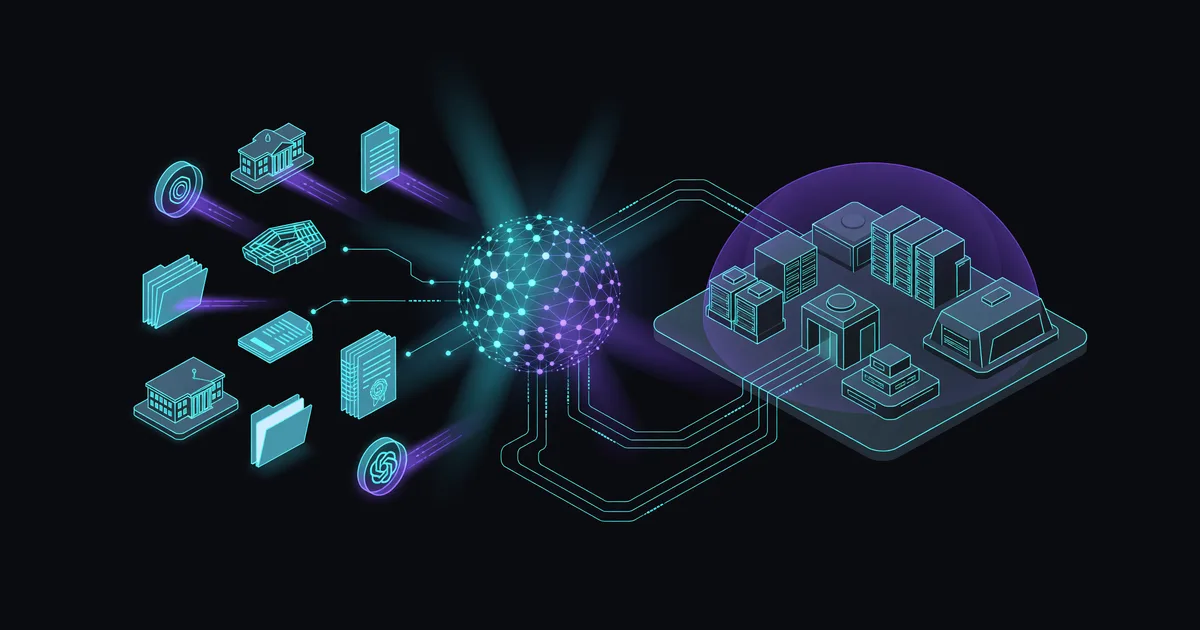
The headline most coverage led with was the model: GPT-5.6 Sol, OpenAI's new flagship, plus two smaller siblings, Terra and Luna. The more interesting story is the sentence buried underneath it. According to Reuters (June 26, 2026), OpenAI deferred the public rollout of GPT-5.6 because the US government asked for early access to frontier models before they reach the rest of us.
That's a meaningful shift. For years, the implicit deal with frontier AI was that the public and the government got access at roughly the same time — sometimes with enterprise tiers ahead of free tiers, but no formal "government goes first" gate. GPT-5.6 is the clearest sign yet that such a gate now exists. This post is about how that gate actually works, what's confirmed versus assumed, and why it matters well beyond one model launch.
What OpenAI actually announced
Per OpenAI's own preview post, GPT-5.6 is a three-model family:
- Sol — the frontier flagship, the most capable and most safety-hardened of the three.
- Terra — the balanced tier, positioned for general production use.
- Luna — the cheap, fast model built for high-volume, latency-sensitive work.
The naming follows the celestial theme OpenAI has leaned into recently. The structure — flagship, mid, mini — mirrors what every major lab now ships, including Claude's Opus/Sonnet/Haiku split and Google's Gemini Pro/Flash tiers. What's different isn't the lineup. It's that the most capable member of it, Sol, is in a "limited preview" that the public can't simply sign up for yet.
OpenAI frames the preview as a safety-and-reliability staging step. That framing is real, but it's not the whole picture. The Reuters reporting makes clear the deferral is also a response to a government request — the public rollout was held back specifically so federal evaluators could get hands-on time first.
What "government early access" actually means here
This is the part where I want to be precise, because it's easy to read "the government got the model first" and imagine something more dramatic than what's been confirmed. Here's the honest split.
What's reported: The US government sought early access to GPT-5.6 before its wider release, and OpenAI deferred the public rollout to accommodate that. The arrangement is about pre-release evaluation of a frontier model, not a productized "government ChatGPT."
What we don't know yet: Which agency or agencies are involved, whether this runs through the AI Safety Institute lineage (the body that handled pre-deployment testing of earlier frontier models), how long the exclusivity window lasts, and whether the government's evaluation can actually block or delay a public launch or is purely advisory. OpenAI hasn't published those mechanics, and I'd treat anyone who states them confidently as guessing.
My read: this is almost certainly an evolution of the pre-deployment evaluation pattern that already existed informally. Labs were already sharing frontier models with government safety evaluators ahead of release. What changed with GPT-5.6 is that the public launch was visibly held for it, and that the arrangement got reported as a government request rather than a lab courtesy. The sequencing became official.
Why the government wants frontier models first
There are three plausible motivations, and they're not mutually exclusive.
1. Safety evaluation. The most-cited reason. Frontier models get tested for dangerous-capability uplift — chem/bio, cyber-offense, autonomous-replication risks — before they're loosed on millions of users. Government evaluators with classified threat models can run tests a lab can't. If you believe frontier capability is approaching genuinely dangerous thresholds, having a neutral evaluator look first is defensible.
2. National-security awareness. If GPT-5.6 Sol meaningfully advances what an AI can do for cyber operations or scientific research, the government wants to know what's about to be publicly available — both to defend against it and to understand what adversaries will soon have. Early access is reconnaissance on a capability that's about to proliferate.
3. Procurement and operational use. The less-discussed angle. The federal government is now a serious AI customer. Early access lets agencies evaluate a model for their own deployments — defense, intelligence, scientific — ahead of the commercial market. This shades from "safety review" into "preferred customer," and the line between the two is exactly what's unclear.
The uncomfortable question is which of these is really driving it. "We test for catastrophic risk" and "we get the best AI before our competitors and our citizens do" produce the same observable behavior: government gets the model first.
How the limited preview is structured
For everyone who isn't a federal evaluator, GPT-5.6 Sol behaves like a gated preview. Based on the announcement and OpenAI's recent pattern with limited previews, expect access to roll out in tiers: select enterprise and safety partners, then broader API waitlists, then general availability — with Terra and Luna likely reaching general availability faster than Sol, since the smaller models carry lower capability-risk and don't sit at the center of the government arrangement.
If you're a developer, the practical takeaway is simple: don't architect anything on Sol availability yet. Terra is the model to design around for near-term production, and Luna for cost-sensitive volume. Sol is the one to prototype against and assume you'll get later than you'd like. This is the same posture that made sense for earlier capped previews — build on the tier you can actually get, treat the flagship as aspirational until a firm GA date exists.
The precedent this sets
This is the part worth caring about even if you never touch GPT-5.6. A norm is forming, and norms in this space tend to harden fast.
If "government gets frontier models before the public" becomes standard, a few things follow. Pre-deployment government evaluation could quietly become a soft licensing regime — not law, but a step no major lab skips, which functions like law. The gap between frontier capability and publicly available capability widens, with a privileged tier of evaluators and procurement customers operating ahead of the market. And the labs gain a powerful incentive alignment with the state: cooperate on early access, and regulatory friction tends to ease.
I've written before on this site that frontier AI increasingly reaches governments and big labs before it reaches the rest of us. GPT-5.6 is the cleanest example yet — not because the access gap is new, but because this time the public launch was openly postponed for it and the arrangement was reported as a government ask. The quiet part is now on the record.
What's genuinely good here — and what isn't
To be fair: if a model is approaching dangerous-capability thresholds, having competent evaluators stress-test it before public release is the responsible move. I don't want the version of this where a frontier model with real cyber-uplift ships to millions with zero outside review. Pre-deployment evaluation, done transparently, is a feature.
The "done transparently" qualifier is where it gets thin. Right now we don't know who's evaluating, against what criteria, for how long, or whether the evaluation can actually stop a launch. Without those answers, "safety review" and "the government and a handful of insiders get the best AI first" are indistinguishable from the outside. The mechanism could be entirely benign. The problem is that nothing published lets us verify that, and a process the public can't inspect tends to drift toward serving whoever controls it.
What to watch next
- Disclosure on the evaluation process. If OpenAI or the relevant agency publishes who tested Sol and against what framework, that's a strong signal this is genuine safety work rather than preferential access.
- The Sol GA date. How long the public waits after the government's window closes tells you how much of the deferral was safety versus sequencing.
- Whether other labs follow. If Anthropic, Google, or xAI announce similar government-first arrangements on their next frontier releases, the norm is locked in.
- Terra and Luna availability. If the smaller models ship publicly fast while Sol stays gated, that confirms the government arrangement is specifically about frontier capability, not the family as a whole.
The bottom line
GPT-5.6 Sol is a capable new flagship in a tidy three-model lineup, and most readers will eventually use Terra or Luna for real work. But the story that'll matter in a year isn't the benchmarks. It's that OpenAI held a public launch so the US government could go first, and that this got reported as routine. The access ladder for frontier AI now has a government rung above the public one. Whether that's prudent safety practice or a quiet concentration of capability depends entirely on details nobody has published. Until they do, the honest read is: a precedent just got set, and it deserves a lot more scrutiny than a model launch usually gets.
Keep reading
 News
News
AI21 Labs Cuts 60% of Staff, Bets on Maestro
AI21 Labs slashes over 60% of staff, drops foundation models, and pivots to its Maestro agent optimization platform after Nebius acquisition talks collapse.
 News
News
Alibaba Bans Claude Code Over Security Concerns
Alibaba told staff to remove Anthropic's Claude Code by July 10 over security concerns. Here's what triggered the ban and what it signals.
 News
News
Anthropic Acquires Stainless: What It Means for AI
Anthropic bought Stainless, the SDK generator behind OpenAI and Cloudflare's client libraries. Here's the strategic play for AI agents.