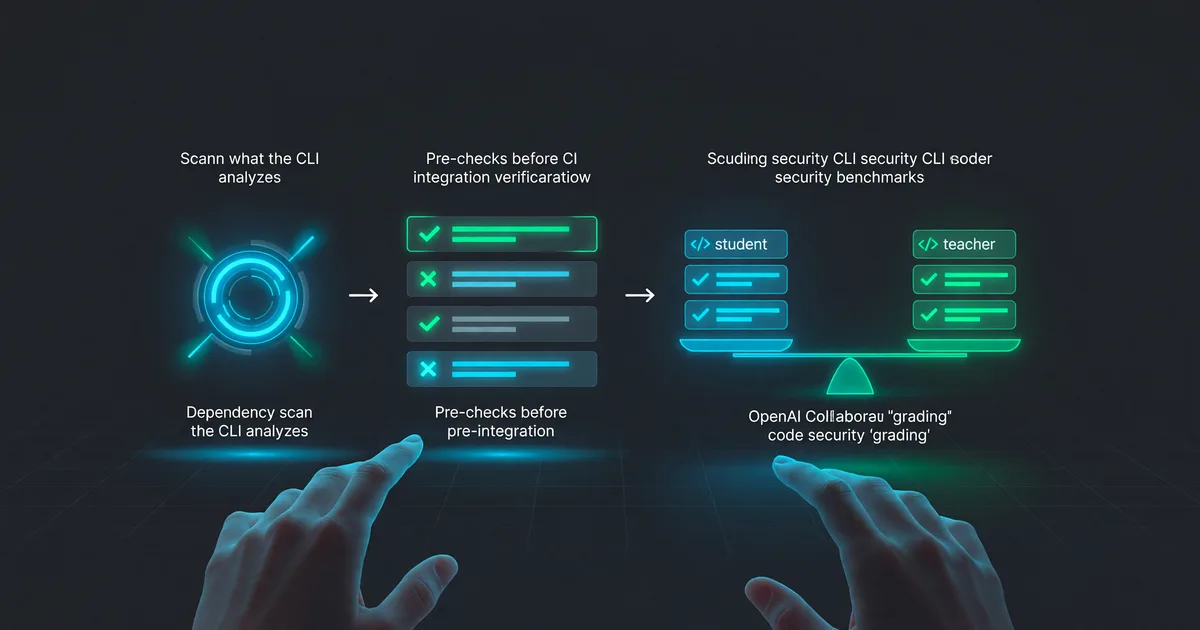
OpenAI Codex Security CLI: Setup and the Catch
OpenAI open-sourced the Codex Security CLI on July 29. What it scans, what to check before wiring it into CI, and who is grading whose homework.
The company that generates your code now also ships the tool that audits it, gives that tool away for free, and scores the results with a model from the same family. Four separate releases over the past two weeks have quietly established that as the normal arrangement for software security, and I have not seen anyone name it as an arrangement.
It went unchallenged because every individual piece arrived looking like a gift.
Ship the agent, then ship the thing that audits the agent
Stack the releases in order and the shape is hard to miss:
- OpenAI Codex Security CLI, July 29, 2026. Open-sourced and announced from OpenAI's own X account, on the Hacker News front page within hours. It scans repositories, tracks vulnerability state across runs, and is built to live in CI/CD rather than on a developer's laptop. Distribution is a public GitHub repo plus an npm package. Codex writes the code. The Codex-branded CLI now checks it.
- Gemini 3.5 Flash Cyber inside CodeMender, July 21, 2026. Google DeepMind's launch post claims validated patches for 61 vulnerabilities in open-source projects. Google selected the repositories, Google's checks decided what "validated" meant, and Google published the number. Gemini is on both ends of that sentence.
- Anthropic's Project Glasswing. Anthropic reported its Mythos-class model surfacing more than 10,000 vulnerabilities across open-source code in a single month. Vendor tooling, vendor count, vendor announcement.
- OpenAI's cyber evaluation against Hugging Face production infrastructure. OpenAI's models exercised a live third-party system as a capability eval, and OpenAI wrote up how it went.
- The counter-instance: Alibaba restricting internal use of Claude Code on security grounds. Apply the same-vendor logic from the position of someone with a reason to distrust the vendor and the answer flips completely.
Any one of these is defensible on its own terms. Free scanning for repositories that had none is good. Automated patches for real CVEs in real projects is good. What the sequence adds up to is a security supply chain where the generator, the auditor, the scoring rubric, and the press release all originate at the same address.
The case for letting the model vendor grade the code
The strongest version of the other side is stronger than the framing above suggests, so here it is properly.
Static analysis has been drowning teams in false positives for two decades. Rule-based scanners match patterns without any model of what the code was trying to do, which is why most engineering orgs have a mute list longer than their findings list. A model that produced a function has the closest available proxy for intent, and it can reason about a dataflow that spans four files without someone hand-writing a taint rule for it. That is a genuine capability jump, not a repackaging.
The vendors also see something nobody else can. OpenAI knows which failure modes its own generations produce at a volume no third-party scanner will ever observe. Feeding that back into a detector is the obvious move and arguably an obligation. And OpenAI open-sourced this one instead of parking it behind an enterprise tier, which is more than the previous generation of security vendors ever did with their rule sets.
My read: the steelman holds cleanly for detection and falls apart at triage. Detection is where vendor context genuinely helps, because knowing how the code was likely written narrows the search. Triage is the step where somebody decides which of 400 findings is real and which gets auto-closed as noise, and that is precisely the step every vendor is automating hardest. A false negative at triage looks identical to a clean repo.
What a team trades away when this becomes the default gate
Ranked by how much damage each one does, most first.
1. Correlated blind spots. If the generator and the auditor descend from the same pretraining corpus and similar post-training, the bug class the generator reliably introduces is plausibly the bug class the auditor is least primed to flag. This is the load-bearing risk in the whole arrangement and I am not aware of any public study measuring same-family generator/auditor miss rates. That number would settle the argument. It does not exist yet, from any lab.
2. Your unpatched inventory becomes a data question. A scanner wired into CI knows every live vulnerability you have, ranked by exploitability, before you have fixed any of them. Whether the Codex Security CLI keeps that on your runner or ships it to an API endpoint is the single most important fact to establish before it touches a pipeline, and it is answerable from the source rather than from anyone's summary.
3. Finding counts stop being security numbers. 61 patches. 10,000 vulnerabilities. Both figures are real and both were produced, scored, and published by the party they flatter. They are not comparable to each other and they are not comparable to what your scanner reports on Monday.
4. The independent tool market gets priced at zero. Snyk, Semgrep, CodeQL, and AI review products like CoderRabbit now compete with a free CLI from the company whose agent wrote the code under review. Squeeze the independents out and you remove the only auditors with no stake in the generator looking good.
Before it touches your pipeline
Five things worth doing in the first week, in order:
- Read the network behavior in the source, not the README. The repo is public. Find every outbound call and decide whether your vulnerability inventory leaving the runner is acceptable for this codebase. If it is not, that answer is the same on day one and day 300.
- Take the command surface from the README at the exact commit you install. Flags churn hard on a day-one open-source release, and a launch-week writeup that transcribes them is stale by the time you read it. This one included.
- Pin the version in CI. A scanner that auto-updates is a build that fails for reasons nobody on your team caused, at a time nobody chose.
- Run it report-only for two weeks before it gates anything. Then compare its findings against whatever you already run. High overlap means you bought duplication. Low overlap in one direction is the interesting result and tells you which tool to keep.
- Keep one scanner in the pipeline that OpenAI did not write. It is cheap and it is the only practical hedge against the first item on the ranked list above.
None of that is exotic. It is the same diligence you would apply to any new gate in CI, which is exactly the point: a free tool from a household-name lab tends to skip diligence on the strength of the name.
Open-sourcing the CLI does not open-source the judgment
The counterweight everyone reaches for is the license, and it is not nothing. You can read this client. You can audit its calls, fork it, pin it, run it without signing a contract or handing over a seat count. Snyk and Veracode never offered that, and the teams shipping with GitHub Copilot or Cursor and no security budget at all are strictly better off today than they were last week.
What is open, though, is the harness. The model that ranks a finding as critical or noise is not open. The eval set that decided what counts as a vulnerability in the first place has not been published by OpenAI, Google, or Anthropic. The threshold where "theoretically reachable" becomes "exploitable" lives in weights, and no amount of reading the TypeScript will show it to you.
You can audit every line of the scanner and still have no way to check the one thing it actually does.
Keep reading
How to Write With AI Without Sounding Like a Robot
Learn how to write with AI without sounding robotic. Master prompt engineering, the write-then-edit approach, voice preservation techniques, and tools like…
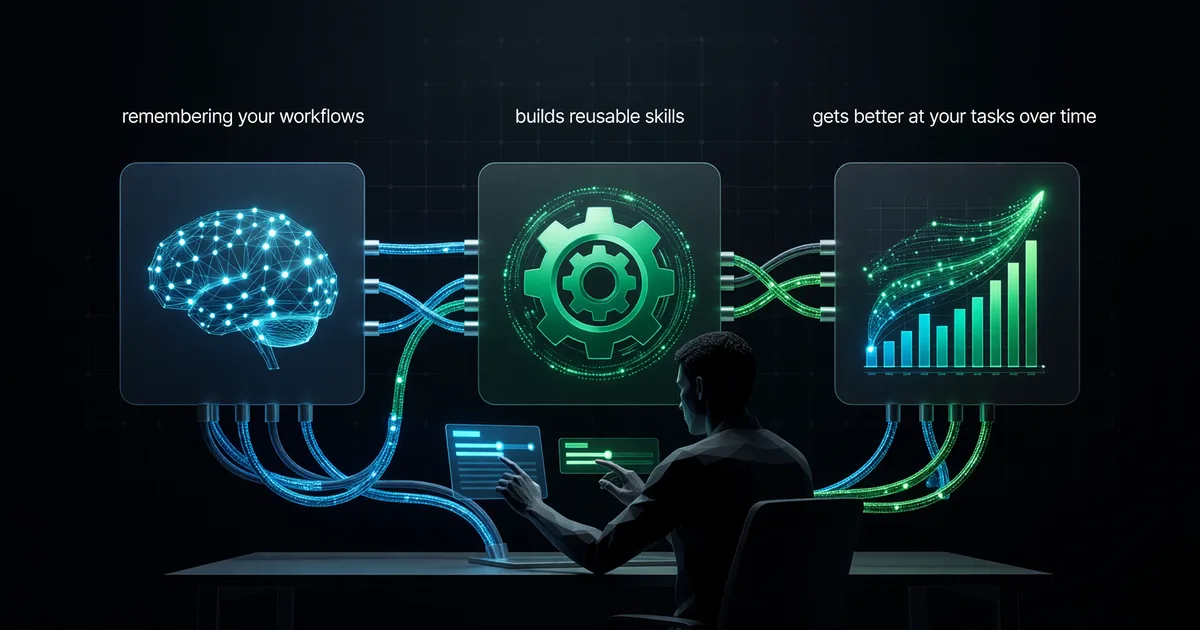
Hermes Agent Tutorial: Self-Improving AI Setup
Install and configure Hermes Agent so it remembers your workflows, builds reusable skills, and gets better at your tasks over time.
How to Clone Your Voice in ElevenLabs: A Beginner Guide
What ElevenLabs' docs actually say about instant voice cloning: the plan you need, the audio spec, the five settings, and the limits.