OpenAI's GPT-Red: Self-Improving AI Safety Explained
OpenAI's GPT-Red trains an AI to attack other models with self-play, and OpenAI says it cut GPT-5.6 Sol prompt-injection failures 6x.
OpenAI announced GPT-Red on July 15, 2026, a model trained specifically to attack other AI systems and surface the prompt injections they fall for. Per OpenAI's blog post, feeding the vulnerabilities GPT-Red found back into training cut prompt-injection failures on GPT-5.6 Sol by roughly 6x on the company's internal test set. The framing is a safety flywheel: one model gets better at breaking, the other gets better at holding, and each cycle needs less human red-teaming than the last.
That's the pitch. Here is what sits underneath it, and where the claim gets thinner.
GPT-Red is a model whose job is to break other models
Traditional red-teaming is people. A safety team, sometimes contractors, sometimes a bug-bounty crowd, sits down and tries to trick a model into doing something it shouldn't: leak a system prompt, follow a malicious instruction buried in a web page, exfiltrate data an agent can reach. It works. It also doesn't scale. Humans are slow, they're expensive, and they get bored testing the thousandth variant of the same attack.
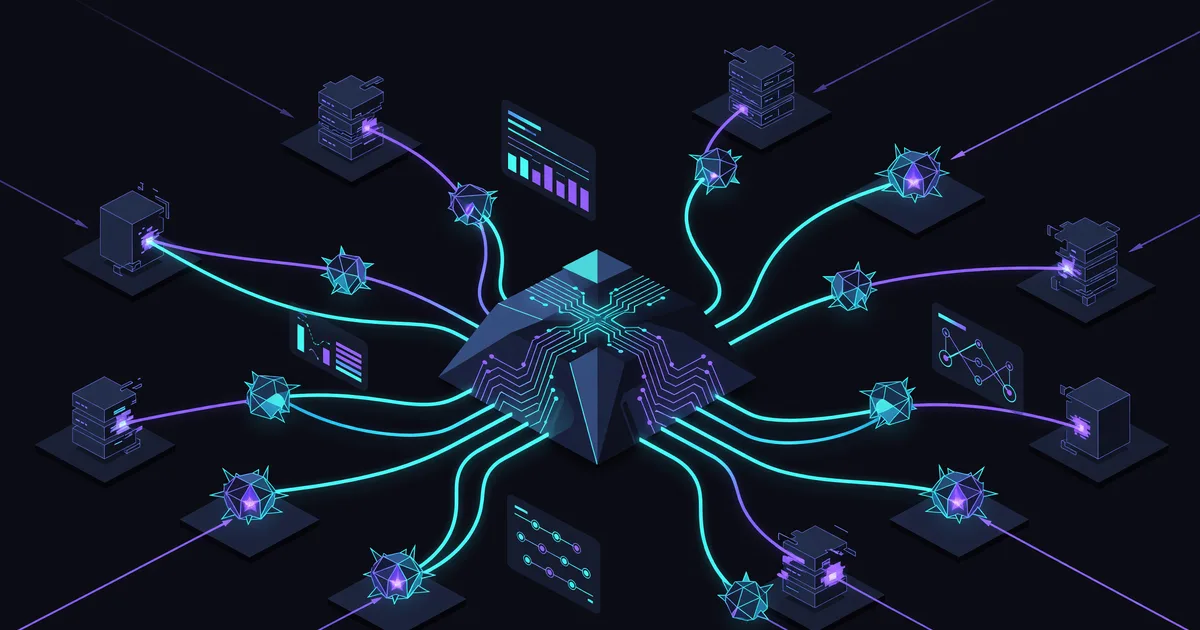
GPT-Red makes the attacker a model instead. OpenAI describes it as a system trained with reinforcement learning to generate adversarial inputs, measure how badly those inputs break a target model, and use that score as the reward signal to get better at attacking. Point it at a deployed model like GPT-5.6 Sol and it produces attacks faster than a human team, at a volume no human team could match.
The idea is not new. Automated adversarial testing has been a research topic for years, and "AI red-teaming AI" has appeared in papers from several labs. OpenAI's specific claim is that they got it working well enough to run at production scale and pipe the results straight back into model training.
Self-play is the part doing the heavy lifting
The mechanism worth understanding is self-play. If you followed how game-playing systems like AlphaGo got strong, the shape is familiar: two sides compete, each one's improvement raises the bar for the other, and the whole system climbs without a human handing it new examples at every step.
Here the two sides are attacker and defender. GPT-Red searches for inputs that make the target misbehave. The target is hardened against the attacks that land. A hardened target forces GPT-Red to find subtler attacks. Those subtler attacks then harden the target further. In principle the loop keeps generating fresh, harder adversarial data for as long as you let it run, which is the whole appeal. Human red-teamers produce a finite set of attacks. A self-play attacker produces a moving target.
OpenAI is positioning this as a self-improvement story that is deliberately separate from capability scaling. The model isn't getting smarter at coding or math here. It's getting harder to manipulate. That distinction matters, because "self-improving AI" usually triggers a very different set of worries, and OpenAI clearly wants this filed under safety, not under the recursive-capability-gain conversation.
The 6x is OpenAI's number, on OpenAI's benchmark
The headline figure is a 6x reduction in prompt-injection failures on GPT-5.6 Sol. Read that carefully. It's a relative improvement, measured by OpenAI, on a test set OpenAI built, against a baseline OpenAI chose. None of that makes it false. It does make it unverifiable from the outside right now.
A few things the number does not tell you:
- The absolute rate. Cutting failures 6x is very different if you started at 60% versus 3%. OpenAI's post frames the relative gain; the starting failure rate on their benchmark is the context that would make it meaningful.
- Whether it generalizes. A defender trained against a specific attacker can overfit to that attacker's style. The real test is novel attacks from outside the loop, not the ones GPT-Red already learned to generate.
- What it cost. Running an RL attacker at scale against a frontier model is not cheap compute. OpenAI hasn't said what the flywheel costs to spin, which matters for whether smaller labs can copy it.
My read: the 6x is real and probably meaningful inside OpenAI's threat model, but treat it as a vendor benchmark until a third party reproduces the effect on attacks OpenAI didn't design. That's the same standard we'd apply to any lab's self-reported safety win.
Prompt injection is the specific thing they're aiming at
The target here is narrow on purpose. Prompt injection is the attack where instructions hidden in content the model processes, a web page, a document, an email, a tool's output, override the instructions the user or developer actually gave. It's the defining security hole of the agent era. The moment a model can browse, read files, or call tools, everything it reads becomes a potential instruction it might obey.
This is not theoretical. OpenAI shipped a Lockdown Mode aimed at prompt injection earlier this year, and the broader industry has spent 2026 watching agentic systems do damaging things when manipulated. A model that reliably ignores injected instructions is worth a lot to anyone deploying agents on untrusted data, which is most serious agent use.
GPT-Red is a bet that you can grind this problem down with volume. Generate enough attacks, patch enough holes, and the surface that remains gets small enough to live with. Whether prompt injection is the kind of problem that yields to volume, or the kind that always has one more clever bypass, is genuinely unsettled.
Anthropic is circling the same problem from a different side
The timing is not a coincidence. The same week, Anthropic published its summer 2026 update on agentic misalignment, continuing a line of work on how agent models behave when their goals and their operators' goals diverge. Different framing, overlapping territory: both labs are trying to make models that don't get steered into bad behavior, whether the push comes from a hidden injected prompt or from a misaligned internal objective.
The contrast is instructive. OpenAI's move is engineering-forward: build an attacker, automate the loop, report a metric. Anthropic's public work leans more toward characterizing failure modes and understanding why models misbehave. Neither approach is complete on its own. You want the attacker that finds the holes and the analysis that explains why the holes exist. The labs are, roughly, splitting that labor in public.
What the announcement doesn't answer yet
Several things are missing that would change how much weight to put on this.
OpenAI hasn't said whether GPT-Red will be exposed to customers or partners, or whether it stays an internal tool. An automated red-teamer that enterprises could run against their own fine-tuned ChatGPT deployments would be a genuinely useful product. There's no indication that's on offer.
There's also the dual-use question that hangs over every offensive-security tool. A model trained to be very good at finding prompt injections is, definitionally, a model that is very good at writing prompt injections. OpenAI keeping it internal is the obvious mitigation, and the post gives no sign they intend to release the weights or the attack traces. That's the right call, and it's worth naming that the same capability points both directions.
And there's no external benchmark yet. Until someone outside OpenAI runs independent attacks against a GPT-Red-hardened model and reports numbers, the 6x lives in the same bucket as every other lab-reported safety figure: plausible, directionally encouraging, not yet confirmed. Watch for third-party evaluations and for whether the hardening holds against attack styles GPT-Red never saw during training. That second test is the one that actually tells you if the flywheel works.
Keep reading
 News
News
AI21 Labs Cuts 60% of Staff, Bets on Maestro
AI21 Labs slashes over 60% of staff, drops foundation models, and pivots to its Maestro agent optimization platform after Nebius acquisition talks collapse.
 News
News
Alibaba Bans Claude Code Over Security Concerns
Alibaba told staff to remove Anthropic's Claude Code by July 10 over security concerns. Here's what triggered the ban and what it signals.
 News
News
Anthropic Acquires Stainless: What It Means for AI
Anthropic bought Stainless, the SDK generator behind OpenAI and Cloudflare's client libraries. Here's the strategic play for AI agents.