Brockman Takes Charge of OpenAI Product Strategy
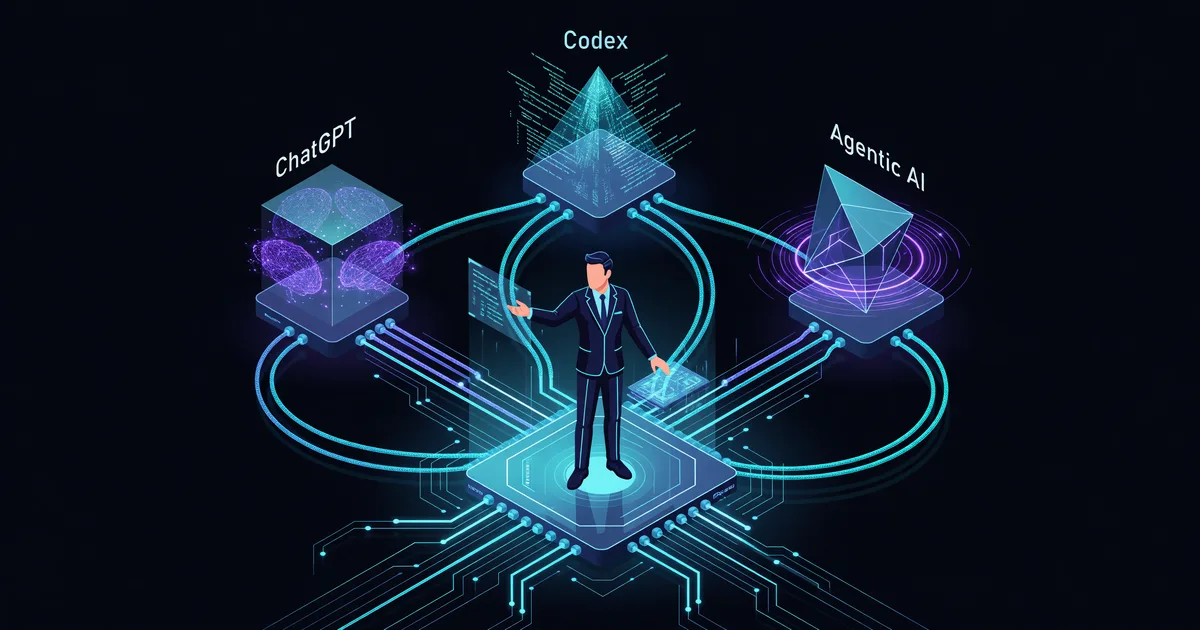
OpenAI co-founder Greg Brockman now leads all product strategy, unifying ChatGPT, Codex, and the push toward agentic AI under one roof.
The Reorg That Tells You Where OpenAI Is Headed
OpenAI just handed its co-founder Greg Brockman full control of product strategy — a move that consolidates ChatGPT, Codex, the API platform, and the company's agentic push under a single leader for the first time. The reorganization, reported by TechCrunch and Wired on May 16, is the clearest signal yet that OpenAI sees product fragmentation as its biggest internal risk heading into the second half of 2026.
This isn't a ceremonial title. Brockman's expanded role means one person now owns the roadmap for consumer ChatGPT, enterprise deployments, the developer API, and the agentic experiences (like Codex and Workspace Agents) that OpenAI has been shipping at breakneck speed. That's a lot of surface area — and the fact that Sam Altman signed off on concentrating it tells you something about how urgently OpenAI wants these products to stop feeling like separate teams' side projects.
Why This Matters Now
OpenAI has shipped an extraordinary amount of product in 2026. Just in the last few weeks: Codex went mobile on the ChatGPT app, GPT-Realtime-2 brought reasoning to voice agents, Workspace Agents launched for Slack and Gmail integration, the $4B Deployment Co was announced alongside the Tomoro acquisition, and new ChatGPT finance tools added bank connections. That's five major launches in roughly two weeks.
The problem? These products don't always feel like they come from the same company. Codex lives in its own tab. Workspace Agents have a separate setup flow. The API platform serves a different audience than ChatGPT consumer. The finance tools feel like a pivot toward fintech. Each product team has been executing well in isolation, but the connective tissue between them has been thin.
My read: Brockman's appointment is OpenAI admitting that shipping fast created product sprawl, and that the next phase requires someone to impose coherence before competitors — especially Anthropic and Google — do it first.
Greg Brockman's Track Record
Brockman co-founded OpenAI in 2015 and served as president and chairman before stepping back in late 2023 during the board crisis that briefly ousted Altman. He returned in early 2024 but took a quieter role, working on what OpenAI described at the time as "special projects." His background is deeply technical — he was CTO of Stripe before OpenAI, where he built the engineering organization from a handful of engineers to hundreds.
That Stripe experience is relevant here. Stripe's entire value proposition was making a fragmented set of payment capabilities (processing, billing, subscriptions, fraud detection, treasury) feel like one product. That's almost exactly the challenge OpenAI faces now: making chat, code generation, voice, agents, and enterprise tools feel like a unified platform rather than a collection of demos.
Brockman's return to a high-visibility operational role also signals stability. OpenAI has lost several senior leaders over the past 18 months — Mira Murati departed to found TML, Ilya Sutskever left to start Safe Superintelligence Inc., and several VP-level product leads have cycled through. Putting a co-founder in charge of the entire product surface sends a message to both employees and enterprise customers: the strategy isn't going to shift every quarter.
What "Unified Product Strategy" Probably Means
Based on the reporting and OpenAI's recent product trajectory, here's what consolidation under Brockman likely looks like in practice:
ChatGPT Becomes the Agent Hub
Right now, Codex, Workspace Agents, and ChatGPT's new finance tools all live inside the ChatGPT interface but feel like separate apps. The logical move is to make ChatGPT itself the orchestration layer — one place where you can kick off a coding task, have an agent file a report in Google Docs, check your bank balance, and carry on a voice conversation, all in the same session. OpenAI has been inching toward this with the "tools" paradigm in GPT-4o and GPT-5, but it hasn't felt seamless yet.
API and Consumer Converge
OpenAI currently maintains two somewhat separate product tracks: the consumer ChatGPT experience and the developer API. Enterprise customers often straddle both — they want ChatGPT's polish for their employees but API access for custom integrations. Brockman's remit reportedly covers both, which suggests OpenAI may push toward a model where the API and ChatGPT share more infrastructure, pricing logic, and feature parity. This would mirror what Anthropic has done with Claude, where the web app and API feel like the same product at different abstraction levels.
Agentic Experiences Get a Coherent Identity
OpenAI has launched at least four distinct agentic products in 2026: Codex (code agents), Workspace Agents (productivity automation), Operator (web browsing agents), and the deep research feature in ChatGPT. Each has its own interaction model, its own limitations, and its own pricing implications. Under a unified product strategy, I'd expect these to consolidate into a clearer framework — probably "agents" as a first-class ChatGPT feature with different capabilities (code, browse, automate) rather than separate product launches.
The Competitive Context
This reorg doesn't happen in a vacuum. OpenAI's competitors have been moving fast on product coherence:
- Anthropic has kept Claude remarkably unified — the web app, API, and enterprise offering all feel like the same product with the same personality. Claude's creative connectors (Blender, Adobe, Ableton) extend the product without fragmenting it. And with the recent SpaceX Colossus lease giving Anthropic 220K+ GPUs, they have the compute to scale whatever they build.
- Google has been integrating Gemini across Workspace, Search, Android, and Cloud in a way that makes the AI feel native to every Google surface. It's messy in places, but the distribution advantage is real.
- xAI just launched Grok Build, a CLI coding tool, and has been expanding Grok's capabilities rapidly. The SpaceXAI merger gives them infrastructure at a scale that's hard to match.
OpenAI still has the largest user base — ChatGPT reportedly has over 400 million weekly active users as of early 2026 (per Altman's statements at Davos). But user count doesn't mean product clarity. A user who opens ChatGPT for casual questions, then has to context-switch to a different tab for Codex, then set up Workspace Agents through an entirely different flow, is a user who might find a competitor's more unified experience appealing.
What This Doesn't Solve
Reorgs are necessary but not sufficient. A few open questions that Brockman's appointment doesn't automatically answer:
- Pricing coherence. OpenAI's pricing is getting complicated. ChatGPT Plus, ChatGPT Pro, ChatGPT Team, ChatGPT Enterprise, the API (with its own per-model pricing), and now Codex and Workspace Agents with their own usage costs. Unifying the product experience without simplifying the pricing model only gets you halfway there.
- Model strategy. OpenAI now maintains GPT-4o, GPT-4.1, GPT-5, GPT-5.5, the o-series reasoning models, and various specialized variants. Which model powers which product experience? That's a product strategy question as much as a technical one, and it hasn't been clearly communicated to users.
- Enterprise trust. Large companies buying OpenAI's enterprise tier want stability. Frequent reorgs — even positive ones — can make procurement teams nervous. Brockman's co-founder status helps here, but OpenAI will need to demonstrate continuity, not just announce it.
The Bigger Pattern: AI Companies Hit the Product Phase
There's a broader trend worth noting. The first wave of the AI race (2022–2025) was primarily about model capabilities — who could build the most powerful foundation model. The second wave, which we're firmly in now, is about product execution. Having a great model is table stakes. The question is: can you turn that model into products people actually use every day, in ways that justify the pricing and the switching costs?
Google learned this lesson with search — the best technology doesn't always win; the best product does. Microsoft learned it with Azure — AWS had an inferior product in many ways but dominated through developer experience and ecosystem. OpenAI putting a product-focused co-founder in charge of everything suggests they've internalized this lesson.
Anthropic has arguably been running this playbook from the start — Claude's product experience has been more consistent than OpenAI's, even with fewer features. Mira Murati's TML is building around interaction models as a core concept. Even xAI, despite being newer, has shipped a surprisingly coherent product in Grok across chat, voice, image generation, and now CLI tools.
What to Watch For
If this reorg is real and not just an org-chart shuffle, here's what should become visible in the next 2-3 months:
- Fewer separate product launches, more platform updates. Instead of "we launched Workspace Agents" and "we launched Codex mobile," look for "ChatGPT now does X" — a subtle but important framing shift.
- A simplified pricing page. If Brockman is serious about unification, the pricing has to follow. Watch for plan consolidation.
- Cross-product features. Can a Codex agent hand off to a Workspace Agent mid-task? Can voice mode invoke deep research? The seams between products are where unification either happens or doesn't.
- Developer experience improvements. The API should start reflecting whatever product coherence ChatGPT gets. If they diverge further, the reorg isn't working.
The Honest Take
OpenAI needed this. They've been shipping like a company with ten product teams and no product leader — impressive output, unclear direction. Brockman has the technical depth, the institutional authority, and the Stripe-era experience to actually pull off a unification play. Whether he will is a different question, but the appointment is the right move.
The risk is that "unified product strategy" becomes a euphemism for slower shipping. The best outcome is that OpenAI keeps its velocity but makes the products feel like they belong together. The worst outcome is a reorg that produces six months of internal alignment meetings while Anthropic and Google keep executing.
I think the former is more likely. Brockman isn't a process person — he's a builder who happens to have organizational authority. That's exactly what this role needs.
Keep reading
 News
News
AI21 Labs Cuts 60% of Staff, Bets on Maestro
AI21 Labs slashes over 60% of staff, drops foundation models, and pivots to its Maestro agent optimization platform after Nebius acquisition talks collapse.
 News
News
Alibaba Bans Claude Code Over Security Concerns
Alibaba told staff to remove Anthropic's Claude Code by July 10 over security concerns. Here's what triggered the ban and what it signals.
 News
News
Anthropic Acquires Stainless: What It Means for AI
Anthropic bought Stainless, the SDK generator behind OpenAI and Cloudflare's client libraries. Here's the strategic play for AI agents.