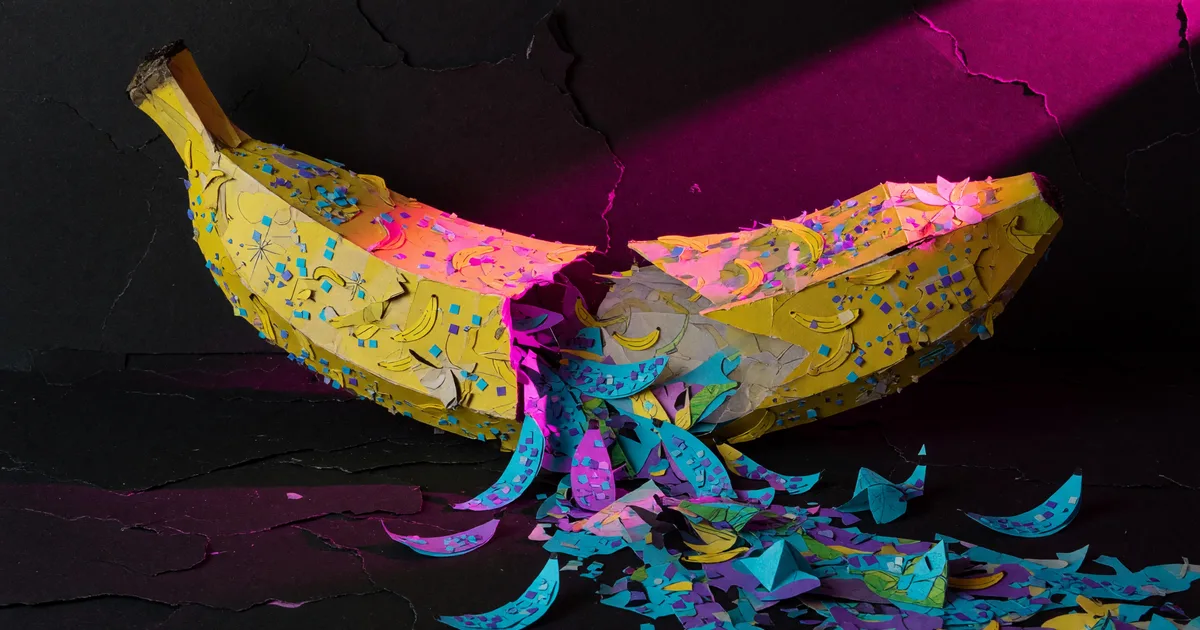
Nano Banana 2.1 vs Pro: The Price Lane Split
Google’s Nano Banana 2.1 lands at roughly half prior image prices with sharper text and 4K. How that lane splits from Nano Banana Pro for buyers.
Nano Banana 2.1 cuts Google’s image-generation bill roughly in half versus the prior Nano Banana stack while shipping cleaner text in images, tighter character consistency, and up to 4K output across Gemini, AI Studio, and other Google surfaces, per DeepMind’s October 6, 2026 rollout notes and same-week coverage on The Decoder.
The split the scoreboard posts keep skipping is lane versus ceiling: 2.1 as the half-price default on everyday Gemini surfaces, Nano Banana Pro as the escalation path when fidelity and brand control matter more than unit cost.
Half-price product lane
DeepMind’s pitch for 2.1 is efficiency with visible quality work, not a new frontier SKU. Text rendering and character consistency are the features called out for people who generate slides, social creatives, product mockups, and UI comps inside Gemini without opening a separate studio app. Up to 4K output is the resolution claim that matters for print-adjacent and large-canvas work that used to force an upscale step.
Access is the other half of the lane. Immediate placement in Gemini, AI Studio, and adjacent Google products means the model shows up where non-technical users already type prompts. Surface placement sits alongside the weights change as part of the same October 6 rollout. Replicate and other host listings that tracked the drop treat 2.1 as the volume SKU people will hit first when they ask Gemini for an image, not as a gated research preview.
On price, public write-ups around the launch converge on “about half” relative to the previous Nano Banana rates Google had been charging for comparable image calls. A single public rate card that lists every surface’s per-image number next to Pro has not appeared in that coverage. If your workflow is high volume and “good enough at 4K with readable labels,” that half-price framing is the whole commercial argument for switching the default.
Pro fidelity ceiling
Nano Banana Pro stays in the stack as the higher ceiling. The product name marks the escalation lane for character sheets, campaign typography, or multi-shot consistency that have to survive client review. 2.1’s launch notes stress text rendering, character consistency, and up to 4K at roughly half the prior price. Pro remains a separate product line in the same family for work that needs that escalation path.
Third-party launch coverage (The Decoder’s roundup, Replicate’s model notes, DeepMind’s own card) emphasizes 2.1’s efficiency and day-one surface coverage more than a claim that Pro is obsolete. Coverage does not announce a Pro retirement. The stack that shipped is a two-rung ladder: cheap default, paid ceiling.
| Dimension | Nano Banana 2.1 | Nano Banana Pro |
|---|---|---|
| Relative price (vs prior Nano Banana) | Roughly half, per launch coverage | Higher tier / escalation SKU |
| Resolution claim | Up to 4K | Pro-tier studio ceiling (Google’s upper lane) |
| Called-out quality work | Text rendering, character consistency | Escalation for brand-critical work |
| Primary surfaces (Oct 6 rollout) | Gemini, AI Studio, Google products | Same family, positioned as the premium pick |
| Buyer job | Volume, drafts, everyday creatives | Client-facing finals, strict brand control |
None of those rows are Arena ranks. They are invoice and workflow rows on purpose.
Buyer lane split
Pick 2.1 if you live in Gemini, ship a lot of images, and care that logos and labels in the frame are readable without a second tool. The October 6, 2026 rollout put that half-price lane with text rendering, character consistency, and up to 4K on Gemini, AI Studio, and other Google products, so the upgrade lands in the same prompt box. AI Studio users who prototype image flows for apps get the cheaper default for experiments and demos.
Pick Pro if a wrong face, a warped wordmark, or a soft 4K upscale would cost you a revision cycle with a client or legal. Agencies, brand studios, and product teams with locked style guides still have a reason to escalate. The half-price lane does not cancel that constraint.
Most Gemini users get the price cut by making 2.1 the default and keeping Pro as a manual upgrade for jobs where a stakeholder will pixel-peep. Treating every prompt as a Pro job wastes the price cut Google just put on the table. Treating every prompt as 2.1 without a Pro escape hatch is how brand work gets sloppy.
We still lack a single public rate card that lists every surface’s per-image number next to Pro in one table. The missing rate card does not change the lane logic Google already shipped.
Until Google’s Gemini API and AI Studio pricing docs list Nano Banana 2.1 as a named billable image SKU beside Nano Banana Pro after the October 6, 2026 rollout, keep 2.1 as the default lane and Pro as the escalation path.
Keep reading
AI21 Labs Cuts 60% of Staff, Bets on Maestro
AI21 Labs slashes over 60% of staff, drops foundation models, and pivots to its Maestro agent optimization platform after Nebius acquisition talks collapse.
Alibaba Bans Claude Code Over Security Concerns
Alibaba told staff to remove Anthropic's Claude Code by July 10 over security concerns. Here's what triggered the ban and what it signals.
Anthropic Acquires Stainless: What It Means for AI
Anthropic bought Stainless, the SDK generator behind OpenAI and Cloudflare's client libraries. Here's the strategic play for AI agents.