Kimi K3 vs Fable 5: Moonshot's Open Challenge
Moonshot's 2.8T Kimi K3 lands July 16 with open weights due July 27, and its real contrast with Anthropic's Fable 5 is access, not score.
Moonshot AI released Kimi K3 on July 16, 2026, and put a date on the weights: July 27. Reuters described it as the largest open AI model yet released. The comparison everyone reached for was Anthropic's Fable 5, the Mythos-class model that returned to global availability on July 1 once its export block lifted. That pairing carries the whole story, and most of what it carries happens off the benchmark chart.
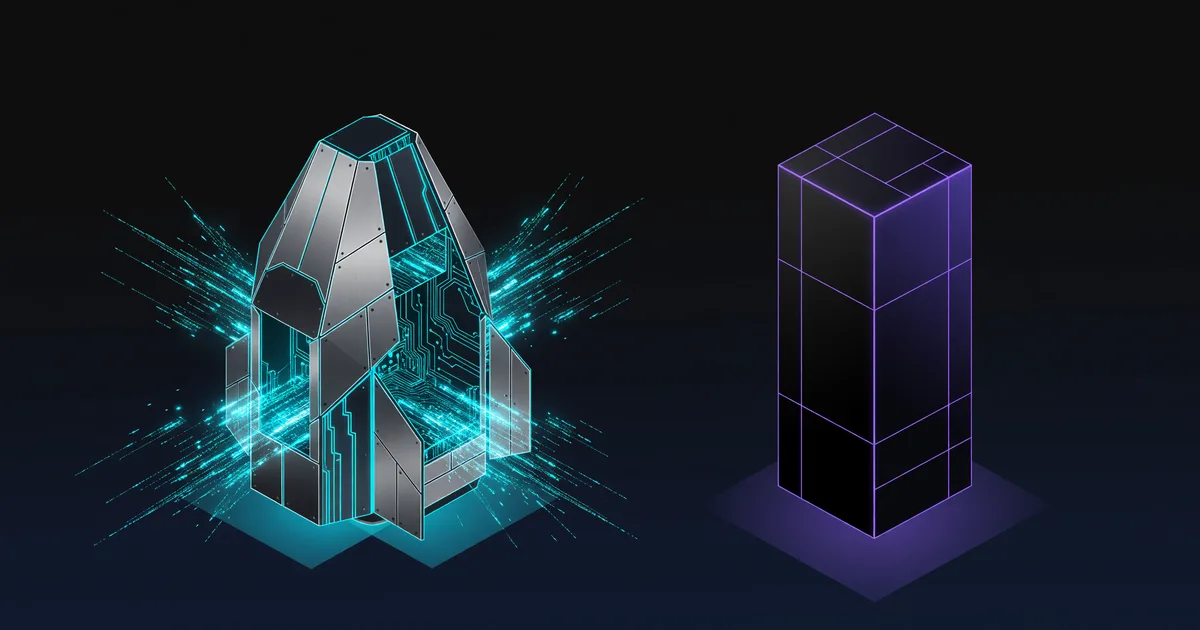
Here is the split that matters. K3 is a 2.8-trillion-parameter mixture-of-experts model you will be able to download in nine days. Fable 5 is a closed model you rent through Anthropic's API and apps. Both are being discussed as frontier-adjacent. Only one of them will sit on hardware you control.
July 27 is the only claim you can check yourself
Everything Moonshot has said about K3 so far is either a spec or a self-reported number. The specs are concrete: 2.8T total parameters, a 1-million-token context window, native multimodal input. The performance framing is Moonshot's own, and it leans on a comparison to Fable 5 and GPT-5.6 that nobody outside the company can reproduce yet.
The weights change that. When they drop on the 27th, independent benchmarkers get to run K3 on their own harnesses, and the "near Fable 5" line either holds or it breaks. That is the most useful thing about an open release: the marketing has an expiry date. Fable 5's numbers come from Anthropic and from third parties poking a black box through an API. You can measure its outputs. You cannot inspect the thing producing them.
An open-weights launch converts a press claim into a testable one. That's the difference nine days from now, and it's why the July 27 date matters more than the July 16 headline.
Fable 5 is closed and metered; K3 will be a download
This is the axis the score-versus-score coverage keeps skipping. Anthropic gates Fable 5 behind an account, a rate limit, and a per-token bill. It shipped under export controls that literally blocked it from parts of the world until three weeks ago, which tells you the model is treated as a strategic asset, not a commodity. That posture buys Anthropic safety review, usage policy, and a support surface. It also means you build on infrastructure you don't own and can't fork.
K3's open weights invert every one of those tradeoffs. You can run it air-gapped, fine-tune it, quantize it, and audit the checkpoint. You also inherit the costs Anthropic absorbs: no managed safety layer, no SLA, and a 2.8T-parameter file that most teams cannot serve without serious GPU budget. "Open" here does not mean "runs on your laptop." It means the ceiling on who can deploy a near-frontier model moved from "companies with an Anthropic contract" to "companies with a cluster."
Where each one actually fits
| Dimension | Kimi K3 (Moonshot) | Fable 5 (Anthropic) |
|---|---|---|
| Access | Open weights, releasing July 27 | Closed, API + apps only |
| Architecture | 2.8T-param MoE (fraction active per token) | Not disclosed (Mythos-class) |
| Context | 1M tokens | Anthropic-published limits |
| Multimodal | Native image input | Text and vision via API |
| Deployment | Self-host, fine-tune, audit | Managed by Anthropic |
| Cost model | Your compute | Per-token billing |
Two different products, aimed at two different buyers. A regulated enterprise that needs data never leaving its network reads that table one way. A startup that wants a supported endpoint tomorrow reads it the opposite way.
2.8T total is a mixture-of-experts number, not a dense one
The trillion-parameter figure is the one to slow down on. K3 is a mixture-of-experts model, so only a slice of those 2.8 trillion parameters fires on any given token. The routing network picks a handful of experts per pass, which is how a model this large stays servable at all. The total count sets the model's capacity ceiling. It is not the compute you pay per token, and it is not directly comparable to a dense parameter count.
This is why "world's largest open model" is accurate and also slightly beside the point. LongCat-2.0 from Meituan (1.6T) and Z.ai's GLM-5.2 are playing the same MoE game at smaller totals, and on real tasks a well-routed 1.6T model can trade blows with a poorly-utilized 2.8T one. The headline number wins the press cycle. The active-parameter count and the routing quality win the eval.
Frontend Code Arena is a genuine lead, and a narrow one
The strongest concrete claim in Moonshot's launch is coding. K3 is reported to top Frontend Code Arena, the benchmark for browser-facing code generation, and to hold up on agentic tasks. Take the frontend result at face value: it's a real, named leaderboard, and topping it is not nothing.
It is also one slice. Frontend codegen rewards models that produce clean, runnable UI code from a prompt. It says little about long-horizon agent reliability, tool use under pressure, or the kind of multi-file refactor where Anthropic's Claude line has built its reputation. One arena win is a data point, not a coronation. The honest read: K3 has at least one domain where it is demonstrably at the front, and we won't know how wide that lead generalizes until the weights are in independent hands.
The contest runs through GPT-5.6 too
Framing this as K3 against Fable 5 flatters both companies and misses the field. Moonshot benchmarked against Fable 5 and GPT-5.6 because those are the closed frontier models it wants to be measured next to. The actual competitive pressure K3 applies is broader: it lands in a lineup with GLM-5.2, LongCat-2.0, DeepSeek's recent releases, and Mistral's open mid-weights. Chinese open-weights labs are now shipping near-frontier models on a monthly cadence, and each one shaves a little more margin off the closed labs' pricing power.
My read: the pressure on Anthropic and OpenAI isn't that any single open model beats them on a headline eval. It's that "good enough, and you own it" is becoming a real option for a widening set of workloads. When the open tier closes the gap to weeks-old closed models, the closed premium has to justify itself on safety, support, and reliability rather than raw capability. That's a harder sell than it was a year ago.
What a downloadable near-frontier model changes for buyers
If you're deciding where to build, the K3-versus-Fable-5 question resolves along a few concrete lines, not a benchmark table:
- Data control: If prompts and outputs cannot leave your network, an open model you self-host is the only real answer. Fable 5 doesn't compete here regardless of score.
- Time to ship: If you want a supported endpoint today with a policy layer and an SLA, Anthropic's managed model wins on the boring operational stuff that decides real projects.
- Cost at scale: Per-token billing is cheap until it isn't. High-volume workloads are exactly where owning the weights and the GPUs starts to pencil out — if you have the infra team to run them.
- Auditability: Open weights let you inspect, red-team, and freeze a checkpoint. For some regulated buyers that's a requirement, not a nice-to-have.
None of that is settled by whichever model posts a higher frontend-arena number this month.
What's still unknown before the 27th
Plenty. Moonshot hasn't published a full benchmark table across the categories where Fable 5 is strongest, and the coverage in Fortune, Reuters, and the BBC has focused on the geopolitical framing more than the evals. We don't have independent numbers on K3's agentic reliability, its multimodal accuracy, or how it holds up on long-context recall at the full 1M window. We don't know the license terms in detail, and for open weights the license is half the story.
The launch date was July 16. The date that actually decides whether "rivals Fable 5" survives contact with reality is July 27. Until independent harnesses run the checkpoint, the smartest position is the boring one: strong specs, one credible coding result, and a genuine shift in who gets to deploy a model this size. The rest is Moonshot's framing, and framing has a shelf life of nine days.
Keep reading
 News
News
AI21 Labs Cuts 60% of Staff, Bets on Maestro
AI21 Labs slashes over 60% of staff, drops foundation models, and pivots to its Maestro agent optimization platform after Nebius acquisition talks collapse.
 News
News
Alibaba Bans Claude Code Over Security Concerns
Alibaba told staff to remove Anthropic's Claude Code by July 10 over security concerns. Here's what triggered the ban and what it signals.
 News
News
Anthropic Acquires Stainless: What It Means for AI
Anthropic bought Stainless, the SDK generator behind OpenAI and Cloudflare's client libraries. Here's the strategic play for AI agents.