Kimi K3 Explained: Moonshot's 2.8T MoE Model
Moonshot AI's Kimi K3 is a 2.8T-parameter open MoE model with 1M context and weights due July 27. Here's what the specs actually mean.
Kimi K3 is a mixture-of-experts model, and that one architectural fact is why "2.8 trillion parameters" means less than the headline wants it to. Moonshot AI put the number front and center when it launched K3 on July 16–17, 2026, and VentureBeat ran it as "the largest open-source model ever." Both things are true. Neither tells you how big the model is when it actually runs.
Here's the explainer version of the launch, aimed at the part most of the coverage skipped: what the specs do and don't commit Moonshot to, and what you can verify versus what you're taking on trust until the weights land.
2.8 trillion is the total count, not what runs per token
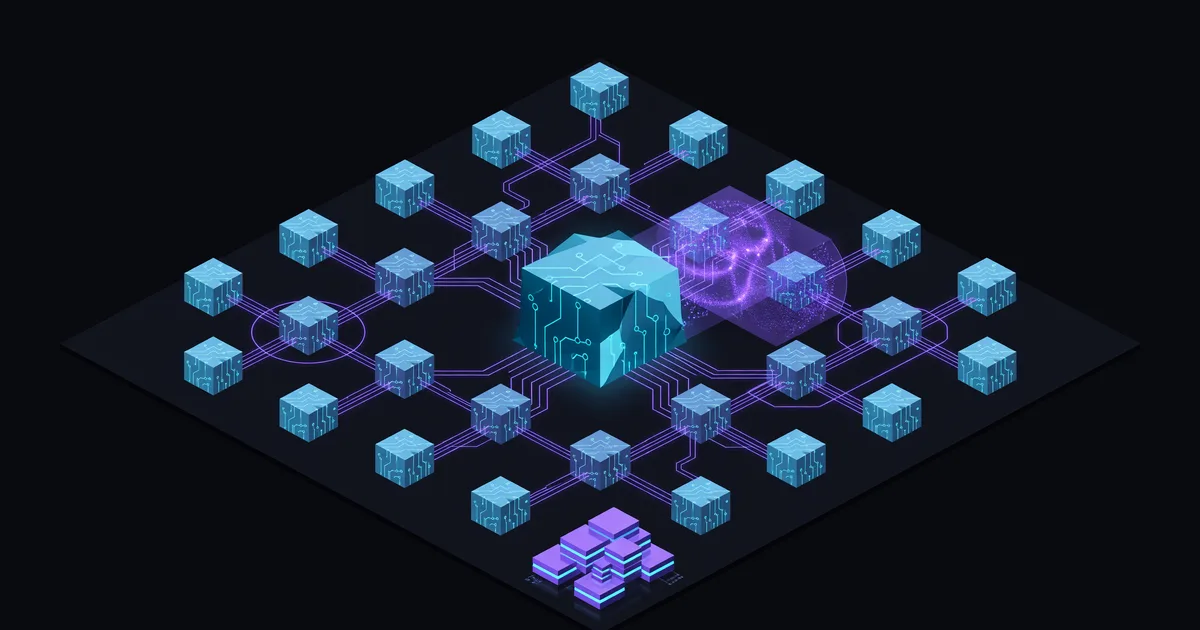
In a dense model, every parameter fires on every token. In a mixture-of-experts model, a router picks a small subset of "expert" sub-networks for each token and leaves the rest idle. So the total parameter count and the active count are two different numbers, and they can differ by 20x or more.
Moonshot's own K2, K3's predecessor, ran roughly 32 billion active parameters out of about a trillion total. If K3 keeps that ratio, the model doing the work on any given token is a fraction of the 2.8T banner figure. That's the whole point of MoE: you get the capacity of a huge model with the per-token compute of a much smaller one.
What I'd flag: as of launch, Moonshot has led with the total and been quiet on the active count. Early aggregator listings like llm-stats reflect the same gap. The active number is the one that determines what hardware you need to serve it and how fast it runs. Until that's published, "2.8T" is a marketing spec, not a deployment spec.
The 1M context window and multimodal input are the developer-facing wins
Two features matter more day-to-day than the parameter count. K3 ships with a 1-million-token context window and native multimodal input, meaning it takes images alongside text rather than bolting vision on through a separate pipeline.
A million tokens is enough to hold a mid-size codebase, a long document set, or a lengthy conversation history in a single call. It's now table stakes at the frontier. Gemini has pushed to 2M, and GPT-5.6 and Claude sit in the same range. K3 matching it on an open-weights model is the notable part, not the number itself.
"Native multimodal" deserves a caveat worth checking on July 27. Input multimodality (the model reads images) is not the same as the weights being multimodal end to end. When the launch collateral says a model "handles" images, sometimes the released checkpoint covers only part of what the hosted API demos. Verify what the open weights actually include before you design around vision.
July 27 is when the claims become testable
Moonshot is running the split-release playbook that has become standard for Chinese labs: announce and open the hosted model now, drop the downloadable weights later. For K3, "later" is July 27, roughly ten days after launch.
That gap is doing real work. It lets Moonshot capture the news cycle and the X buzz immediately (the announcement post from @Kimi_Moonshot circulated fast) while holding the artifact that lets outsiders independently benchmark and stress-test the model. Everything before the 27th runs on Moonshot's own numbers and hosted endpoints.
My read: the ten-day window is the most informative thing about the launch. A lab confident in its weights releases them alongside the announcement. A staggered drop buys time — for final safety passes, for infrastructure, or simply to control the narrative before the community can poke holes in it. None of those are damning. But it's why the 27th, not the 16th, is the date to circle.
"Near Fable 5 and GPT-5.6" is Moonshot's framing, and it's unverified
The claim generating the geopolitical takes is that K3 performs close to Claude Fable 5 and GPT-5.6 — the current closed frontier from Anthropic and OpenAI. Kyodo News and VentureBeat both relayed it as the pitch: a Chinese open model rivaling top US systems.
Treat that as a vendor claim until the weights are out. A few reasons to keep the skepticism dial up:
- The benchmark suite is Moonshot's choice. Labs pick the evals that flatter them. "Near GPT-5.6" on a lab-selected board is a weaker statement than the same result on SWE-bench Verified or a neutral aggregator like Artificial Analysis.
- Hosted-model numbers aren't open-weights numbers. The served endpoint can differ from the checkpoint you download — different quantization, different scaffolding, different system prompts.
- "Near" is unfalsifiable until quantified. Within two points on one benchmark and within two points across twenty are very different kinds of "near."
Independent testing has caught up fast on recent Chinese open releases. When Z.ai's GLM-5.2 and Meituan's LongCat-2.0 shipped, third parties confirmed strong coding numbers within days. K3 will get the same treatment after the 27th. Wait for it before you rewrite your stack.
Kimi Delta Attention is the architecture line worth understanding
Moonshot is highlighting an attention mechanism it calls Kimi Delta Attention as a K3 differentiator. The name signals a linear or near-linear attention variant — the family of techniques designed to cut the quadratic cost that makes long context expensive, so a 1M-token window stays tractable at inference.
If it delivers, the payoff is throughput at long context: cheaper, faster inference than a standard transformer would give you at the same window size. That's directly relevant to the developers who care about K3 in the first place, since the appeal of an open model is running it yourself at a cost you control.
The honest caveat: attention-efficiency schemes almost always trade something for the speedup, usually a bit of recall or accuracy on tasks that need to reach far back in the context. Whether Kimi Delta Attention pays for itself is exactly the kind of thing you can only measure once the weights are downloadable. Another line item for the 27th.
Why Moonshot keeps shipping open weights at all
Giving away a frontier-adjacent model looks strange until you follow the incentives. Moonshot is reportedly raising at around a $30 billion valuation. Open weights are how a well-funded challenger buys distribution and mindshare it can't get by competing head-on with hosted incumbents.
Every developer who builds on K3, every benchmark that cites it, every fine-tune posted to Hugging Face is reach the closed labs have to spend marketing dollars to match. It also puts genuine pricing pressure on OpenAI and Anthropic: when a capable open model is free to run, the closed labs have to justify their per-token rates on something other than raw capability. DeepSeek made that argument loudly on price; Moonshot is making it on scale and openness.
There's a national dimension the Western press keeps foregrounding, and it's real but secondary. The through-line that actually predicts behavior is competitive: a lab that can't out-market the incumbents out-opens them instead. K2 followed that logic. K3 is the bigger version of the same move.
The checklist for July 27
When the weights drop, these are the things that turn the launch from announcement into fact:
- Active parameter count and the exact MoE config — the number that decides what it costs to serve.
- License terms — "open weights" spans everything from true Apache-2.0 to restrictive custom licenses with commercial carve-outs. Read the actual license.
- What the multimodal weights cover — full image support in the checkpoint, or input-only on the hosted endpoint.
- Independent benchmarks — SWE-bench, Artificial Analysis, LMArena, whatever neutral board you trust, not the launch slides.
- Real-world inference cost — GPU count and tokens-per-second at long context, where Kimi Delta Attention either proves out or doesn't.
Until then, what's solid is the shape of the thing: a 2.8T-total MoE model, 1M context, multimodal input, open weights promised for July 27, positioned against the US frontier. What's not yet solid is every claim that requires the weights to check. That's not a knock on Moonshot. It's just where the story is until the 27th, and it's the difference between reporting the launch and believing the pitch.
Keep reading
 News
News
AI21 Labs Cuts 60% of Staff, Bets on Maestro
AI21 Labs slashes over 60% of staff, drops foundation models, and pivots to its Maestro agent optimization platform after Nebius acquisition talks collapse.
 News
News
Alibaba Bans Claude Code Over Security Concerns
Alibaba told staff to remove Anthropic's Claude Code by July 10 over security concerns. Here's what triggered the ban and what it signals.
 News
News
Anthropic Acquires Stainless: What It Means for AI
Anthropic bought Stainless, the SDK generator behind OpenAI and Cloudflare's client libraries. Here's the strategic play for AI agents.