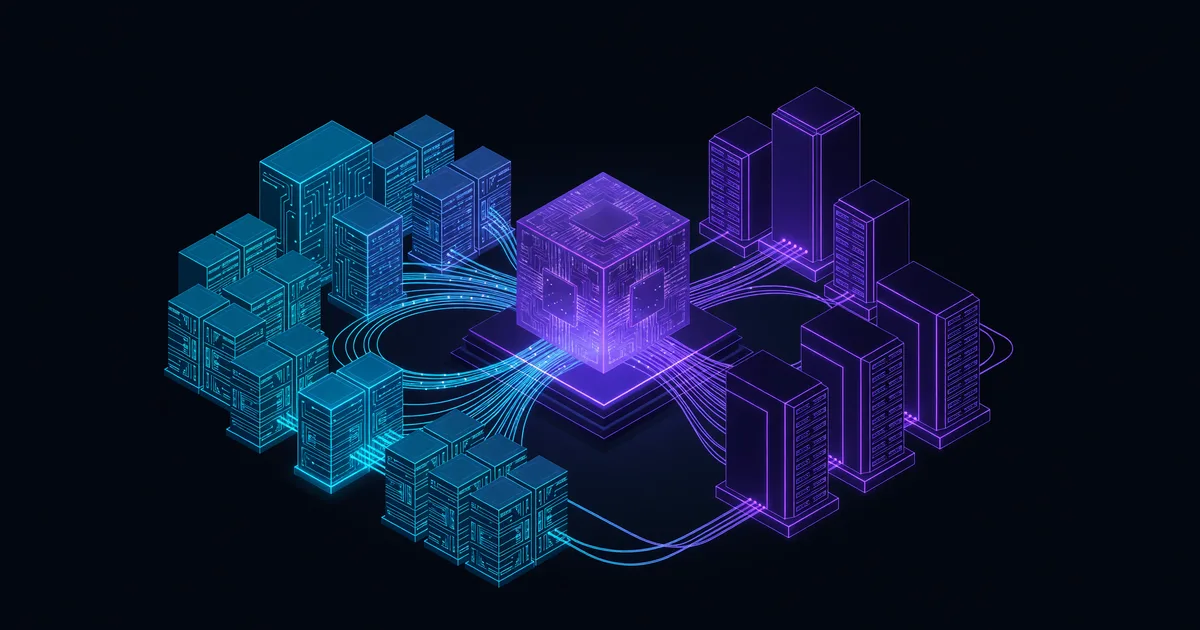
IREN's $3.4B NVIDIA Deal: AI Cloud Strategy Explained
IREN signed a $3.4B AI cloud deal with NVIDIA and a 5GW strategic partnership. Here's what it means for the neocloud race.
IREN Just Landed a $3.4 Billion AI Cloud Contract With NVIDIA
IREN — the company most people still think of as a Bitcoin miner — announced a five-year, $3.4 billion AI cloud contract with NVIDIA on May 7, 2026 (per IREN's official press release). The stock jumped roughly 30% in the week following the announcement, and Bernstein slapped a $100 price target on it. That market reaction tells you this isn't a routine cloud deal. It's a signal that NVIDIA is picking winners in the AI infrastructure race — and IREN just got picked.
But the $3.4B contract is only part of the story. Alongside it, IREN and NVIDIA announced a 5GW strategic partnership and a $2.1 billion equity option. Together, these three pieces form one of the most aggressive infrastructure bets in the current AI buildout cycle. Here's what each piece means and why it matters.
The Deal Structure: Three Interlocking Pieces
This isn't a single contract — it's a layered partnership designed to lock in NVIDIA's compute needs while giving IREN the capital certainty to build at scale. Here's how it breaks down:
| Component | Value | Purpose |
|---|---|---|
| AI Cloud Contract | $3.4B over 5 years | NVIDIA uses IREN's data centers for its own internal AI workloads |
| Strategic Partnership | 5GW capacity target | Long-term commitment to build out massive power and compute infrastructure |
| Equity Option | $2.1B | NVIDIA gets the option to take an equity stake in IREN |
The $3.4B contract means NVIDIA will run its own internal workloads — training runs, inference, research compute — on IREN's infrastructure. This is NVIDIA acting as a customer, not just a GPU supplier. At $680 million per year over five years, that's a massive anchor tenant contract for a company IREN's size.
The 5GW strategic partnership is the long-game piece. For context, 5 gigawatts is roughly the power consumption of a mid-sized US city. It signals that IREN and NVIDIA are planning data center capacity at a scale that goes well beyond what the initial $3.4B contract requires. This is about reserving power and land for the next wave of AI infrastructure expansion.
The $2.1B equity option is the trust signal. NVIDIA isn't just buying compute time — it's signaling willingness to become a part-owner. That kind of financial entanglement aligns incentives: IREN builds the facilities, NVIDIA fills them with workloads, and both sides benefit from the scale.
Why NVIDIA Chose IREN
This is the question worth spending time on. NVIDIA could contract with any hyperscaler — AWS, Azure, GCP — or with established colocation providers like Equinix or Digital Realty. Why IREN?
Three factors stand out:
1. Power access. AI data centers are power-constrained, not GPU-constrained. IREN's background in Bitcoin mining means it already has relationships with power utilities, experience operating in high-density power environments, and sites with grid connections that can handle the load. Converting a Bitcoin mining operation to an AI data center is non-trivial, but the hardest part — securing cheap, reliable power at scale — is already solved.
2. Vertical integration. IREN has been building toward full-stack AI infrastructure, not just renting out rack space. The company's recent acquisition of Mirantis — an open-source cloud infrastructure platform — gives IREN a software layer to manage and orchestrate workloads across its data centers. That's the difference between being a landlord (here's a building, bring your own everything) and being a cloud provider (here's compute, ready to use). NVIDIA apparently wants the latter.
3. Independence from hyperscaler competitors. This is the strategic logic that also drove Anthropic's recent compute diversification deals. NVIDIA sells GPUs to AWS, Google, and Microsoft — but those companies are also building their own custom AI chips (Amazon's Trainium, Google's TPUs, Microsoft's Maia). Working with a neocloud provider like IREN means NVIDIA gets dedicated infrastructure from a partner whose entire business depends on NVIDIA hardware, not one that's actively trying to replace it.
NVIDIA picking IREN over hyperscalers isn't surprising when you realize the hyperscalers are simultaneously NVIDIA's biggest customers and its biggest competitive threats.
IREN's Pivot: From Bitcoin Miner to Neocloud
IREN (formerly Iris Energy) built its reputation mining Bitcoin with renewable energy. The company operated large-scale mining facilities powered primarily by hydroelectric and other renewable sources. That business model had a problem: Bitcoin mining margins are cyclical, compressed by halving events, and increasingly competitive.
The pivot to AI infrastructure makes economic sense. The same core competencies — securing cheap power, cooling high-density compute, managing large-scale facilities — apply directly to AI data centers. But instead of earning volatile Bitcoin block rewards, IREN now earns contracted revenue from the world's most valuable semiconductor company.
The Mirantis acquisition is the piece that transforms IREN from "Bitcoin miner with GPUs" into something resembling an actual cloud provider. Mirantis brings container orchestration, Kubernetes management, and cloud platform tooling. With that software stack, IREN can offer managed AI compute services — not just raw hardware.
My read: the Mirantis buy was likely a prerequisite for landing the NVIDIA contract. NVIDIA doesn't want to manage bare-metal servers in someone else's building. It wants a turnkey cloud environment, and Mirantis gives IREN the software to deliver that.
The Neocloud Landscape
IREN isn't the only company making this play. A new class of AI-focused cloud providers — sometimes called "neoclouds" — has emerged to fill the gap between hyperscalers and bare-metal colocation. Here's where IREN fits:
| Company | Key Backing | Focus | Notable Deal |
|---|---|---|---|
| CoreWeave | NVIDIA (investor) | GPU cloud for AI training/inference | $7.5B IPO (2025) |
| Lambda | Various VCs | GPU cloud, ML tooling | On-demand NVIDIA clusters |
| Crusoe Energy | Energy-first approach | Sustainable AI compute | Flared gas to GPU |
| IREN | NVIDIA (strategic partner) | Full-stack AI cloud (power + compute + software) | $3.4B NVIDIA contract |
What sets IREN apart from CoreWeave and Lambda is the power-first approach. CoreWeave and Lambda lease data center space and fill it with GPUs. IREN controls the power supply and the physical facilities from the ground up. The binding constraint on AI scaling is electricity, not chips, so that vertical integration from power to platform could be a genuine competitive advantage.
The 5GW partnership target underscores this. For comparison, CoreWeave's total deployed capacity is measured in hundreds of megawatts. IREN and NVIDIA are planning for a scale an order of magnitude larger.
What This Tells You About NVIDIA's Strategy
NVIDIA is doing something interesting: it's simultaneously selling GPUs to everyone and building deep partnerships with specific infrastructure providers who depend entirely on NVIDIA silicon. This creates a captive ecosystem.
Consider what NVIDIA gets from the IREN deal:
- Guaranteed demand. $3.4B in contracted revenue for NVIDIA GPUs that IREN will need to buy to service the contract. The contract value is what NVIDIA pays IREN for cloud services, but IREN needs to buy the GPUs to deliver those services — from NVIDIA.
- Priority access to capacity. When NVIDIA needs burst compute for internal research (new model training, chip design simulation, autonomous vehicle workloads), it has reserved capacity at IREN facilities.
- A showcase partner. IREN running a successful neocloud on NVIDIA hardware validates the "NVIDIA cloud stack" for other potential neocloud customers.
- Equity upside. The $2.1B option means NVIDIA can participate in IREN's growth if the neocloud thesis works out.
I think the most underappreciated angle here is NVIDIA using IREN as its own cloud provider. Jensen Huang has said repeatedly that NVIDIA needs massive compute for chip design, AI research, and Omniverse workloads. Rather than build and operate its own data centers — which would put NVIDIA in direct competition with its hyperscaler customers — NVIDIA outsources to a partner that exists because of NVIDIA. Clean separation of concerns.
The Risks Worth Watching
A few things to watch that the bullish analyst notes won't emphasize:
- Execution risk is real. Building 5GW of AI-ready data center capacity is a massive construction and engineering challenge. IREN has operated mining facilities, not enterprise cloud infrastructure at this scale. The Mirantis acquisition helps on the software side, but operational maturity takes time.
- Customer concentration. If NVIDIA represents the majority of IREN's cloud revenue, the company is effectively a single-customer business. That's fine when things are good — it's a problem if NVIDIA decides to diversify its own infrastructure strategy.
- The equity option is a double-edged sword. A $2.1B equity option gives NVIDIA significant influence over IREN's direction. That alignment helps until it doesn't — if NVIDIA's priorities shift, IREN may find itself building for a customer whose needs have changed.
- Power market uncertainty. Securing 5GW of power capacity depends on utility negotiations, permitting, and grid infrastructure that IREN doesn't fully control. Regulatory delays or power cost increases could undermine the economics.
The Bigger Picture: Compute Is the New Oil
Zoom out, and the IREN-NVIDIA deal is part of a pattern. In the past month alone:
- Anthropic signed a $1.8B deal with Akamai for cloud compute and leased SpaceX's Colossus 1 cluster (220K+ GPUs)
- NVIDIA signed this $3.4B deal with IREN plus the 5GW partnership
- Multiple frontier AI labs are reportedly in negotiations for additional data center capacity across the US, Europe, and the Middle East
The infrastructure layer of AI is undergoing a massive buildout. The companies that control power, land, and GPU supply are becoming as strategically important as the companies building the models. IREN's bet is that being vertically integrated — from power generation to cloud platform — is the winning position in that race.
Whether IREN can actually execute at the scale this deal implies is the open question. A $3.4B contract from NVIDIA is the strongest possible validation of the thesis. Now they have to build it.
Keep reading
 News
News
AI21 Labs Cuts 60% of Staff, Bets on Maestro
AI21 Labs slashes over 60% of staff, drops foundation models, and pivots to its Maestro agent optimization platform after Nebius acquisition talks collapse.
 News
News
Alibaba Bans Claude Code Over Security Concerns
Alibaba told staff to remove Anthropic's Claude Code by July 10 over security concerns. Here's what triggered the ban and what it signals.
 News
News
Anthropic Acquires Stainless: What It Means for AI
Anthropic bought Stainless, the SDK generator behind OpenAI and Cloudflare's client libraries. Here's the strategic play for AI agents.