GPT-Live: OpenAI's Real-Time Voice Models Explained
OpenAI launched GPT-Live and GPT-Live mini on July 8, 2026 — voice models that listen and speak at the same time. Here's what shipped.
OpenAI shipped GPT-Live on July 8, 2026 — a pair of voice models built to listen and speak at the same time, rather than politely waiting for you to finish before responding. Reuters covered the launch the same day, and OpenAI's own announcement (via its official X account) framed it as the biggest change to ChatGPT's voice experience since Advanced Voice Mode. The rollout starts with paid tiers, with free access "expanding" over the following weeks per the ChatGPT release notes.
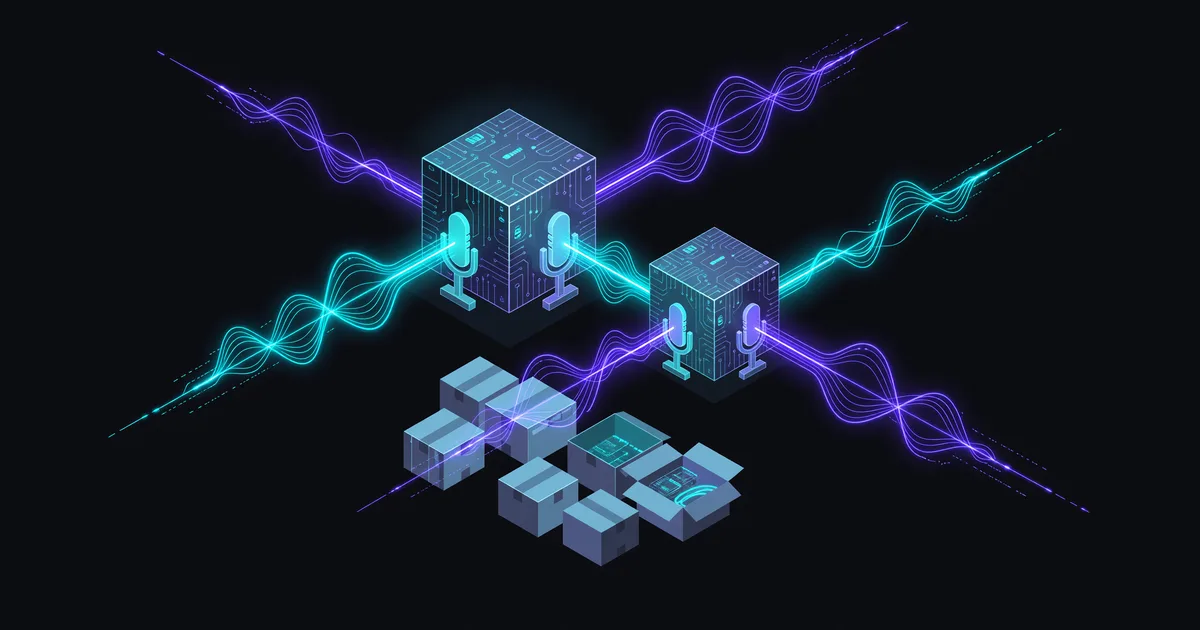
The headline feature is full-duplex conversation: the model processes your audio while it is still talking, so you can interrupt, interject, or overlap the way people actually do on a phone call. That is a genuinely different design from the turn-based voice most assistants use — and it is the detail worth understanding before you decide whether GPT-Live changes anything for you.
What actually shipped
OpenAI released two models under the GPT-Live banner:
- GPT-Live-1 — the flagship, tuned for the most natural, expressive, low-latency conversation.
- GPT-Live mini — a lighter, cheaper variant aimed at latency-sensitive and higher-volume use, the kind of thing you would put in a phone tree or an in-app assistant.
The naming mirrors OpenAI's now-standard flagship/mini split (think GPT-5 and GPT-5 mini). The "mini" here is not just a smaller brain — for voice, the real currency is round-trip latency, and a lighter model that responds a beat faster often feels better in conversation than a smarter one that lags. My read: GPT-Live mini is the one most developers will reach for first, because in a voice product the difference between 300ms and 800ms of response delay is the difference between "natural" and "annoying."
Why "listen and speak at the same time" is the whole story
Most voice assistants, including ChatGPT's earlier Advanced Voice Mode, are effectively half-duplex. You talk, an endpoint-detection system decides you have stopped, the model thinks, then it replies. Interrupting works, but it is bolted on — you cut the audio off and the system scrambles to re-plan.
Full-duplex flips that. The model maintains a continuous audio stream in both directions and reasons about your speech while generating its own. Practically, that unlocks the small things that make human conversation feel human:
- Backchanneling — the "mm-hm," "right," "go on" that signals it is following you without taking over the turn.
- Graceful interruption — you can cut in mid-sentence and it stops cleanly, holding context instead of losing the thread.
- Overlap handling — when you both start talking, it can yield rather than plow ahead.
The honest take: turn-taking is the uncanny valley of voice AI. Getting the words right was mostly solved a year ago. Getting the rhythm right — knowing when to jump in and when to shut up — is what separates a demo from a tool you would actually use hands-free.
This is also why GPT-Live matters beyond ChatGPT's consumer app. Anyone building a voice agent — support lines, drive-time assistants, language tutors — has been fighting the turn-taking problem with duct tape. A model that handles it natively removes a whole category of engineering pain.
Where GPT-Live fits in OpenAI's voice stack
OpenAI has been building toward this for a while. The earlier GPT-Realtime-2 release brought GPT-5-class reasoning to the Realtime API, giving voice agents better tool use and instruction-following. GPT-Live reads as the next layer up: less about raw reasoning, more about the acoustic and conversational realism of the exchange itself.
If you are building on the API, the mental model is roughly:
- Realtime API + GPT-Realtime-2 — reasoning-heavy voice agents that call tools and follow complex instructions.
- GPT-Live / GPT-Live mini — the conversational front-end: natural cadence, interruption, expressive delivery.
OpenAI has not, as of this writing, published full API pricing or exhaustive latency numbers for GPT-Live in a place I can cite cleanly. That is a real gap — I would not commit a production voice product to it until the per-minute audio pricing and rate limits are on the docs page rather than in a launch tweet. Treat this as a "watch the pricing page" moment.
How it compares to the rest of the field
Real-time voice is one of the most crowded races in AI right now, and OpenAI is not first to full-duplex conversation. Here is where the major players sit, based on their public positioning:
| Player | Angle | Notable strength |
|---|---|---|
| OpenAI GPT-Live | Full-duplex, in ChatGPT + API | Distribution — hundreds of millions of ChatGPT users |
| Google Gemini Live | Multimodal voice + video in the Gemini app | On-device tie-ins, Android reach |
| Hume AI | Emotionally expressive voice (EVI) | Prosody and emotion modeling |
| ElevenLabs | Best-in-class TTS + conversational agents | Voice quality and cloning breadth |
| Bland AI | Phone-call automation for businesses | Telephony infrastructure |
OpenAI's edge is not that GPT-Live is technically unprecedented — Hume and others have shown expressive, low-latency voice, and Google's Gemini Live has done overlapping conversation in demos. OpenAI's edge is distribution. GPT-Live drops into an app that hundreds of millions of people already open daily. For most consumers, "the best voice AI" is going to mean "the voice AI already in the app I use," and that is a fight OpenAI wins by default.
It is also a shot across the bow for Siri and the wider assistant category. If ChatGPT can hold a genuinely fluid hands-free conversation, the bar for what people expect from a phone assistant just moved. Apple's Gemini-powered Siri reset, announced at WWDC 2026, suddenly has more to prove.
What this means if you use ChatGPT
If you are a Plus, Pro, or Team subscriber, you should see GPT-Live surface in voice mode as the rollout reaches your account — OpenAI's staged rollouts typically take days to a couple of weeks. Free users will get access as it "expands," which historically has meant a slower and sometimes usage-capped path. A few practical notes:
- It should feel different immediately. The tell is interruption. If you can cut it off mid-sentence and it responds to your new point without restarting, you are on GPT-Live.
- Hands-free use cases get better. Cooking, driving, walking — the scenarios where you cannot look at a screen are where full-duplex earns its keep.
- Expressiveness is a double-edged sword. More natural delivery is great until it oversteps into sounding artificially chummy. Whether OpenAI tuned the personality well is the kind of thing that only shows up after a few real conversations.
What this means if you build voice products
For developers, the interesting question is when GPT-Live hits the API with documented pricing and latency guarantees. The consumer launch is the marketing moment; the API availability is the one that reshapes what you can ship. If OpenAI exposes the full-duplex behavior through the Realtime API at a competitive per-minute rate, a lot of teams currently stitching together separate speech-to-text, LLM, and text-to-speech pipelines will consolidate onto it.
That said, do not rip out a working stack on a launch-day announcement. The specific things to confirm before you migrate:
- Per-minute audio input and output pricing for both GPT-Live-1 and mini.
- Latency and rate limits under real load, not demo conditions.
- How interruption and barge-in are exposed in the API — do you get events, or is it a black box?
- Language coverage. Expressive full-duplex in English is one thing; parity across languages is another, and vendors rarely lead with the gaps.
The bottom line
GPT-Live is OpenAI doing what it does best: taking a capability the research community has been circling — full-duplex, interruptible voice — and putting it in front of a massive audience with a clean product story. The technology is not singular, but the distribution is, and in the voice-assistant race that may matter more than any benchmark.
The open questions are the ones OpenAI has not answered yet: API pricing, latency under load, language parity, and whether the expressive personality lands or grates. Until those are on a docs page rather than in a launch post, I would call GPT-Live a very strong consumer upgrade and a promising-but-unproven foundation for production voice agents. Watch the pricing page over the next few weeks — that is where the real story for builders gets written.
Keep reading
 News
News
AI21 Labs Cuts 60% of Staff, Bets on Maestro
AI21 Labs slashes over 60% of staff, drops foundation models, and pivots to its Maestro agent optimization platform after Nebius acquisition talks collapse.
 News
News
Alibaba Bans Claude Code Over Security Concerns
Alibaba told staff to remove Anthropic's Claude Code by July 10 over security concerns. Here's what triggered the ban and what it signals.
 News
News
Anthropic Acquires Stainless: What It Means for AI
Anthropic bought Stainless, the SDK generator behind OpenAI and Cloudflare's client libraries. Here's the strategic play for AI agents.