Why Anthropic Bought OpenAI's SDK Builder
Anthropic acquired Stainless, the SDK generator behind OpenAI and Cloudflare's APIs. The real play is owning the agent-to-tool layer.
Anthropic Now Owns the SDK Layer Its Rivals Depend On
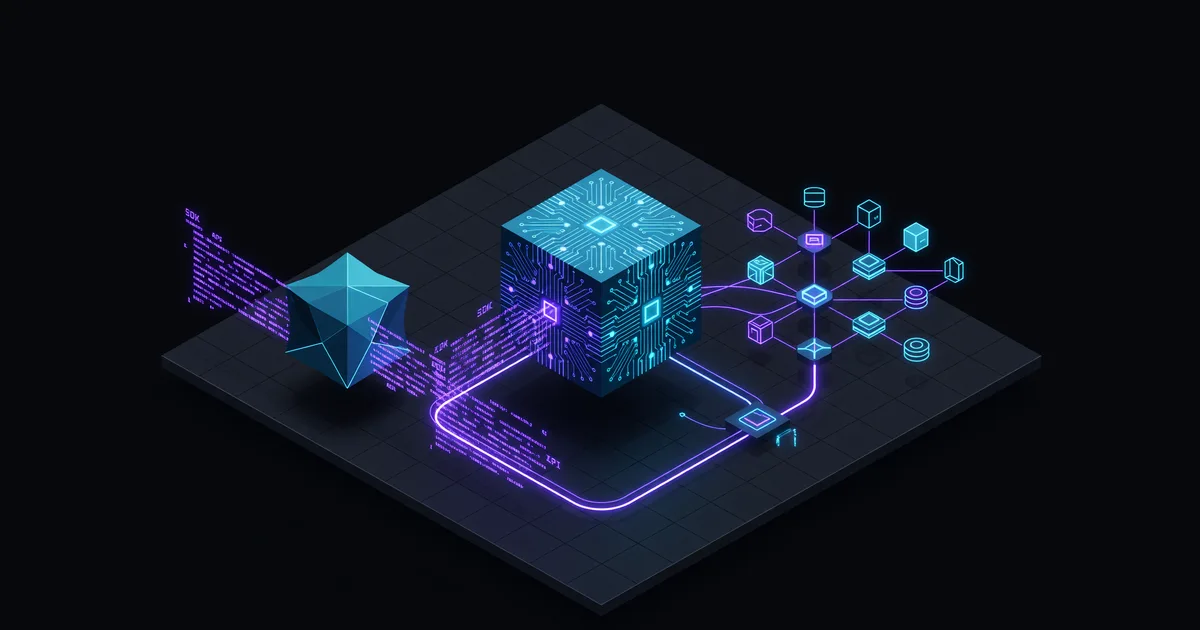
On May 18, 2026, Anthropic announced the acquisition of Stainless, the developer tools company that auto-generates typed SDKs from API specifications. If you've ever run pip install openai or npm install @anthropic-ai/sdk, you've used Stainless-generated code. That's the punch line: Anthropic just bought the platform that builds client libraries for OpenAI, Cloudflare, and a string of other API-first companies.
The announcement (per Anthropic's official blog post) frames this as an investment in developer experience. That's true, but it undersells the strategic weight. In a world where AI agents need to call thousands of external tools reliably, owning the SDK generation layer is owning the connective tissue of the agent economy.
What Stainless Actually Does
Stainless takes an OpenAPI specification — the machine-readable contract that describes an API's endpoints, parameters, and types — and generates production-quality client libraries in Python, TypeScript, Go, Java, and other languages. These aren't the janky auto-generated SDKs you might remember from Swagger Codegen. Stainless-generated libraries include:
- Full type safety — proper type hints in Python, TypeScript generics, Go structs
- Streaming support — first-class handling of SSE streams, critical for LLM APIs
- Automatic retries and pagination — production patterns baked in, not bolted on
- Idiomatic code per language — the Python SDK feels Pythonic, the TypeScript SDK feels like TypeScript
The result: companies like OpenAI and Anthropic shipped official SDKs that felt hand-written but updated automatically whenever the API spec changed. Stainless was a quiet but critical dependency for some of the most-used developer libraries in AI.
The Client List Problem
Here's where it gets strategically interesting. According to TechCrunch's reporting on the acquisition, Stainless counted OpenAI, Google, and Cloudflare among its customers. Anthropic itself was already a client. So Anthropic just acquired a vendor that served its direct competitors.
Anthropic has said existing Stainless customers will continue to be supported. My read: that's a short-term commitment, not a forever promise. OpenAI is not going to want its SDK toolchain owned by its primary competitor indefinitely. Google certainly won't. Expect those companies to either build internal alternatives or adopt competing open-source SDK generators within 12-18 months.
The real question isn't whether rivals will migrate off Stainless — they will. It's whether Anthropic can use this window to build something they can't easily replicate.
Why This Is Really About Agents
The timing of this acquisition matters. The AI industry is mid-shift from chat interfaces to autonomous agents — software that plans, reasons, and executes multi-step tasks by calling external tools. Claude's agent capabilities (through Claude Code, the Agent SDK, and the Model Context Protocol) are central to Anthropic's product strategy.
Agents have a specific infrastructure need that chat models don't: they must call APIs reliably, parse responses correctly, handle errors gracefully, and do all of this without human intervention. Every failed API call, every type mismatch, every malformed request is a broken link in an agent's chain of reasoning.
This is exactly what Stainless solves. Consider the stack Anthropic is assembling:
- Model Context Protocol (MCP) — an open standard for how AI models connect to external tools and data sources, already adopted by dozens of tool providers
- Claude Agent SDK — the framework for building production agents that orchestrate multi-step workflows
- Stainless — automatic generation of typed, production-grade SDKs from any API spec
Put these together and Anthropic controls the full path from "agent decides to call a tool" to "typed SDK makes the call correctly." MCP defines the protocol. Stainless generates the client code. The Agent SDK orchestrates the whole thing. No other AI lab has this vertical integration on the tooling side.
MCP + Stainless: The Compound Play
MCP has been Anthropic's most successful open-source bet. Since its launch in late 2024, it's become the de facto standard for connecting AI models to external tools — adopted by IDE makers, database vendors, cloud platforms, and competing AI labs alike.
But MCP has a gap: it defines how models discover and invoke tools, not how the underlying API calls are implemented. An MCP server still needs to make actual HTTP requests to Stripe, GitHub, Salesforce, or whatever service it wraps. That's where SDK quality matters enormously — especially for agents running autonomously at scale.
With Stainless, Anthropic can potentially auto-generate MCP servers from OpenAPI specs. Think about what that means: any company that publishes an API spec could have a production-quality MCP tool server generated automatically, making their service immediately accessible to Claude agents. The friction of "build an MCP integration" drops from days to minutes.
I think this is the real strategic endgame. Not just better SDKs for Anthropic's own API, but a flywheel where every API on the internet becomes a tool Claude agents can call natively.
What This Means for Developers
For developers building on Anthropic's stack, the near-term implications are positive:
- Better Claude SDKs, faster. Stainless's team now works full-time on Anthropic's developer surface. Expect faster iteration on the Python and TypeScript SDKs, better streaming primitives, and tighter integration with the Agent SDK.
- MCP tooling improvements. If Anthropic connects Stainless's generation capabilities to MCP, building tool integrations gets dramatically easier.
- More languages, sooner. Stainless already supports Go, Java, Kotlin, and Ruby generation. Anthropic's official SDKs currently cover Python and TypeScript. Expect that list to grow.
For developers building on OpenAI or other platforms that used Stainless, the situation is less clear. The existing SDKs won't break overnight — they're open source, published on PyPI and npm, and Anthropic has committed to continued support. But the incentive to invest deeply in a competitor's SDK quality is obviously diminished over time.
The Competitive Landscape
This acquisition fits a broader pattern of AI labs vertically integrating their developer toolchains:
| Company | Model Layer | Agent Framework | SDK / Tooling Layer |
|---|---|---|---|
| Anthropic | Claude 4.x | Agent SDK + MCP | Stainless (acquired) |
| OpenAI | GPT-5.x | Agents SDK + Responses API | Stainless (was client, now rival-owned) |
| Gemini 2.x | Vertex AI Agent Builder | Internal tooling | |
| xAI | Grok 4.x | Grok Build CLI | Internal tooling |
OpenAI is the most directly affected. Its official Python and Node SDKs — the ones hundreds of thousands of developers use daily — were built on Stainless. OpenAI will almost certainly need to either fork the existing Stainless-generated code and maintain it internally, or build or adopt an alternative SDK generation platform. Neither option is catastrophic, but both cost engineering time and attention that could go elsewhere.
My read: this is a classic infrastructure acquisition. It doesn't change the model-quality race, but it gives Anthropic a meaningful edge in developer experience — which increasingly determines where agents get built and deployed.
What We Don't Know Yet
Several important questions remain unanswered:
- Deal terms. Neither Anthropic nor Stainless has disclosed the acquisition price. Stainless was a relatively small team, but its client list and strategic position likely commanded a premium.
- Team integration. Where does the Stainless team sit within Anthropic? If they're folded into the developer experience org, expect SDK improvements. If they're placed closer to the MCP team, expect the auto-generation-of-tool-servers play to materialize faster.
- Open source commitments. Stainless's core generation engine and the SDKs it produced are open source. Will Anthropic keep them open? The existing published SDKs (like OpenAI's) are already MIT-licensed and can be forked, but the generation platform itself is the key asset.
- Timeline for competitor migration. How long will Anthropic actually support rival SDKs? The goodwill gesture of continued support has a shelf life.
The Honest Take
This is a smart, unglamorous acquisition. It won't make headlines the way a model benchmark or a billion-dollar compute deal does. But developer tooling is where platform loyalty gets built. The company that makes it easiest to go from "I have an API" to "agents can call it" wins the integration layer of the agent economy.
Anthropic already had MCP as the protocol standard. Now it has Stainless as the SDK generation engine. If it connects these two — and the engineering path is straightforward enough — it creates a moat that's genuinely hard to replicate. Not because the technology is secret, but because the network effects of being the default tool-connectivity layer compound quickly once they start.
For developers: if you're building agents on Claude, this is unambiguously good news. If you're building on OpenAI, start watching for SDK migration announcements. And if you're building tools that agents will call, make sure your OpenAPI spec is clean — it might soon be the only thing standing between your API and automatic Claude integration.
Keep reading
AI21 Labs Cuts 60% of Staff, Bets on Maestro
AI21 Labs slashes over 60% of staff, drops foundation models, and pivots to its Maestro agent optimization platform after Nebius acquisition talks collapse.
Anthropic Acquires Stainless: What It Means for AI
Anthropic bought Stainless, the SDK generator behind OpenAI and Cloudflare's client libraries. Here's the strategic play for AI agents.
Glasswing's 10K Vulns and the Open-Source Reckoning
Anthropic's Glasswing results expose a structural crisis in open-source security. What 10,000 AI-found vulnerabilities mean for maintainers and the industry.