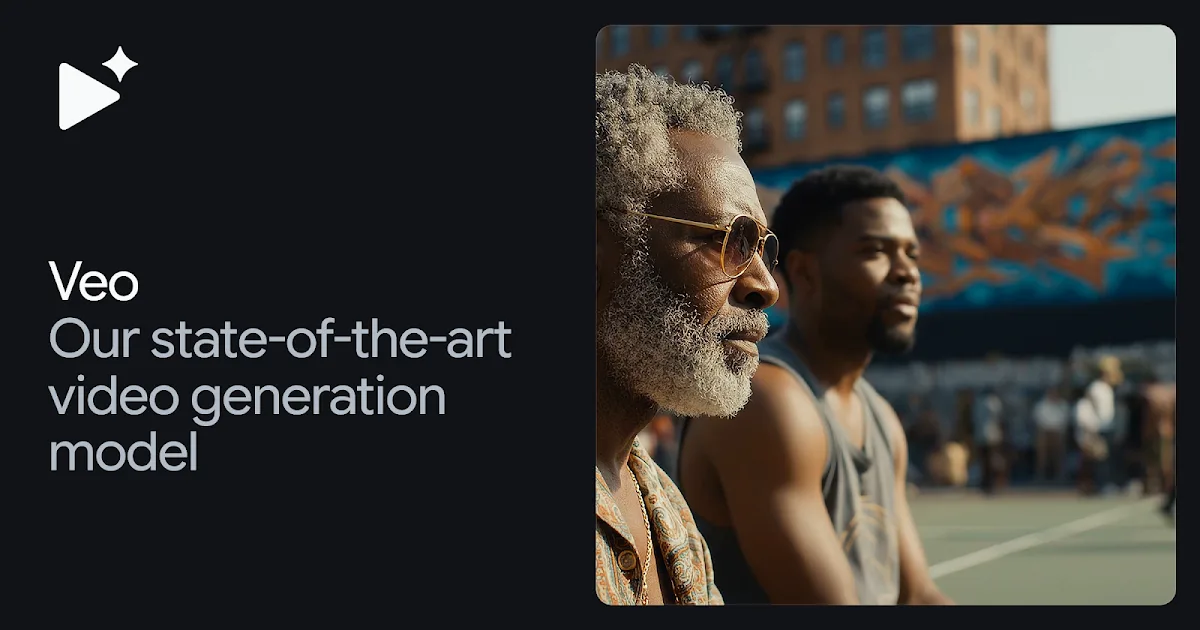

Veo 3
Google DeepMind's flagship video model generates cinematic clips with synchronized native audio from text prompts.
Updated 2026-05-01
Yes, within limits. Veo 3 runs a free tier with paid plans above it.
Listed pricing: Free via Gemini + Vertex AI pay-per-use.
Overview
Veo 3 is Google DeepMind's latest text-to-video generation model and arguably the most capable video AI available in 2026. It generates high-fidelity, cinematic video clips from text prompts with a level of physical consistency and visual coherence that sets a new benchmark. What truly separates Veo 3 from every competitor is native audio generation — the model produces synchronized dialogue, sound effects, and ambient audio directly alongside the video, eliminating the need for separate audio tools.
The model is built for filmmakers, content creators, and marketing teams who need production-quality video without a production budget. It understands cinematic language: you can specify camera angles, lens types, lighting moods, and editing styles in your prompts and get results that genuinely look like they came off a professional set. Physics simulation is notably improved — water, fabric, hair, and complex motion all behave convincingly.
Access comes through two paths: casual users can generate clips inside Gemini Advanced, while developers and enterprises get full control via Google Vertex AI with usage-based pricing. The Vertex route offers longer durations, higher resolutions, and API integration for automated workflows. The main trade-off is that Veo 3 lives entirely within Google's ecosystem — there's no standalone app or open-weight version.
Is Veo 3 free?
Yes, within limits. Veo 3 runs a free tier with paid plans above it.
What the free tier covers: Limited generations available through Gemini with a Google account.
Listed pricing: Free via Gemini + Vertex AI pay-per-use.
Pricing on this page has not been re-verified. The entry was last edited on , and no separate pricing check has been run since. Treat the figures as a record of what was published then and confirm on the official site.
What the free tier leaves out
Read straight off the plan list below. Vendors move features between tiers, so check the current split before you pay.
- Gemini Advanced $19.99/mo Included with Google One AI Premium; limited video generations per day, shorter clips
- Vertex AI Pay-per-use Usage-based enterprise pricing; longer durations, higher resolutions, API access, batch generation
Veo 3 pricing
| Plan | Price | What's included |
|---|---|---|
| Gemini Advanced | $19.99/mo | Included with Google One AI Premium; limited video generations per day, shorter clips |
| Vertex AI | Pay-per-use | Usage-based enterprise pricing; longer durations, higher resolutions, API access, batch generation |
Included with Google One AI Premium; limited video generations per day, shorter clips
Usage-based enterprise pricing; longer durations, higher resolutions, API access, batch generation
One plan carries no published number: Vertex AI, recorded as “Pay-per-use”. Nothing is estimated in its place. The vendor's own pricing page is the only source for those figures.
Pricing on this page has not been re-verified. The entry was last edited on , and no separate pricing check has been run since. Treat the figures as a record of what was published then and confirm on the official site.
Is Veo 3 worth it?
Worth it for Filmmakers, content creators, and marketing teams who need production-quality cinematic video with synced audio, without a production budget.
You can test that on the free tier before paying anything. The recorded trade-offs are listed below, and any one of them can settle the question on its own.
The 9.1/10 AI Score is an editorial read of published capability, price and shipping pace. Nobody here has hands-on hours with Veo 3. How we verify.
Worth it if
The strengths recorded against this entry.
- Native audio generation with synchronized dialogue and sound effects — no other model does this
- Physical consistency holds up for water, fabric, hair, and complex motion
- Deep integration with Google ecosystem (Gemini, Vertex AI, Google Cloud)
- Cinematic camera control via natural language prompts
- 4K output quality suitable for professional use
Not worth it if
Any one of these blocks your use case.
- Locked into Google's ecosystem with no standalone app or open weights
- Vertex AI pricing can add up quickly for high-volume production use
- Maximum clip duration still lags behind what you'd need for long-form content
- Generation speed is slower than lighter competitors like Pika for quick iterations
What sets Veo 3 apart
- Native synchronized audio (dialogue, sound effects, ambience) generated with the video
- Cinematic camera, lens, and lighting control via natural-language prompts
- 4K output with strong physical consistency for water, fabric, and hair
- Accessed through Gemini Advanced or Vertex AI rather than a standalone app
Key features
Text-to-Video
Generate cinematic video clips from natural language prompts with strong understanding of scene composition, lighting, and narrative flow. Handles complex multi-subject scenes with realistic physics.
Native Audio Generation
Produces synchronized sound effects, ambient audio, and even dialogue directly with the video — no separate audio tool needed. This is a unique capability no other major video model offers natively.
Camera Controls
Specify cinematic camera movements, lens types, depth of field, and tracking shots in your prompts. The model interprets film language for professional-grade output.
4K Output
Renders video at up to 4K resolution with high frame rates. Output quality is suitable for professional content, social media, and marketing without noticeable AI artifacts in most scenes.
How it compares
| Tool | Best for | Pricing | Score |
|---|---|---|---|
| Veo 3 | Filmmakers, content creators, and marketing teams who need production-quality cinematic video with synced audio, without a production budget. | Free via Gemini + Vertex AI pay-per-use | 9.1/10 |
| Runway vs Runway → | Filmmakers, advertisers, and content creators who need cinematic AI video with realistic motion and fine-grained creative control. | Free tier + Standard $12/mo + Pro $28/mo + Max $76/mo + Enterprise contact sales | 9.3/10 |
| Seedance 2.0 vs Seedance 2.0 → | Video creators and developers who need short AI-generated clips with synchronized audio, lip-sync, and cinematic camera control. | Free daily credits (Dreamina) + paid ~$15-$70/mo; API from ~$0.08/s | 9/10 |
| Kling AI vs Kling AI → | Studios and creative teams who want sweeping cinematic camera moves and consistent storytelling with shared team workflows. | Freemium | 8.9/10 |



Compare head-to-head
Related reading
Grok Imagine Video 1.5: xAI's Video Upgrade Explained
xAI launches Grok Imagine Video 1.5 with native audio, better physics, and faster generation. Here's what the upgrade actually delivers.

Anthropic Traced More Than 23 Million Exchanges
Anthropic attributed more than 23 million exchanges to Moonshot between May and July in its September 2026 threat intelligence report.

ChatGPT for Financial Services: What Shipped, Pricing & Who It's For
OpenAI launched a tailored ChatGPT Work experience for investment bankers and equity researchers with GPT-6 Astra, built-in PitchBook/Daloopa/LSEG data, citations, and sales-quoted pricing.
Ready to try Veo 3?
Head to the official site to start with Veo 3 — pricing and plans are listed above.
Visit Veo 3