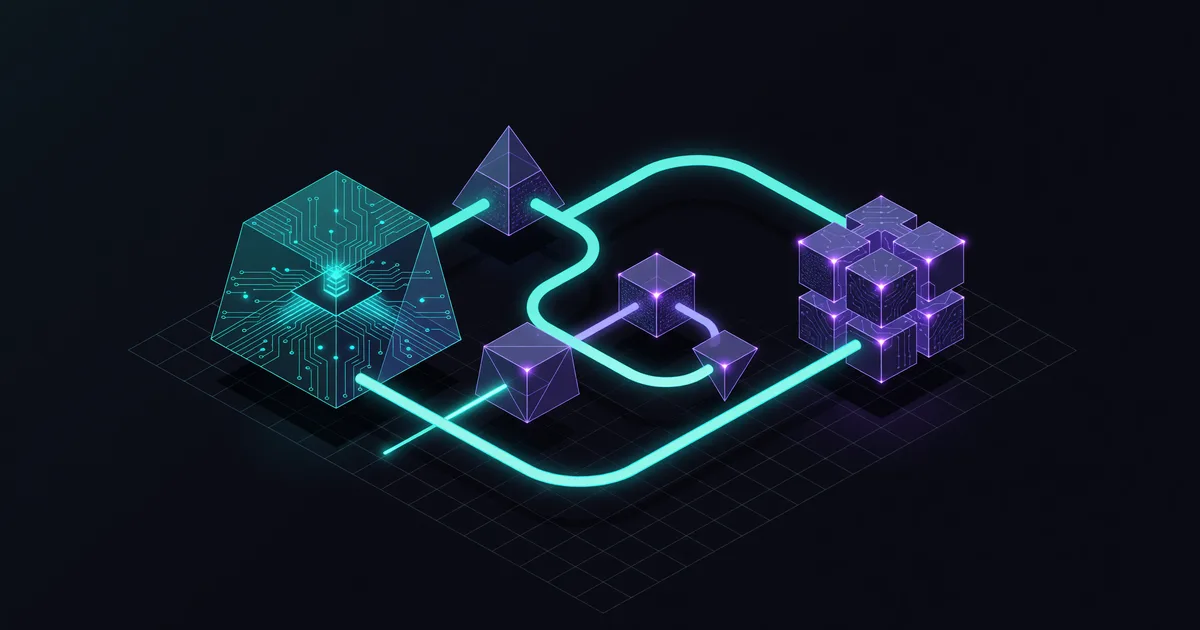
OpenAI's $4B Deployment Co and Tomoro Deal Explained
OpenAI launched a $4B enterprise deployment unit backed by TPG, Bain, and Brookfield, and acquired Tomoro. Here's the full strategy breakdown.
OpenAI announced the OpenAI Deployment Company on May 11, a new entity backed by more than $4 billion from TPG, Bain Capital and Brookfield, three of the largest private equity and infrastructure firms on the planet. Alongside it, OpenAI revealed the acquisition of Tomoro, a consultancy with roughly 150 AI deployment specialists and enterprise clients including Mattel and Red Bull. An entirely new business line arrived with both announcements, and neither of them is a product.
The move lands on something the AI industry has been circling for over a year. Building the model is half the job, and the harder, more lucrative half is getting enterprises to actually use it. OpenAI just put $4 billion and a dedicated company behind that proposition.
What the OpenAI Deployment Company is
Per the announcement, reported by Reuters and Bloomberg on May 11, the Deployment Company is a separate entity from OpenAI's core research and API business. Its purpose is to embed AI engineers directly inside enterprise organizations, functioning as a consulting and integration arm that helps large companies deploy OpenAI's models into their workflows, systems and products.
The investor lineup carries the intent. TPG manages over $220 billion in assets with a deep enterprise tech portfolio including McAfee, Informatica and Wind River. Bain Capital runs $185 billion AUM and is known for operational turnarounds and enterprise software plays. Brookfield is one of the world's largest infrastructure investors and has become increasingly active in data centers and AI compute.
None of those are AI-native venture funds chasing frontier research. They are institutional capital betting on enterprise adoption at scale, which is the boring, high-margin, recurring-revenue part of AI.
Tomoro brings deployment muscle, not model research
Tomoro brings approximately 150 AI deployment specialists to the table along with existing enterprise relationships. Its client roster reportedly includes Mattel and Red Bull, companies that are not building foundation models but do need AI embedded in supply chains, marketing operations and product development.
The acqui-hire playbook applies with a twist. What OpenAI is buying is enterprise deployment capability rather than engineering talent: people who know how to sit in a conference room with a Fortune 500 CTO, map out a rollout plan, handle data governance concerns and get models into production.
That skill set is fundamentally different from what OpenAI has built internally. OpenAI's core team builds models and APIs. Tomoro's team builds the bridge between those APIs and a corporation's actual business processes.
The distribution gap Google and Microsoft already closed
OpenAI is not the first to realize enterprise deployment is where the money lives. The major players are all approaching the same problem from different starting positions.
| Company | Enterprise Approach | Scale Signal |
|---|---|---|
| OpenAI | Dedicated Deployment Company + Tomoro acquisition | $4B+ backing from PE firms |
| Anthropic | Direct enterprise sales, Amazon partnership | $1.8B Akamai compute deal, SpaceX/Colossus lease |
| Gemini integrated into Google Cloud + Workspace | Existing cloud sales force of thousands | |
| Microsoft | Copilot embedded across M365 + Azure OpenAI Service | Built-in distribution to 400M+ Office users |
Google and Microsoft hold a structural advantage, because they already run massive enterprise sales organizations. When Google wants to deploy Gemini at a Fortune 500 company, it routes through the existing Google Cloud sales team that already owns the relationship. Microsoft has a stronger version still, since Copilot ships inside products the enterprise already pays for.
OpenAI has no equivalent built-in distribution. The Deployment Company is the answer: build the enterprise services arm from scratch, capitalize it heavily, and accelerate with Tomoro's existing client relationships.
Private equity money signals a cash-flow business
The investor profile is the most underappreciated detail in the announcement. OpenAI has raised plenty of venture capital, and its $6.6 billion round in late 2024 was the largest VC round in history, so going to TPG, Bain and Brookfield for this entity is a choice rather than a necessity.
It reads as deliberate signaling. Private equity firms invest in cash-flow businesses, not moonshot research. Structuring the Deployment Company with PE backing tells the market this unit is expected to generate real revenue on a predictable timeline, in the sense of quarterly enterprise contracts with measurable ROI rather than eventual returns when AGI arrives.
It also keeps the Deployment Company's economics somewhat separate from the core research burn rate. OpenAI reportedly spent over $8 billion on compute in 2025, and a services arm that generates its own revenue and justifies its own capital raises takes pressure off the core business.
The systems-integrator precedent from cloud
There is a historical parallel worth noting. In the early days of cloud computing the hyperscalers built the platforms, but systems integrators like Accenture, Deloitte and Cognizant made billions helping enterprises actually migrate. Accenture alone generated over $3 billion in annual cloud revenue by the mid-2010s.
OpenAI appears to be trying to own both sides of that equation, building the platform and running the integration business. The ambition carries real risk, because deployment consulting is a fundamentally different business from research, with different margins, different talent needs and different management challenges. The upside is that controlling the deployment layer produces direct feedback on what enterprises actually need, which feeds back into product development.
The pressure this puts on Anthropic
Anthropic has been making its own infrastructure moves, and the $1.8B Akamai deal plus the SpaceX Colossus lease are both about securing compute. It has not announced an equivalent enterprise deployment arm, and its strategy so far has been to work through partners, primarily Amazon and AWS, alongside direct enterprise sales.
Whether Anthropic needs to match the move depends on results. If having 150+ AI engineers available for embed engagements meaningfully accelerates enterprise adoption of OpenAI's models, Anthropic will need its own version. The alternative is doubling down on the AWS partnership and letting Amazon's enterprise sales team do equivalent work.
Either way, the competition in AI is shifting from which lab has the best model toward which lab can get its model deployed in the most enterprises, fastest. OpenAI just spent $4 billion asserting that deployment is a business worth owning rather than outsourcing.
Four details the announcement left out
Exclusivity is the first unknown. Whether the Deployment Company will only deploy OpenAI models, or could work with other providers, changes the addressable market. Pure exclusivity limits it but strengthens lock-in, while multi-vendor flexibility makes it a better sell to enterprises wary of single-provider dependence.
Pricing model is the second. Enterprise consulting typically runs on either time-and-materials or outcome-based pricing, and which one OpenAI chooses reveals how confident it is about delivering measurable results.
Leadership is the third. A separate CEO from Sam Altman would signal genuine operational independence, while a direct report to Altman would signal tighter integration.
Geographic scope is the fourth. Tomoro's client base of Mattel and Red Bull suggests global reach, though the initial deployment focus could be US-centric.
Where the $4B bet actually lands
Building a $4 billion deployment company is an admission that great models are not enough. Enterprises do not adopt AI because a benchmark score went up. They adopt it because someone showed up, understood their data, mapped out the integration, handled compliance and delivered a working system.
Unglamorous work next to training frontier models, and also where the durable revenue lives. With Tomoro's 150 specialists and PE-grade capital behind it, OpenAI has made its most explicit bet yet that the AI industry's profit center sits in enterprise deployment rather than the research lab.
Whether OpenAI can execute what amounts to a management consulting buildout while simultaneously running a frontier AI research lab is the open question, because those are two very different organizational cultures. With $4 billion in backing and a clear gap in the market, the Deployment Company is still one of the more strategically coherent moves OpenAI has made in a year full of big announcements.
Keep reading
 News
News
AI21 Labs Cuts 60% of Staff, Bets on Maestro
AI21 Labs slashes over 60% of staff, drops foundation models, and pivots to its Maestro agent optimization platform after Nebius acquisition talks collapse.
 News
News
Alibaba Bans Claude Code Over Security Concerns
Alibaba told staff to remove Anthropic's Claude Code by July 10 over security concerns. Here's what triggered the ban and what it signals.
 News
News
Anthropic Acquires Stainless: What It Means for AI
Anthropic bought Stainless, the SDK generator behind OpenAI and Cloudflare's client libraries. Here's the strategic play for AI agents.