Gemini 3.5 Flash: Google's Agentic Model Explained
Google built Gemini 3.5 Flash specifically for autonomous agent workflows. Here's what the model does differently and why developers should care.
Google's First Model Built for Agents, Not Chat
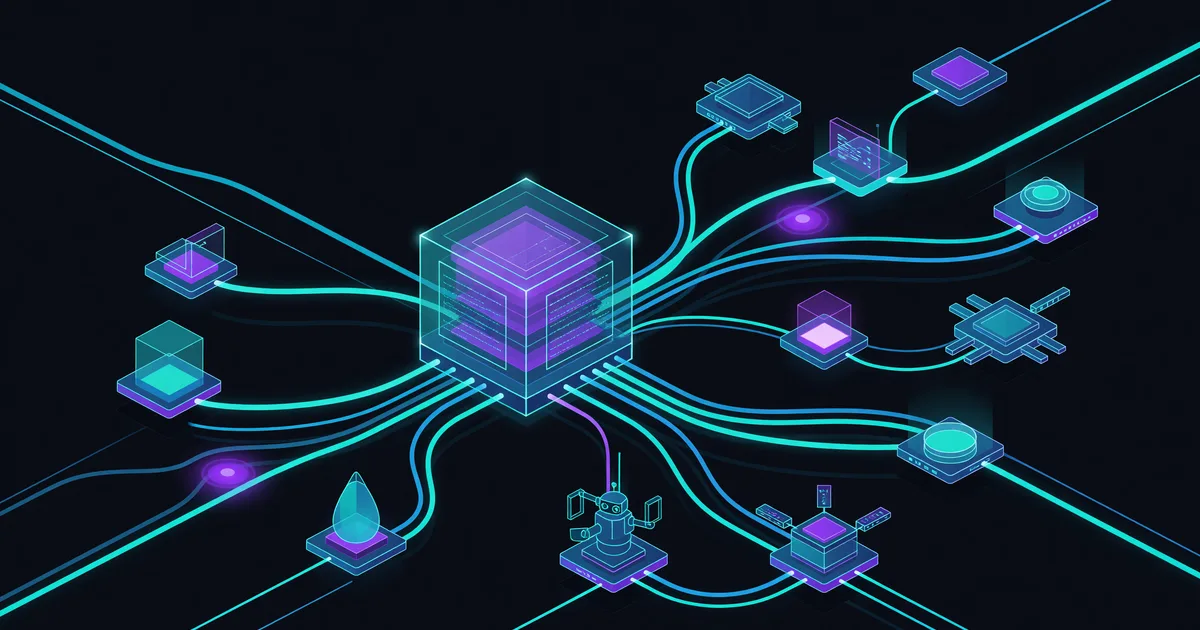
Every major AI lab now says "agents" in every press release. Google just put its money where its mouth is. Gemini 3.5 Flash, announced at I/O 2026 on May 19 and available immediately through the Gemini API and Antigravity platform (per Google's official model page at blog.google), is the first Gemini model explicitly optimized for multi-step autonomous workflows rather than conversational chat.
That distinction matters more than it sounds. Previous Flash models — 1.5 Flash, 2.0 Flash, 2.5 Flash — were speed-optimized versions of Google's flagship. They were chat models that happened to be fast. Gemini 3.5 Flash is architecturally different: it's designed from the ground up for the plan-execute-observe-iterate loop that agent systems require (per TechCrunch's coverage, which frames this as Google "betting its next AI wave on agents, not chatbots").
What "Agentic Optimization" Actually Means
The term "agentic" gets thrown around loosely, so let's be specific about what it means for a model to be optimized for agents versus chat.
A chat model is optimized for single-turn or short-conversation exchanges. You ask a question, it answers. Even with function calling, the model treats tool use as an interruption in a conversation — call a tool, get the result, continue talking.
An agentic model is optimized for something fundamentally different:
- Multi-step planning: Breaking a complex goal into a sequence of actions before executing any of them
- Tool orchestration: Calling multiple tools in the right order, using the output of one as the input to the next
- Observation and correction: Interpreting tool results, detecting errors, and adjusting the plan mid-execution
- State management: Tracking what's been done, what's pending, and what changed across dozens of steps
- Graceful failure: Recognizing when an approach isn't working and trying an alternative, rather than hallucinating a successful result
Google hasn't published the architectural details of how Flash 3.5 achieves this — no paper has dropped yet. But the emphasis on "agentic workflows" across every piece of official messaging signals that the training process, evaluation benchmarks, and optimization targets differ from previous Flash models. My read: this is likely a combination of specialized training data (multi-step tool-use traces), RLHF tuned for planning quality rather than conversational naturalness, and possibly architectural changes to how the model handles long action sequences.
Antigravity: The Platform That Makes Flash 3.5 Different
You can't fully evaluate Gemini 3.5 Flash without understanding Antigravity, Google's agent platform. Flash 3.5 is the default reasoning engine inside Antigravity 2.0, which shipped at the same I/O keynote with a desktop app and CLI (covered in detail in our Spark and Antigravity 2.0 breakdown).
Here's why this coupling matters: Flash 3.5 has native access to Google's service connectors through Antigravity. That means Gmail, Calendar, Drive, Maps, Search, and other Google APIs aren't third-party integrations — they're first-party tools the model was trained to use. The difference is like comparing a driver who learned on a specific car versus one who's reading the manual for the first time.
This is Google's structural advantage and its biggest potential limitation in one package. If your agent workflow lives inside Google's ecosystem, Flash 3.5 through Antigravity is likely the most integrated option available. If your workflow needs Slack, GitHub, Notion, or AWS services, the picture gets murkier. Google hasn't clarified how much of Flash 3.5's agentic performance comes from Antigravity's native tooling versus the raw model's capabilities through the standalone API.
The open question developers should ask before building on Flash 3.5: am I choosing this model, or am I choosing this platform? The answer determines your lock-in risk.
How Flash 3.5 Compares to Other Agentic Models
Flash 3.5 enters a market where every frontier model now claims agentic capabilities. Here's how the approaches differ based on what each company has published:
| Model | Agentic Approach | Native Platform | Key Strength |
|---|---|---|---|
| Gemini 3.5 Flash | Purpose-built for agents | Antigravity (Google services) | First-party Google integration |
| Claude 4 (Anthropic) | Tool use + computer use | MCP ecosystem | Desktop control, open protocol |
| GPT-5 (OpenAI) | Function calling + Codex agents | ChatGPT platform | Largest developer ecosystem |
| Grok 4.3 (xAI) | Agentic coding + Build CLI | Grok Build, SuperGrok | Real-time X/web data access |
The key difference is that Google is the only company claiming its model was specifically optimized for agent workloads at the architecture level, not just fine-tuned for tool calling on top of a general-purpose model. Whether that optimization produces measurably better agent behavior is something we'll need independent benchmarks to confirm — and those haven't arrived yet.
The Benchmark Gap
This is the elephant in the room. As of this writing, Google has not published third-party benchmark results for Flash 3.5. No SWE-Bench scores, no MMLU, no HumanEval, no results on agentic benchmarks like WebArena or AgentBench. Google referenced internal evaluations in its announcement, but internal evals from the model maker are marketing, not evidence.
The community typically gets API access within days of a Google launch and runs benchmarks quickly. Until those results arrive, any performance claims — including Google's — should be treated as unverified. I'll update this post when independent numbers surface.
The Version Numbering Tells a Story
Google jumped from 2.5 to 3.5 for Flash while keeping Gemini 2.5 Pro as its flagship reasoning model. This isn't arbitrary — it signals that Google is branching the Gemini family by function rather than running a single version number forward.
The current Gemini lineup, based on Google's published model pages:
- Gemini 2.5 Pro: Complex reasoning and long-context analysis — the "thinker"
- Gemini 2.5 Flash: Fast, cost-efficient inference for high-volume workloads — the "workhorse"
- Gemini 3.5 Flash: Agent-optimized reasoning and tool orchestration — the "doer"
- Gemini Omni: Multimodal generation including video — the "creator"
I think this branching strategy is smart but creates a real developer experience problem. OpenAI has GPT-5 and GPT-5-mini. Anthropic has Claude Opus, Sonnet, and Haiku. Google now has at least four active model families with overlapping version numbers. If you're a developer choosing a model for your application, Google's lineup requires more homework than its competitors'.
What We Know About Specs (and What We Don't)
Google's announcement and official model page provide some details but leave critical gaps. Being transparent about both:
What Google has confirmed:
- Available immediately through the Gemini API and Antigravity platform
- Optimized for multi-step agentic workflows with tool orchestration
- Native integration with Google services (Gmail, Calendar, Drive, Maps, Search)
- Powers the new Gemini Spark always-on agent
- Agent-to-agent communication supported through Antigravity 2.0
What Google hasn't confirmed:
- Pricing: Previous Flash models were priced around $0.075 per million input tokens (2.0 Flash tier, per Google's published pricing page). Whether 3.5 Flash sits at the same price point or higher given its agentic optimization is unknown.
- Context window: The 2.5 models offered up to 1M tokens. Google hasn't stated whether 3.5 Flash matches this.
- Rate limits: "Available immediately" could mean full production access or a throttled preview. Google's track record on this varies.
- Standalone vs. Antigravity performance: How much agent capability comes from the model itself versus the platform's tooling infrastructure.
Who Flash 3.5 Is Actually For
Developers already in Google's ecosystem: If your stack is Google Cloud, Workspace, and Firebase, Flash 3.5 through Antigravity is the most natural choice for adding agent capabilities. The native service integrations eliminate the connector-building overhead that eats up time with other models. Start here, evaluate against alternatives once benchmarks arrive.
Teams building multi-agent systems: Antigravity 2.0's agent-to-agent communication feature is notable. If your architecture involves specialized agents coordinating on tasks — one for research, one for drafting, one for review — Google is offering this as a platform primitive rather than something you need to build yourself. Worth investigating if this is your design pattern.
Startups choosing an agent foundation: Proceed carefully. Flash 3.5's tight coupling with Antigravity is powerful but creates platform dependency. If Google's agent strategy shifts (and Google has a history of pivoting away from developer platforms), you're exposed. Consider whether the raw API gives you enough capability to build portably, or whether the Antigravity-specific features are what you actually need.
Teams already committed to other stacks: If you're building on Anthropic's MCP, OpenAI's function calling, or LangChain/CrewAI, Flash 3.5 is worth benchmarking when independent results arrive, but probably not worth a migration on the announcement alone. The agent platform layer is where switching costs live, not the model layer.
The Bigger Bet Google Is Making
Step back from the specs and Flash 3.5 reveals something about Google's broader AI strategy. They're not just releasing a better model — they're declaring that the model-as-chat-interface era is ending and the model-as-autonomous-worker era is beginning.
Every company says this. Google is the first to ship a model explicitly versioned and marketed as an agent-first product, separate from its conversational flagship (2.5 Pro). That's a real commitment, not just messaging.
The risk is fragmentation. Google now maintains at least four distinct model families, an agent platform (Antigravity), a consumer agent product (Spark), and all of this alongside its existing Gemini chat interface, AI Overviews in Search, and Workspace AI integrations. History suggests Google struggles when its AI efforts are spread across too many surfaces — the Google Assistant/Bard/Gemini naming saga being the most recent example.
My honest take: Flash 3.5 is the most strategically coherent model Google has shipped. It has a clear purpose (agents), a clear platform (Antigravity), and a clear differentiation from the rest of the lineup. Whether Google can maintain that focus or will dilute it across 15 product teams within six months is the real question. The model isn't the risk. The organization is.
What to Watch Next
Three things will determine whether Flash 3.5 lives up to the I/O 2026 announcement:
- Independent benchmarks: SWE-Bench, AgentBench, WebArena, and other agentic evaluation suites will tell us whether "agent-optimized" translates to measurably better agent performance. These should surface within days to weeks.
- Pricing details: Agent workloads involve many more API calls per task than chat. If Flash 3.5 is priced at a premium over 2.5 Flash, the cost math for agent builders changes significantly.
- Non-Google tool support: Antigravity's value proposition outside Google's walled garden depends on whether it becomes an open agent platform or stays a Google-services orchestrator. The first few months of third-party connector announcements will signal the direction.
Google built Flash 3.5 for a future where AI models do things instead of just saying things. That future is clearly coming. Whether Google is the company that owns it depends less on the model and more on everything around it.
Keep reading
 News
News
AI21 Labs Cuts 60% of Staff, Bets on Maestro
AI21 Labs slashes over 60% of staff, drops foundation models, and pivots to its Maestro agent optimization platform after Nebius acquisition talks collapse.
 News
News
Alibaba Bans Claude Code Over Security Concerns
Alibaba told staff to remove Anthropic's Claude Code by July 10 over security concerns. Here's what triggered the ban and what it signals.
 News
News
Anthropic Acquires Stainless: What It Means for AI
Anthropic bought Stainless, the SDK generator behind OpenAI and Cloudflare's client libraries. Here's the strategic play for AI agents.