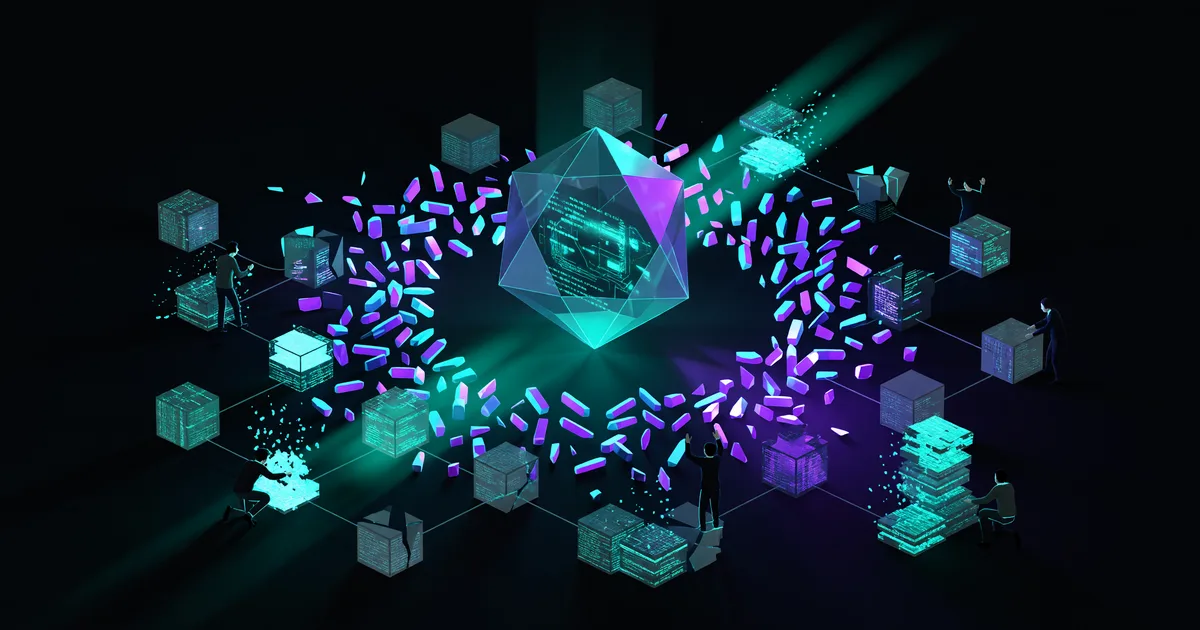
Glasswing's 10K Vulns and the Open-Source Reckoning
Anthropic's Glasswing results expose a structural crisis in open-source security. What 10,000 AI-found vulnerabilities mean for maintainers and the industry.
The Number That Should Keep Maintainers Up at Night
Anthropic's May 22 Glasswing progress report confirmed that Claude Mythos Preview — the restricted, cybersecurity-focused Claude variant — discovered over 10,000 high and critical severity vulnerabilities across major software in its first month of operation (per Anthropic's initial Glasswing update). Most coverage has focused on how impressive that number is. I think the more important question is what it breaks.
Specifically: what happens to the open-source ecosystem when AI can find vulnerabilities faster than volunteer maintainers can fix them? Because that's not a hypothetical — it's the situation Glasswing just created.
A Quick Recap: What Glasswing Actually Did
Project Glasswing is Anthropic's defensive cybersecurity initiative. Claude Mythos Preview is the model powering it — a Claude variant fine-tuned for vulnerability discovery, exploit analysis, and security auditing. It's not publicly available. Access is restricted to vetted security partners, government agencies, and approved researchers through Anthropic's controlled-access program.
The key detail from the May 22 update: Mythos didn't just run static analysis or pattern-match against known vulnerability signatures. Based on Anthropic's description, it operated more like an autonomous security researcher — identifying targets, developing hypotheses about potential weaknesses, crafting inputs to test them, and validating findings before submitting them through coordinated disclosure channels.
All 10,000+ findings entered the responsible-disclosure pipeline. No public exploit details have been released.
The Open-Source Supply Chain Problem
Here's what most commentary is glossing over: a significant portion of the world's critical software infrastructure runs on open-source projects maintained by small teams or, in many cases, a single person. The Linux Foundation's 2024 census of open-source software found that the most critical packages average fewer than 10 active maintainers. Some of the most widely-deployed libraries have one or two.
These maintainers already can't keep up with the vulnerability reports they receive through existing channels. Now imagine Mythos scanning the npm registry, PyPI, or the Linux kernel and generating hundreds of validated high-severity findings per project. Who patches those?
- Corporate-backed projects (React, Kubernetes, Chromium) have engineering teams that can absorb a surge in vulnerability reports. They'll prioritize, triage, and ship fixes within their existing security response processes.
- Foundation-supported projects (OpenSSL post-Heartbleed, the Linux kernel) have some infrastructure for handling security disclosures, though capacity varies wildly.
- Community-maintained projects — the long tail that makes up most of the open-source ecosystem — have essentially zero capacity for a flood of legitimate vulnerability reports. A solo maintainer working evenings and weekends cannot process 50 critical findings in a quarter.
My read: Glasswing didn't create the open-source maintenance crisis. But it's about to make it impossible to ignore. When AI can surface thousands of real vulnerabilities in software that millions depend on, "the maintainer will get to it eventually" stops being an acceptable answer.
The Economics of AI-Driven Vulnerability Discovery
The cybersecurity industry's economic model is built on scarcity. Vulnerability discovery is expensive because skilled security researchers are rare, their time is valuable, and thorough code auditing is slow. This scarcity is what makes bug bounty programs work — HackerOne's 2024 annual report showed the platform paid out over $300 million in bounties, with top researchers earning six figures annually.
Mythos-class AI fundamentally disrupts this model in several ways:
Bug bounty programs need new rules. If AI can find in hours what takes a human researcher days, the per-vulnerability bounty prices should theoretically collapse. But vendors still need the bugs fixed, which means the value shifts from discovery to remediation. Smart bug bounty platforms will start paying more for verified fixes than for reports.
Security audit firms face margin pressure. A significant chunk of the penetration testing and code audit market — worth roughly $3 billion annually per Allied Market Research — involves work that AI can now do faster and cheaper. Firms that differentiate on remediation guidance, architecture review, and threat modeling will survive. Those selling primarily "we'll find your bugs" are in trouble.
The compliance market shifts. SOC 2, ISO 27001, and PCI-DSS audits all require evidence of vulnerability management. When AI can generate comprehensive vulnerability assessments in days rather than weeks, the compliance audit timeline compresses — but the remediation timeline doesn't. Expect growing tension between "we identified all the issues" and "we fixed all the issues."
True-Positive Rates: The Number That Actually Matters
Anthropic's update reports 10,000+ high and critical severity vulnerabilities. What it doesn't publish — and what the security community needs before treating this as definitive — is the true-positive rate.
This matters enormously. Existing automated security tools (SAST, DAST, fuzzing) are notorious for high false-positive rates. Coverity's Scan project historically reports false-positive rates around 15-20% for its static analysis. Semgrep, a more modern tool, claims lower rates but still generates noise that requires human triage.
If Mythos achieves a true-positive rate above 90%, that's a genuine breakthrough — it means the findings are actionable without extensive human validation. If the rate is closer to 70%, the 10,000 number is still impressive but the operational burden on receiving vendors is much higher, because someone still needs to confirm each finding.
Anthropic hasn't disclosed this metric yet. Until they do, the 10,000 figure should be treated as a headline number, not a validated count. I expect Anthropic will need to publish precision and recall data to maintain credibility with the security research community, which is (rightly) skeptical of big numbers without methodology transparency.
What This Means for Anthropic's Strategy
Glasswing is increasingly central to Anthropic's differentiation story. Consider the pattern:
| Deal | Date | Strategic angle |
|---|---|---|
| $200M Gates Foundation partnership | May 2026 | Global health + institutional trust |
| $1.8B Akamai compute deal | May 2026 | Infrastructure for scaled deployment |
| SpaceX GPU lease (220K+ GPUs) | May 2026 | Massive compute for frontier models |
| Stainless acquisition | May 2026 | SDK tooling for API ecosystem |
| Japan cybersecurity negotiations | May 2026 | Government security partnerships |
OpenAI has consumer distribution. Google has infrastructure and search. Anthropic is positioning itself as the AI company that institutions — governments, foundations, enterprises — trust with sensitive, high-stakes work. Glasswing is the clearest expression of that strategy: a capability that's valuable precisely because it's restricted, and that builds relationships with exactly the kind of partners (national security agencies, critical infrastructure operators) that provide durable competitive advantages.
I think this matters more than any benchmark score. If Japan signs on — and reporting from Nippon News on May 22 suggests negotiations are active — other governments will follow. Cybersecurity is one of the few domains where "we have a restricted AI that only we and our trusted partners can use" is a feature, not a limitation.
The Dual-Use Problem Nobody Wants to Talk About
If Anthropic can build a model that finds 10,000 vulnerabilities in a month, so can someone else. That's the uncomfortable reality. The techniques behind Mythos — fine-tuning language models on security codebases, training on exploit databases, reinforcement learning from vulnerability validation — are not secret. They require frontier-scale compute and significant security expertise, but nation-state actors have both.
The question is whether the defenders can patch faster than the attackers can exploit. Right now, the answer is clearly no. Average enterprise patch deployment time for critical vulnerabilities is 60-90 days, according to Qualys's annual reports. An AI that finds vulnerabilities in hours creates an asymmetry that favors attackers unless the remediation pipeline speeds up dramatically.
Anthropic's response — controlled access, responsible disclosure, partner vetting — is the right approach but it's also an incomplete one. It addresses the risk from Mythos specifically. It doesn't address the risk from equivalent capabilities being developed by actors who won't bother with responsible disclosure.
What Developers Should Actually Do
If you maintain open-source software or run engineering teams, the Glasswing results have practical implications:
- Expect more vulnerability reports. Even if you're not in Glasswing's current scope, AI-powered security scanning is going to become standard tooling within 12-18 months. The volume of legitimate vulnerability reports across the ecosystem will increase significantly.
- Invest in automated remediation. If discovery is now cheap and fast, the competitive advantage shifts to fixing quickly. Automated patching tools, CI/CD security gates, and dependency update automation become more valuable.
- Audit your dependency tree. The open-source projects most at risk from a Glasswing-style scan are the ones with thin maintainer teams and large attack surfaces. If your application depends on a critical library maintained by one person, that's a risk factor that just got more urgent.
- Don't panic about the 10,000 number. Most of these are likely in large, complex codebases — operating systems, browsers, enterprise platforms. If you're running a typical web application, the more relevant metric will be what Mythos-class tools find in the frameworks and libraries you depend on, not in your application code directly.
The Bigger Picture
Glasswing's first results are genuinely significant, but I think the most important thing they reveal is structural, not technical. The cybersecurity industry built its entire infrastructure — disclosure timelines, bounty programs, audit cycles, compliance frameworks — for a world where finding vulnerabilities was the hard part. That world ended on May 22.
The hard part is now fixing them. And fixing at scale requires things that AI alone can't provide: organizational will, engineering bandwidth, maintainer funding, and update adoption by end users. Anthropic built the microscope. Now the industry needs to build the hospital.
The honest take: Glasswing is a proof point that AI can radically accelerate one half of cybersecurity. The other half — remediation — remains a human, organizational, and economic problem. The companies and open-source projects that figure out fast, reliable patching pipelines will be the real winners of the AI security era. Everyone else will just have a longer list of known problems.
Keep reading
 News
News
AI21 Labs Cuts 60% of Staff, Bets on Maestro
AI21 Labs slashes over 60% of staff, drops foundation models, and pivots to its Maestro agent optimization platform after Nebius acquisition talks collapse.
 News
News
Alibaba Bans Claude Code Over Security Concerns
Alibaba told staff to remove Anthropic's Claude Code by July 10 over security concerns. Here's what triggered the ban and what it signals.
 News
News
Anthropic Acquires Stainless: What It Means for AI
Anthropic bought Stainless, the SDK generator behind OpenAI and Cloudflare's client libraries. Here's the strategic play for AI agents.