Anthropic's SpaceX Deal: 220K GPUs for Claude
Anthropic leased SpaceX's entire Colossus 1 cluster — 220K GPUs, 300MW. Here's what changes for Claude users.
On May 6, 2026, Anthropic announced it has leased the entire capacity of SpaceX's Colossus 1 supercomputer, a cluster of more than 220,000 GPUs drawing 300 megawatts in Memphis, Tennessee. It is the largest single-customer compute lease the industry has seen, and it changed what Claude can do on the day it was announced.
The immediate effects are concrete: doubled Claude Code usage limits, raised Opus API rate caps, and the end of the peak-hour throttling that made afternoon sessions feel like dialup. The strategic effect is stranger. Anthropic, the lab that built its identity around safety, just put its models on infrastructure owned by its direct competitor's parent company, and decided the compute was worth the optics.
Colossus 1 is xAI's first Memphis cluster, freed up by Colossus 2
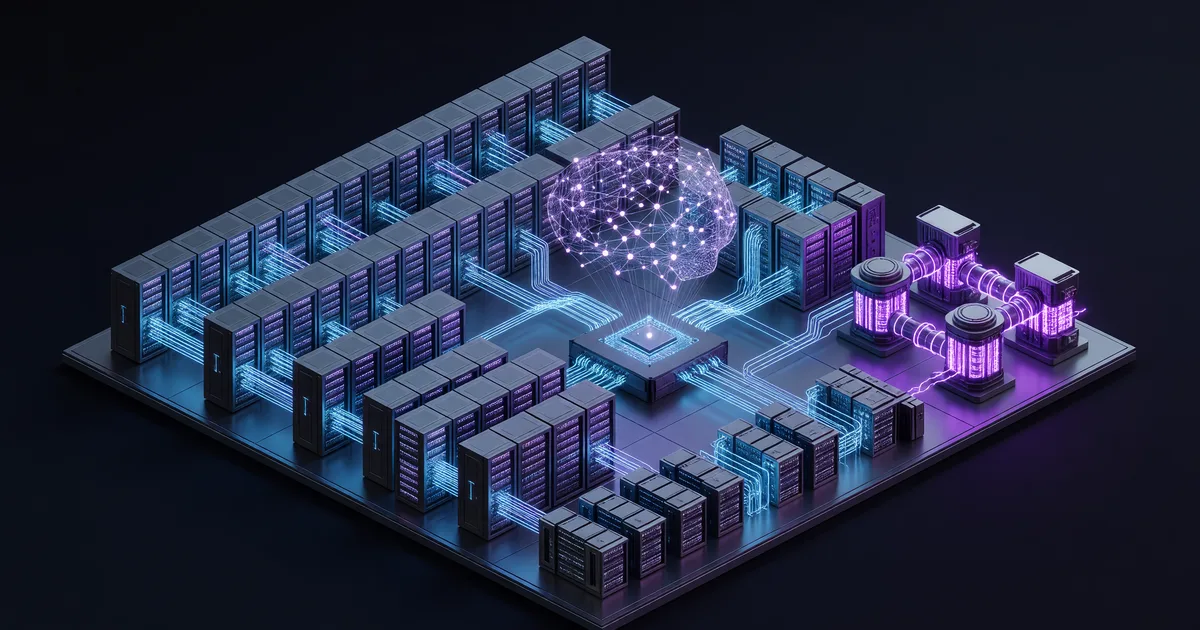
xAI built Colossus 1 in Memphis to train Grok. It came online in late 2024 and was, at that moment, the largest AI training cluster in the world. The build is over 220,000 NVIDIA GPUs, a mix of H100s and later-generation chips, 300 megawatts of power capacity, which is roughly what 230,000 homes draw, liquid-cooled racks in a purpose-built facility, and high-bandwidth interconnects designed for large-scale training rather than general cloud workloads.
xAI has since shifted its primary training onto the newer and larger Colossus 2, which left Colossus 1 underused. Leasing the whole cluster to Anthropic turns depreciating hardware into revenue for xAI. For Anthropic it delivers an enormous capacity injection without the eighteen-month lead time of building a data center, which is the part no amount of capital can compress.
Three things changed for Claude users the same day
Claude Code limits doubled
If you use Claude Code, Anthropic's CLI coding agent, your usage limits have doubled. The old caps were a constant friction point, with heavy users hitting them mid-afternoon and losing the thread of whatever they were building. Colossus 1 gives Anthropic enough inference capacity to be substantially more generous.
For Max plan subscribers who lean on Claude Code for daily development, this is the largest quality-of-life change since the tool shipped. Longer agentic sessions, more complex multi-file edits, and finishing a feature without watching a counter all become possible on the same subscription.
Opus API rate caps went up
Claude Opus, the most capable and most compute-hungry model in the lineup, has always carried tighter rate limits than Sonnet or Haiku, because each request consumes considerably more GPU time. With 220,000 additional GPUs in the pool, Anthropic raised Opus rate caps across all tiers.
For anyone running production applications on the Opus API this is material. Higher limits mean more concurrent users, faster batch jobs, and less elaborate queuing architecture built purely to stay under a ceiling.
Peak-hour throttling should largely disappear
The least-discussed improvement is the one users will feel most often. Claude responses previously lagged during US business hours, roughly 9am to 5pm Pacific, as demand spiked against available capacity. The Colossus 1 headroom lets Anthropic absorb peak load without degrading response times.
Improvements like this never make a changelog and completely change how reliable a tool feels. Consistent two-second responses at 2pm on a Tuesday beat a flashy feature for anyone who works inside the thing all day.
Why Anthropic put its models on a rival's hardware
Anthropic and xAI compete for the same users, the same enterprise contracts and the same developer mindshare. Running Claude on hardware built by Elon Musk's AI company therefore needs an explanation, and there are three.
The compute shortage is genuine. Every major lab is GPU-constrained in 2026, NVIDIA cannot manufacture H100s and B200s fast enough, a new data center takes twelve to twenty-four months, and the large cloud providers all have waitlists for allocations at this scale. Colossus 1 is 220,000 GPUs that exist today, already racked, cooled and networked. Competitive optics do not outweigh that.
Anthropic also has no infrastructure of its own. Google has TPUs and data centers, Meta builds its own clusters, Microsoft owns Azure. Anthropic has historically rented from AWS and Google Cloud, which means shared capacity and someone else's scheduling priorities. A dedicated, non-shared cluster is something the company has never had, and dedicated hardware brings predictable performance plus the option to optimize at the hardware level.
The third reason is safety work, and Anthropic has framed the deal partly in those terms. Additional compute buys more extensive safety evaluations, more red-teaming and more interpretability research. When you are training frontier models, the gap between running safety evals for 200 GPU-hours and running them for 20,000 is the gap between a spot check and a search. Tom Brown, an Anthropic co-founder, made this point on X, noting that safety work is compute-intensive and tends to be the first thing cut when GPUs are scarce. That last part is the uncomfortable bit: safety budgets are the ones that quietly lose when capacity is tight, which is what makes a capacity floor a safety artifact rather than a marketing line.
Where 220,000 GPUs sits in the cluster league table
| Cluster | GPUs | Power | Operator |
|---|---|---|---|
| Colossus 1 (now Anthropic) | 220,000+ | 300 MW | Anthropic (leased from xAI) |
| Colossus 2 | 400,000+ | 600 MW | xAI |
| Microsoft/OpenAI Stargate (planned) | 500,000+ | 1+ GW | Microsoft/OpenAI |
| Meta's MTIA clusters | ~350,000 | ~450 MW | Meta |
| Google TPU v5 fleet | Equivalent ~300,000 | Distributed | Google DeepMind |
Colossus 1 does not make Anthropic the biggest operator. It moves the company from renting cloud instances to running a top-five AI supercomputer, which is a change in category rather than in degree.
No price cut announced, but the cost basis moved
Anthropic has not announced price reductions tied to the lease. The economics point one direction anyway: leasing existing hardware costs less per GPU-hour than renting from a cloud provider carrying its own margin stack. If Anthropic's cost basis falls, competitive pressure from Grok, GPT and Gemini eventually pushes some of that toward users, though nothing guarantees the timing.
The nearer-term effect on your bill is indirect. Higher rate limits remove the need to architect around throttling. The absence of peak-hour slowdowns removes the need for redundant provider fallbacks. Both are real savings even with the per-token price unchanged. And for Claude Code specifically, doubling the limits at the same subscription price is a 50% reduction in cost per unit of work by definition.
Four things worth watching in this deal
Single-point dependency is the first. Routing a large share of inference through one Memphis facility means any incident there affects Claude everywhere. Geographic redundancy exists for a reason, and concentration is the tradeoff Anthropic accepted for speed.
Lease terms are the second, and neither company has disclosed them. A short lease of one or two years would leave Anthropic exposed at exactly the point where it has become dependent on the capacity. If Colossus 2 workloads grow and xAI wants the hardware back, the negotiating position is not symmetrical.
Data isolation is the third. Running your models on a competitor's hardware raises legitimate questions, and both companies have almost certainly built contractual and technical firewalls. Anthropic would need firm guarantees that xAI has no visibility into model weights, training data or inference patterns, and none of those guarantees are public.
The optics are the fourth and they cut both ways. Anthropic gets compute; xAI gets to say in every enterprise sales conversation that even its competitor runs on its infrastructure. That is a usable line, and it will get used.
What to change in your own setup
Claude Code users who have been self-rationing to avoid the caps should stop. The doubled limits mean using the tool the way it was designed, as a persistent partner across a workday, and running the longer and more ambitious agentic tasks that were previously not worth starting.
API developers on Opus should revisit their rate-limiting architecture. Queuing logic, retry chains and model fallbacks built specifically to survive Opus limits may now be removable complexity, so check the updated rate limit documentation for your tier before you keep maintaining them.
Teams comparing Claude against competitors should reopen the evaluation. Reliability and availability were fair criticisms in enterprise assessments, and this capacity addresses them directly. If Claude got ruled out six months ago over rate limits or inconsistent latency, the reason for that decision has changed.
Compute access is now the binding constraint
The deal makes explicit something the industry has been circling for a year. Access to compute, rather than talent or data or algorithmic insight, is the primary bottleneck in AI development right now. Labs that secure reliable large-scale capacity ship better models, serve more users and iterate faster. Labs that do not fall behind regardless of how good their research is, and the research does not get a vote.
Anthropic leasing Colossus 1 follows the same logic as an airline locking in fuel contracts. You buy what is available, where it is available, from whoever will sell it, because the alternative is grounding the fleet.
For Claude users the payoff is straightforward: more capacity, higher limits, better reliability. For the industry, the signal is that compute scarcity is producing alliances nobody would have predicted. Today it is Anthropic on xAI's hardware. Tomorrow it could be OpenAI leasing from Google, or Meta selling spare TPU-equivalent capacity to startups. Building the smartest model has stopped being sufficient on its own; you also have to keep 300 megawatts running while you do it.
Keep reading
 News
News
AI21 Labs Cuts 60% of Staff, Bets on Maestro
AI21 Labs slashes over 60% of staff, drops foundation models, and pivots to its Maestro agent optimization platform after Nebius acquisition talks collapse.
 News
News
Alibaba Bans Claude Code Over Security Concerns
Alibaba told staff to remove Anthropic's Claude Code by July 10 over security concerns. Here's what triggered the ban and what it signals.
 News
News
Anthropic Acquires Stainless: What It Means for AI
Anthropic bought Stainless, the SDK generator behind OpenAI and Cloudflare's client libraries. Here's the strategic play for AI agents.